
- Rebound is expected soon
- EGX30 hit all-time high in May
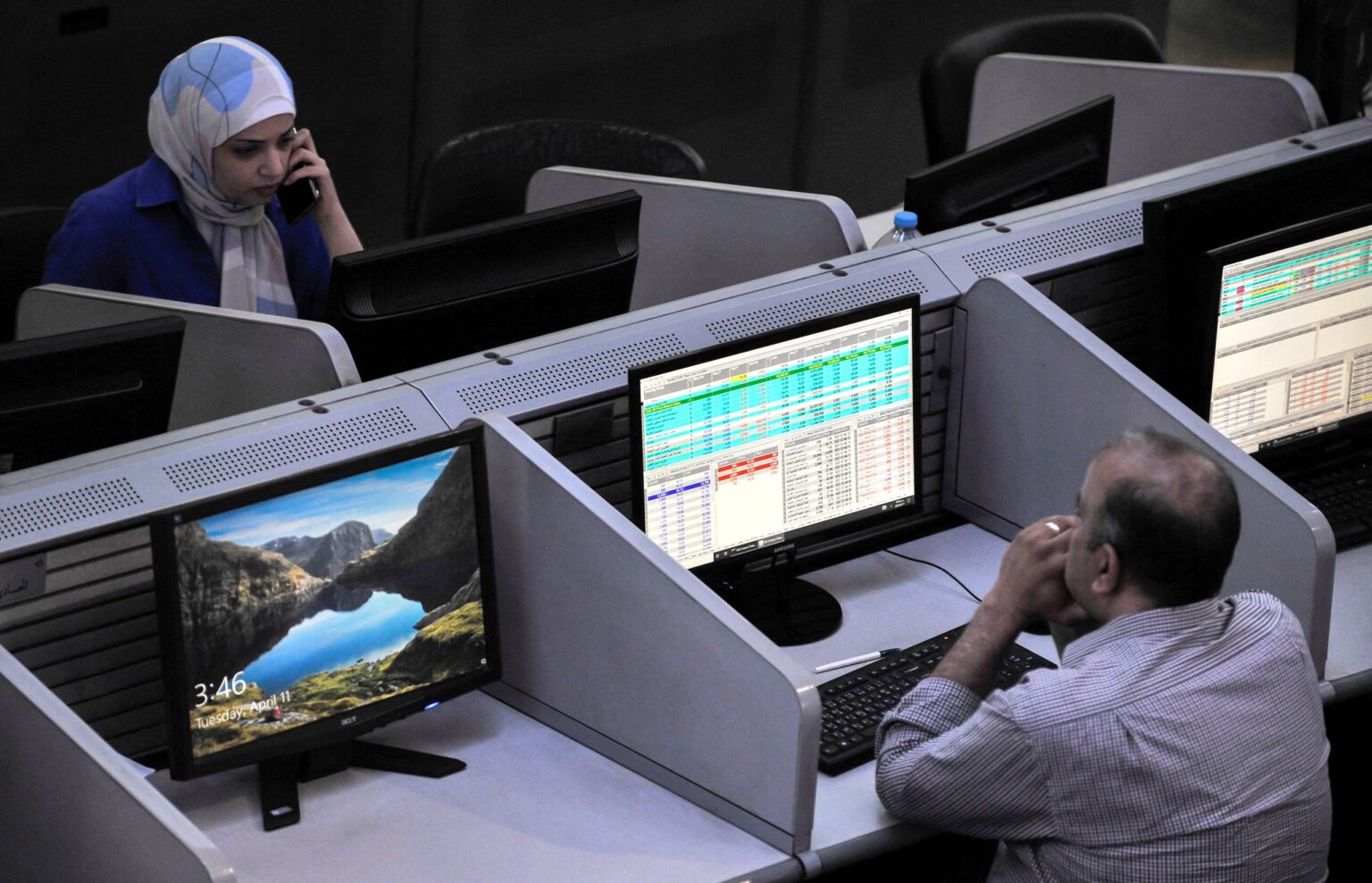
- Retail investors dominate bourse
Egyptian stocks have slid over the past month, halting a multi-year rally as retail investors unwound margin positions ahead of the Eid Al Adha holiday.
Yet relatively cheap valuations and Egypt’s bullish demographics and economic outlook should soon spur a bourse rebound, experts predict.
Analysts say many Egyptian stocks trade at a discount to comparable companies in other emerging markets.
Egypt’s main stock index, the EGX30, is down nearly 4 percent from the all-time high it recorded on May 10. As of June 3, its 12-month gain is 63 percent and its 2026 advance is 26 percent.
Daily turnover on Egypt’s stock market is predominantly retail driven, said Wael Ziada, founder of Zilla Capital, a Cairo-based investment bank.
Retail investors often use margin trading, borrowing from brokers to buy shares and paying a daily interest rate. Margin trading is risky, magnifying both gains and losses.
Ahead of the week-long Eid Al Adha holiday, many retail investors sold stocks bought on margin to avoid paying fees while the bourse was closed. Some exited as early as three weeks beforehand, Ziada said.
“Retail selling also coincided with some portfolio trimming by institutional investors,” he added.
“Retail investors then began rebuilding their positions immediately after trading resumed this week – the stocks that fell the sharpest before Eid are the ones making the biggest gains now, which explains some of the market’s recent yo-yo behaviour.”
The EGX30 spans Egypt’s blue-chip stocks and major companies. It surged in early 2026 after Morgan Stanley said it was overweight on the country’s stocks.
“The market has seen a number of positive trends, including rising liquidity,” said Mohamed Abu Basha, head of macroeconomic analysis at EFG Hermes in Cairo. Bourse daily turnover has more than doubled over the past two to three years, he added.
The US-Israeli war with Iran briefly halted the rally as investors sold assets globally, but the Cairo sell-off proved short-lived.
Investors often turn to equities as a hedge against inflation and currency weakness, a dynamic that has helped support Egyptian stocks.
“Since the war started, the pound has depreciated and inflation has increased, but the stock market swallowed these effects and went up further,” Ziada said.
“Even with the huge gains in Egyptian stocks over an extended period, the market is still cheap when compared with most bourses worldwide. Egypt is a retail-driven market, but it doesn’t have a retail valuation bubble.”
Further reading:
Leading banking stocks have tripled in value yet trade at only 1.1 to 1.2 times their book value, while some of the best industrial and construction companies are priced at five to six times earnings before interest, taxes, depreciation and amortisation, he said.
“We’re coming from exceptionally low valuations and many major companies are still undervalued,” Ziada said.
Some listed Egyptian real estate developers trade at one 20th of the valuations of their Indian peers. Egyptian hospitality groups are cheaper than similar businesses in Turkey.
“Earnings have mostly kept pace with the market; the market did become somewhat expensive, but remains cheap relative to history and relative to growth prospects,” Abu Basha said.
In terms of stock picking, Ziada prefers dollar-earning companies such as exporters and tourism businesses, plus the real estate, industrial and specialist chemical industries.
Abu Basha cited financial services and industrial companies, especially in the energy sector, as his favoured picks.
Should the Iran war conclusively end, refineries and fertiliser makers – whose stock prices have surged since the conflict’s outbreak – will probably decline, Abu Basha added.
“The Egyptian market should perform very well for the rest of 2026,” Ziada said. “It lacks tech or AI companies, but makes up for that by being cheap, having very solid growth at a macroeconomic level and a vast and growing population that has big demand for products and services.”