
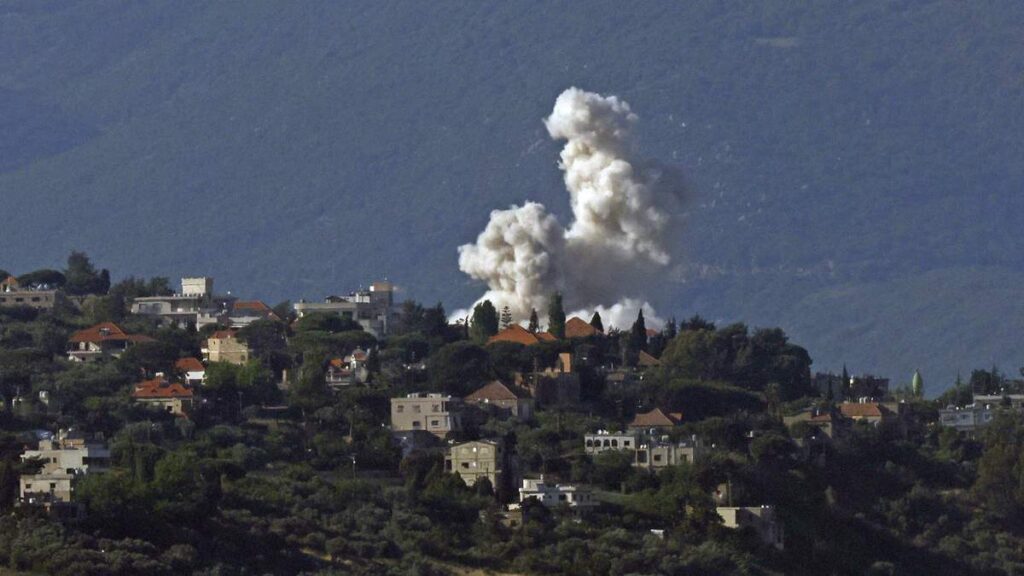
Israel and Lebanon have reached a ceasefire agreement, as announced in a joint statement by the United States on Monday (June 1). The agreement stipulates that the ceasefire will hold as long as the militant group Hezbollah halts its attacks. However, Hezbollah, which has been engaged in conflict with Israeli forces following Israel’s invasion of southern Lebanon, was not directly involved in the negotiations.
The ongoing conflict has been a significant issue in negotiations between the U.S. and Iran, with Iran demanding that Israel cease its military strikes in Lebanon before a peace deal can be finalized. According to BBC News, Israeli Prime Minister Benjamin Netanyahu confirmed the ceasefire but warned that strikes on Beirut would continue if Hezbollah did not stop its attacks on Israeli cities and civilians.
Despite the ceasefire, violence persisted, with Hezbollah targeting Israeli tanks in southern Lebanon and Israel intercepting projectiles fired from Lebanon. The PBS NewsHour reported that nearly 40 people were wounded in recent Israeli strikes near Tyre, Lebanon.
The ceasefire agreement is part of broader efforts to de-escalate tensions in the region, with the U.S. attempting to separate events in Lebanon from its negotiations with Iran. The U.S. has proposed a plan for gradual de-escalation, which was discussed with both Israeli and Lebanese leaders. Meanwhile, NPR noted that Iran remains skeptical of U.S. intentions, citing a lack of trust as a major obstacle in negotiations.
As the ceasefire holds, the international community remains watchful, hoping for a lasting peace between Israel and Lebanon, while also addressing the broader implications for U.S.-Iran relations.