
If Estonia’s annual art market turnover is estimated at approximately €18–20 million, auctions make up a significant share of it. This spring’s auctions generated nearly €3 million in art sales, but more telling than record prices is which artists attract capital, attention, and trust in the Estonian art market.
Auctions provide a good snapshot of the Estonian art market and its current preferences. It is interesting to see which artists consistently come to market, whose works buyers are willing to compete for, and which names manage to retain value even in changing economic conditions.
The spring auctions of 2026 revealed several key trends at once. Pre-war classics continue to serve as the market’s foundation, but artists from the 1970s–1980s are increasingly setting the tone, and living artists are becoming ever more visible. The most important question, therefore, is not which artwork sold for the highest price, but which artists have earned sustained trust.
Which auction houses performed best?
Across the five largest Estonian secondary-market auction houses — Haus Gallery, Vaal Gallery, E-Kunstisalong, Allee Gallery, and Gallery Vernissage — nearly €3 million worth of art was sold in the spring 2026 auctions. The total hammer price reached €2.97 million, with buyer’s premiums added on top.
The analysis is based on results published on auction house websites immediately after the auctions ended. Later sales, reservations, and data updates are not included.
“Pre-war classics continue to serve as the market’s foundation, but artists from the 1970s–1980s are increasingly setting the tone.”
Allee Gallery delivered the strongest overall performance this year, combining large volume, a high sell-through rate, and several of the season’s biggest sales. Its spring auction featured 235 works — more than any other Estonian auction house this season. Of these, 173 sold (74 percent), the highest sell-through rate of the spring. Total hammer sales reached €1.23 million, accounting for about 41% of the total analyzed turnover.
The next tier was led by Gallery Vernissage and Haus Gallery. Vernissage reached €844,100 in sales with a 57 percent sell-through rate. Haus Gallery totaled €716,650 in hammer prices. Although Haus sold more works in absolute terms, its sell-through rate stood at 52 percent.
Vaal and E-Kunstisalong seeking their place
Vaal Gallery and E-Kunstisalong represent the smaller segment of the spring auction market. Vaal posted a 34 percent sell-through rate, while E-Kunstisalong reached 45 percent.
Although their revenues were significantly lower than those of the top three, both play important roles in the Estonian art market. E-Kunstisalong remains closely tied to collectors in Tartu and operates steadily within its established niche. Vaal Gallery, meanwhile, appears to be increasingly positioning itself between the traditional auction market and contemporary art, offering both classical and newer works.
This distribution reflects the current structure of the Estonian art market: while a few larger auction houses drive the market, smaller players also shape collector preferences and bring new artists and works to market.
Top-priced works of the spring auctions
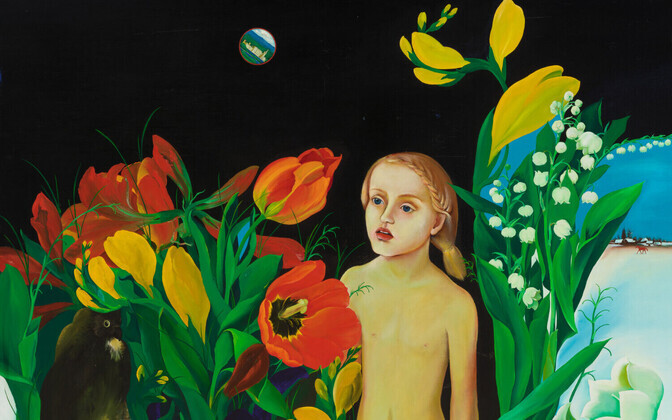
Among the highest-priced sales were Adamson-Eric’s “Sirelid” (“Lilacs”) and Malle Leis’s “Sandra ja Château de Tarascon”, both reaching €100,000 hammer prices. While Adamson-Eric’s result fits within established top-tier pricing, Leis’s result stands out as more exceptional.
Rather than viewing Leis’s result simply as a record, it highlights the importance of standout individual works. “Sandra ja Château de Tarascon” is among her most significant pieces and has been exhibited in the Baltic art history exhibition “Out of the Frames: Leis, Tabaka, Rožanskaitė”, shown in Tallinn, Vilnius, and Riga. The value of such works is shaped not only by the artist’s name but also by art-historical relevance, exhibition history, and cultural meaning.
Olev Subbi’s “Kauged metsad” (“Distant Forests”) ranked third, rising from €44,000 to €84,000 — one of the biggest increases of the season and a confirmation of Subbi’s strong market position.
 Evald Okas Museum opens in Haapsalu. Source: Juhan Hepner/ERR
Which names drive the market?
One of the most interesting questions is which artists auction houses choose to offer. Typically, these are artists whose works are expected not only to sell but to provoke competition among buyers. As such, this list can be seen as a “trust index” of the Estonian art market.
Eduard Wiiralt remained dominant, with 28 works featured across the five major auction houses. Of these, 21 sold (75%), generating €219,100 in hammer prices.
Wiiralt was followed by Kaljo Põllu (20 works), Evald Okas (19), Malle Leis (19), and Jüri Arrak (17). The top ten also included Leonhard Lapin, Richard Uutmaa, Valdur Ohakas, Endel Kõks, and Alo Hoidre.
Notably, this list spans multiple generations. Pre-war classics, postwar modernists, and later artists coexist in the auction market. These are not isolated successes but artists with sustained activity and broad interest from both collectors and investors.
Noteworthy too are artists with perfect sell-through: all works by Richard Sagrits and Toomas Vint sold. Vint’s seven works alone generated over €80,000.
Wiiralt as the gold standard
Wiiralt once again achieved the highest total hammer sales. Of 28 works offered, 21 sold, totaling €219,100. Major sales included “Kabaree” (“Cabaret”), “Lamav tiiger” (“Recumbent Tiger”), and “Mon Paris”, all showing strong price growth. “Kabaree” saw the largest increase, rising from €20,000 to €61,500.
Nearly a century after their creation, Wiiralt’s works function as a gold standard in the Estonian art market.
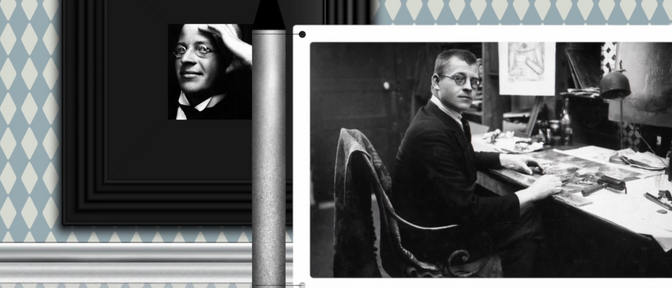 Eduard Wiiralt Autor/allikas: ERR
The special status of printmaking in Estonia
Wiiralt’s success also highlights a distinctive feature of the Estonian art market. In the international art market, printmaking is often treated as a separate collecting category and tends to receive less value and attention than painting. Even in the case of world-famous artists such as Salvador Dalí, Joan Miró, or Pablo Picasso, prints are often seen as a more accessible entry point into an artist’s work, requiring a smaller investment than paintings.
In Estonia, however, the situation is somewhat different. Among the most frequently sold artists and those generating the highest turnover are consistently figures associated with printmaking, and prints are regarded as a strong, independent collecting category. The roots of this tradition lie at the core of Estonian art history, with Eduard Wiiralt as its symbolic center.
Wiiralt’s influence extends far beyond his own market performance. Several generations of Estonian printmakers have had to position themselves in relation to his legacy, and it is largely through Wiiralt that Estonian printmaking has achieved international visibility. Today’s strong results for artists such as Kaljo Põllu, Leonhard Lapin, Alo Hoidre, and other Estonian printmakers are supported in part by this historical foundation.
The strong position of Kaljo Põllu
Against this backdrop, Kaljo Põllu’s strong performance at the spring auctions is no coincidence. Põllu is one of the central figures of postwar innovation in Estonian art, and the popularity of his mythological and national identity–focused series is clearly reflected in today’s market.
“Based on the spring auction results, Kaljo Põllu can be considered one of the most stable and in-demand names in the Estonian art market.”
He ranked second among the most frequently offered artists, with 20 works, and was one of the few artists whose name consistently appeared among both the largest percentage and absolute price increases. This points to broad-based interest in his entire body of work, rather than success limited to a few individual pieces.
Particularly notable were “Kõikehõlmav Jumala keha” (“All-Encompassing Body of God”), which saw a 486% price increase, and “Maa õnnistamine” (“Blessing of the Earth”), which rose by 384%. Based on the spring auction results, Põllu can be considered one of the most stable and in-demand names in the Estonian art market.
The strength of postwar classics is further confirmed by Evald Okas’s results. Of his 19 works brought to auction, 15 found buyers, with total hammer prices exceeding €70,000. This demonstrates that collector interest in the classics of postwar Estonian art remains strong.
 “Recumbent Tiger” by Estonian classic Eduard Wiiralt. Source: Reproduction
The biggest winner of the spring: Malle Leis
If one were to identify a symbolic winner of the 2026 spring auctions, it would most likely be Malle Leis, who belongs to the generation of artists that emerged in the 1960s–1970s. Nineteen of her works came to auction, with total hammer prices reaching nearly €160,000.
Even more important than any single record sale, however, is Leis’s consistency. She is among the few artists whose works appear at auction regularly, reliably find buyers, and whose price levels have shown a clear upward trend in recent years.
After years of steady price growth, it is now fair to say that Malle Leis ranks among the strongest names in the Estonian auction market. The €100,000 result for “Sandra ja Château de Tarascon” aligns with the recent record sales of her contemporary, Tiit Pääsuke, and confirms that the generation of artists who emerged in the 1960s–1970s has become one of the strongest and most sought-after segments of the Estonian art market.
Heitti Polli’s surprising rise
Heitti Polli can be considered one of the biggest surprises of the spring. Only six of his works came to auction, but five of them found buyers, with total hammer sales reaching €118,000. Three of Polli’s works ranked among the twenty most expensive sales of the season and also stood out for their strong price increases. The top result was “Kased” (“Birches”), sold at the Vernissage auction, which rose from €12,000 to €45,000. It was followed by “Tallinna sadam” (“Port of Tallinn”), €31,000 and “Tallinn”, €26,000.
Unlike Malle Leis, Tiit Pääsuke, or Jüri Arrak, Heitti Polli has not previously been considered one of the most established top-tier names in the Estonian auction market. However, this year’s results indicate a clear increase in demand and a possible market re-evaluation. Whether this reflects a lasting trend or the influence of a few strong buyers will likely become clear in the coming auction seasons.
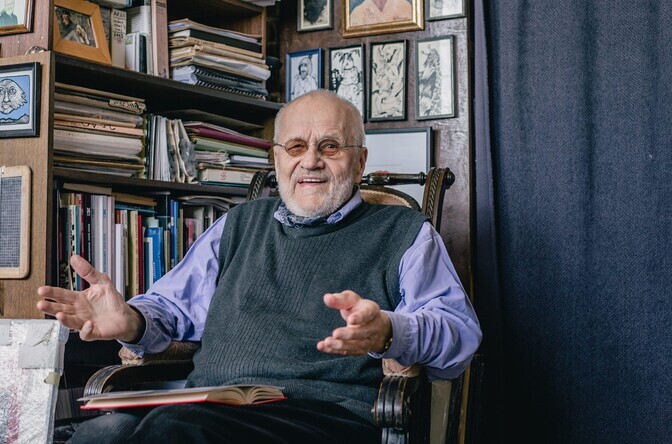 Jüri Arrak. Source: Eesi Raa
The rise of 1970s–1980s art
Across time periods, prewar classics once again proved the most successful segment. A total of 41 works from the 1930s came to auction, of which 29 found buyers, representing a 70.7% sell-through rate. These works generated more than €380,000 in total sales, with an average price close to €13,000. The high sell-through rate, strong price levels, and consistent demand confirm that prewar classics remain the foundation of the Estonian art market.
At the same time, another important trend emerged from the spring auctions. Whereas a decade ago the highest-priced sales were almost exclusively dominated by prewar classics and major figures of modernism, attention is now increasingly shifting toward art from the 1970s–1980s. Many of the season’s strongest results came from this period, including works by Malle Leis, Kaljo Põllu, Olev Subbi, Heitti Polli, Tiit Pääsuke, and Jüri Arrak.
This suggests that Estonian art from the 1970s–1980s has become one of the most desirable segments of the market. While prewar classics continue to offer stability, art from this later period appears to be where the most active reassessment of value is currently taking place.
“Among the largest price increases were also several notable examples of contemporary art.”
The greatest level of buyer interest, however, was seen in works created in the 2020s, roughly two-thirds of which found buyers. This confirms another key takeaway from the spring auctions: demand for living artists is steadily increasing, and contemporary art is becoming an ever more important part of the Estonian art market.
Among the largest price increases were also several notable examples of contemporary art. At the Vernissage auction, Henrik Hürden’s 2026 work “Pühapaik nurjatutele” (“Sanctuary for the Corrupt”) rose from €2,400 to €22,000 — an increase of as much as 817 percent. Strong results were also achieved by Indrek Aava, Andro Kööp, Marko Mäetamm, and Toomas Vint. This suggests that works by living artists are no longer attracting attention solely through percentage price gains, but are increasingly able to compete in terms of substantial sales figures as well.
What did the spring auctions really show?
The 2026 spring auctions demonstrated that the Estonian art market is no longer sharply divided between classical and contemporary art. Pre-war classics remain the stable foundation, but attention is shifting toward later 20th-century and contemporary works.
If classical art provides stability, these emerging segments are where the most active revaluation is taking place—and likely where future price records will emerge.
Ultimately, what matters most is not record-breaking prices for individual works, but which artists generate sustained demand. The results show that collectors increasingly value artists whose work combines artistic quality with a strong place in Estonia’s cultural and art-historical memory.
Data for this article were compiled using Claude AI (Anthropic).
—