
At the end of August, Icelanders will decide in a referendum whether to open talks with the EU on accession. The previous attempt came in 2009, in the aftermath of the international financial crisis that had struck Iceland the year before and led to the collapse of the country’s three largest banks.
Supporters of EU membership viewed the economic turmoil and public disillusionment as a window of opportunity to advance Iceland’s accession to the bloc, despite the challenging circumstances.
Thórdís Kolbrún Gylfadóttir, former Icelandic foreign minister, discusses how Iceland is adapting to new challenges in a rapidly changing geopolitical environment.
On 29 August Icelanders will hold a referendum on whether to reopen accession negotiations with the EU. For many years, the EU was an economic partner and the discussions were held primarily on economic terms. Has the situation changed and become more of a geopolitical debate?
It is not much part of the debate, at least not yet. In my opinion it should be more about geopolitical developments in addition to economics. There are a lot of changes ahead of us, a lot of uncertainty on all fronts.
The geopolitical tension and the changes in the US with the current administration combine in a way the economic debate in a broader sense with security and defence. Everything is very much mingled. If you think about it, on the economic side, pressures from other countries, like threatening tariffs, are broader than they were 15 years ago.
Why isn’t it more of a geopolitical question yet ?
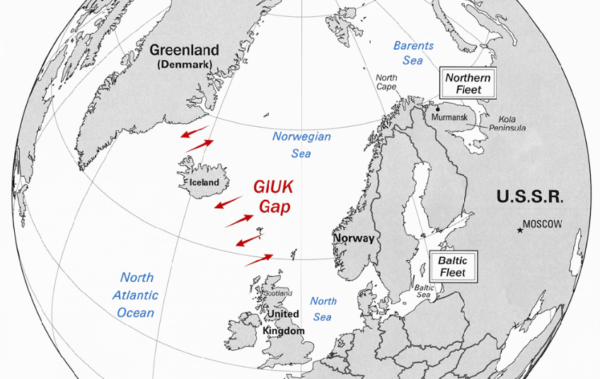
The debate in general on security and defence is less in Iceland than in our neighbouring countries. Part of that is due to natural reasons – we are further away from the main threat, Russia, and we are an island. Also, even as a founding member of Nato, we have never had an army – it is not as much in our DNA or culture as in other countries. In that sense, I think that we are somehow more immune to what is happening around us.
The debate in Iceland being different and more limited, I understand it up to a point because when we talk about security and defence, it is not only about full scale war or aggression any more. There are also other developments and challenges like hybrid threats.
If we were to see further escalation on European soil, it would have an effect on us. Not in the way that we would be attacked but conflict at sea or any form of rupture would have an effect on us. We need to digest what is happening, and we need to have a real debate about what that could mean for us and how we can secure ourselves best – our way of life but also our economy.
In a Europe shaped by war at its borders what would Iceland as a Nato member gain politically from joining the EU table?
Basically, what there is for Iceland to gain from the EU depends on who you ask. Big leading countries in the European Union have to manage with uncertainty in domestic politics. There is a lot of debate about the Draghi report and other work on bureaucracy, competitiveness… that is quite a big part of the debate in Iceland.
Within the European Union you see both: in decisions and actions, you see unity but also the challenges that 27 countries bring to the table as sovereign, independent states with their own example of foreign policy.
The decision from our government was to put in a referendum the question whether Iceland should negotiate with the EU. It means that the government is saying it depends on the outcome of it.
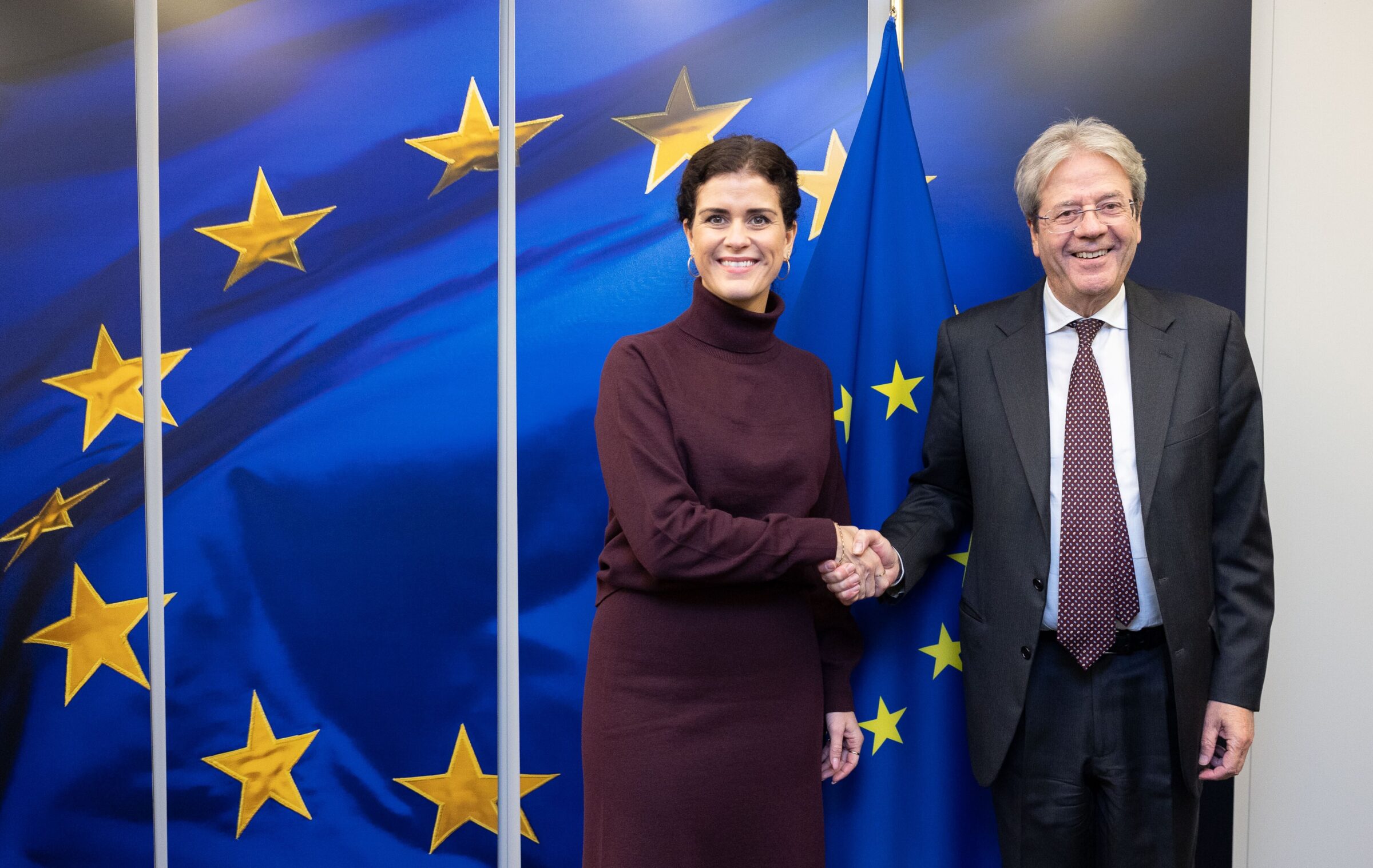 Former EU economy commissioner Paolo Gentiloni meeting Thórdís Kolbrún Reykfjörd Gylfadóttir, November 2023. Source: European Union, EC – Audiovisual Service.
It poses the questions of what would be the wins and what would be the losses. And that really depends because the stakes are in the hands of the general public – they will make the decision about next steps. You can have a debate with someone that says the fundamental question for me is 100 percent control on fisheries…
We are an extremely export-driven economy. We are rich and prosperous because we sell goods and services to foreigners. It means we need all these things to function well – if there would be any big developments or changes, that could have an effect on us.
Many Icelanders remain concerned about sovereignty, particularly over fisheries. Fishermen and coastal communities have long viewed control over the fishery industry as a cornerstone of Iceland’s independence and economic success. What would you say to voters who fear deeper European integration and see it as a threat to Iceland’s control over the fishery industry?
This is one of the key questions. It really depends on negotiations and the will of the European Union to reach out to Iceland on that front. This is both a practical and an economic question. But it is also a cultural question because our quota system makes our sustainable fisheries what they are. We do not subsidise this sector in Iceland, which is very different from other OECD countries. It also means that people [Icelanders] say: “We need to keep full control.”
Fishery is part of our identity, our history, our culture, and therefore I think for many people, this would be the biggest or in the top three of biggest questions that would need to be tackled.
What would be the other two then?
The first, as I said, would be on fishery and all the resources. We have a lot of green energy. As we are an isolated system, we don’t have inter-connectors, so we are very different from Norway, for example.