
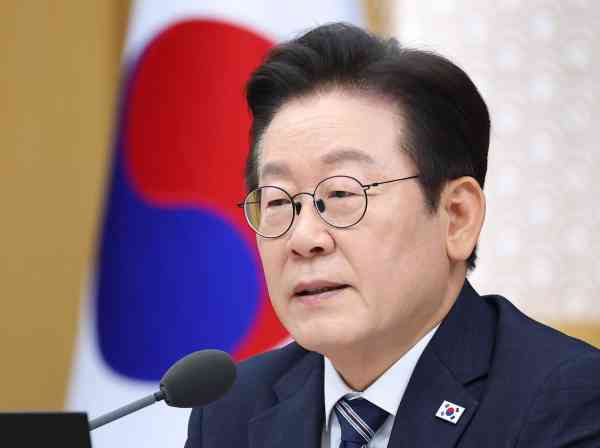
Photo : YONHAP News
Anchor: Thursday marked the first anniversary of President Lee Jae Myung’s inauguration. Over the past year, Lee has focused on restoring political stability and promoting national unity while pursuing a pragmatic, national interest-centered foreign policy. Analysts say his government has produced tangible gains in diplomacy, exports and the stock market, despite lingering challenges such as inter-Korean relations, inflation and political polarization. Today we take a look back at Lee’s first year in office.
Lee Bokyung reports.
Report: President Lee Jae Myung took office on June 4, 2025, without a transition team after winning a snap election triggered by the fallout from former President Yoon Suk Yeol’s martial law declaration and subsequent impeachment.
Early in his term, Lee’s administration faced mounting pressure from U.S. tariffs but succeeded in lowering a proposed tariff from 25 percent to 15 percent following lengthy negotiations.
Relations with China were restored through reciprocal state visits, while summit diplomacy with Japan helped reinforce bilateral cooperation.
Relations with North Korea, however, remain largely frozen as Pyongyang maintains its “two hostile states” stance despite Seoul’s conciliatory efforts and the halting of cross-border propaganda broadcasts.
Domestically, Lee has actively engaged with the public through livestreamed Cabinet meetings, town halls and social media communication.
The Lee administration has also overseen notable gains in exports and the stock market.
South Korea’s exports reached a record 709-point-three billion dollars last year, driven by a strong recovery in the semiconductor sector.
The Korea Composite Stock Price Index climbed above eight-thousand for the first time, far surpassing the target of five-thousand that Lee envisioned in his campaign pledge.
While the administration vowed to crack down on real estate speculation and has consistently reflected that goal in its policies, housing prices and rental costs recently resumed their upward trend, particularly in the Greater Seoul area.
Persistent high inflation, a weak won and the widening economic divide are seen as key challenges that could shape the success or failure of Lee’s remaining four years in office.
Observers say the course of the Lee administration’s second year hinges on three factors: the results of Wednesday’s local elections, the future relationship between the presidential office and the ruling Democratic Party after its August convention, and the prospects for bipartisan cooperation.
Lee Bokyung, KBS World Radio News.