
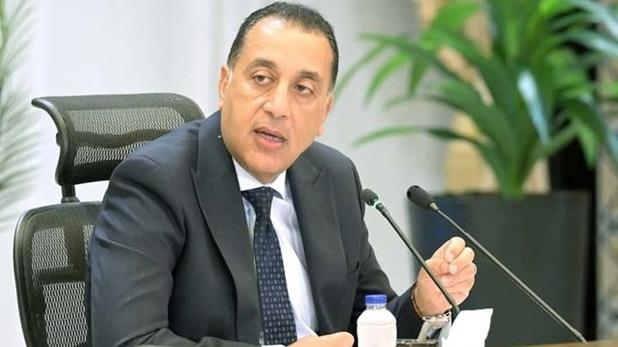
Prime Minister Moustafa Madbouly directed the continued enhancement and diversification of communication channels with citizens to ensure prompt responses to complaints, requests, distress calls and inquiries, as part of the government’s efforts to improve the quality of public services.
The directive came as Madbouly reviewed the performance of the Cabinet’s Unified Government Complaints System and affiliated government entities in May, based on a detailed report prepared by Tarek El-Refaie, Assistant Secretary-General of the Cabinet for Complaints and Citizen Satisfaction.
According to the report, the system received and processed 206,000 complaints, requests and inquiries during May. After review and verification, 172,000 complaints and requests, representing 83.5 percent of the total, were referred to the relevant authorities for action and response. Around 33,000 complaints were archived in accordance with established regulations, while the review of approximately 1,000 complaints and requests is still underway.
El-Refaie noted that ministries processed 64 percent of all grievances referred to government bodies. Out of these, nearly 90 percent were directed at just nine ministries: Interior; Supply and Internal Trade; Housing; Health; Electricity; Social Solidarity; Communications; Education; and Petroleum.
Several ministries recorded distinguished performance and rapid response rates, including Awqaf, Petroleum and Mineral Resources, Electricity and Renewable Energy, Interior, Social Solidarity, Foreign Affairs and Expatriates, Health and Population, Tourism and Antiquities, Youth and Sports, Education and Technical Education, Local Development and Environment and Labor.
Governorates handled 22 percent of all complaints directed to government entities. Cairo, Alexandria, Giza, Sharqia, Dakahlia, Qalyubia, Beheira, Gharbia, and Monufia received 77 percent of the complaints submitted to the governorates. Several governorates achieved high completion rates, notably Port Said, Ismailia, Qena, Suez, Aswan, South Sinai, Fayoum, Sohag, Matrouh, Minya and Luxor.
Government authorities and universities electronically linked to the system handled 14 percent of complaints. High response rates were recorded by the Central Agency for Organization and Administration, the General Authority for Healthcare, the Universal Health Insurance Authority, the Consumer Protection Agency, the Engineering Authority, the Egyptian Drug Authority, Al-Azhar and the National Food Safety Authority. Universities including Damanhour, Alexandria, Sohag, Cairo, Benha, Beni Suef, Ain Shams and Aswan also achieved strong performance.
The Central Bank of Egypt continued its supervisory and coordinating role by directing banking-related complaints to the relevant banks and branches for examination and resolution, while informing citizens of the outcomes and measures taken.
In the healthcare sector, the system received nearly 13,000 complaints and distress calls. Authorities resolved 3,364 urgent medical complaints requiring immediate intervention, including the provision of intensive care beds, critical surgeries, dialysis services, blood and plasma supplies and infant formula. They also addressed 1,645 complaints related to healthcare service quality, responded to 1,616 requests under the presidential initiative to eliminate surgical waiting lists and finalized 1,598 requests concerning state-funded treatment and health insurance services.
Regarding market regulation and commodity availability, the Ministry of Supply examined 21,000 complaints concerning market control and the availability of essential goods. Responses included resolving 9,441 complaints related to ration cards, answering 403 inquiries about price fluctuations and shortages and addressing 219 complaints concerning the weight and quality of subsidized bread.
Refaie concluded that the Unified Government Complaints System continues to play a vital role in serving citizens by receiving complaints and inquiries, referring them to competent authorities, monitoring their resolution and providing electronic responses. These efforts support the state’s broader objective of improving public services, enhancing government responsiveness, reducing citizens’ burdens and minimizing the need for repeated visits to government offices.
MENA

Listen to the word paragraph