
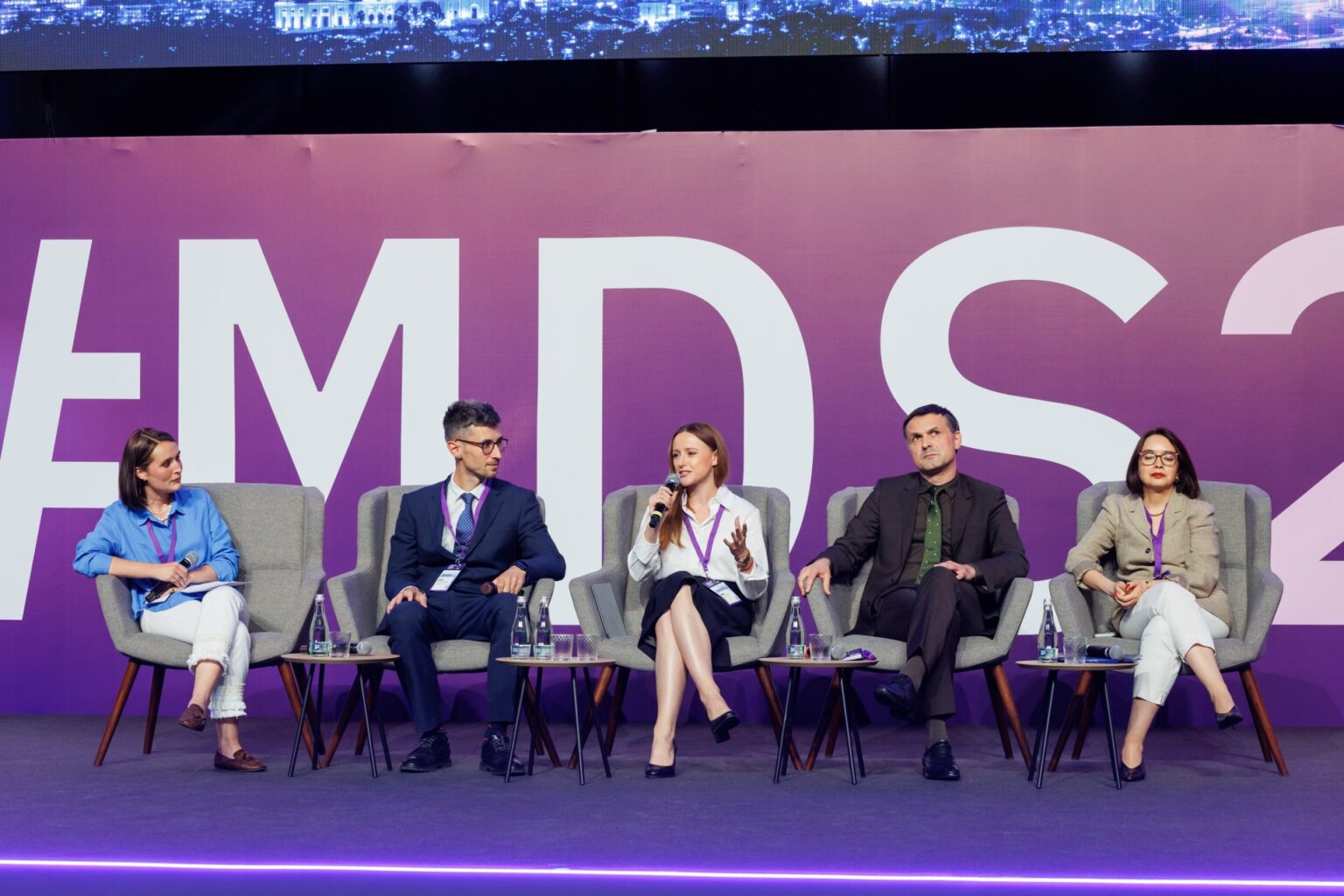
Moldova will continue modernizing the energy sector by implementing smart meters, that will enable remote reading of consumption, accurate billing and efficient energy management. The Energy Ministry’s vision for the future of energy services for citizens has been presented by the Ministry’s Secretary of State, Carolina Novac, at the Moldova Digital Summit 2026.
According to the official, in five years, checking an energy invoice will become a fully digital, transparent and interactive experience. Consumers will be able to monitor their energy consumption in real time, receive personalized recommendations for saving energy and have quick access to support services and assistance measures.
Smart meters are the key element of the digital transformation in the energy sector and mark the transition from a system based on estimates and fragmented information to one built on accurate data, transparency and rapid response, Novac underlined.
“For citizens, this means fewer estimated invoices, more transparency and the possibility to manage their consumption more efficiently. For the business environment, it means increased predictability and access to modern energy services, and for the energy system – better data for forecasting, balancing and investment planning,” said Carolina Novac.

The state secretary said that the new meters will allow for rapid identification of losses in the grid and a more accurate understanding of consumption behavior, providing authorities and operators with more effective tools for managing the energy system.
During the event, Carolina Novac also presented other digitalization projects under development, including the National Energy Management Platform and the National Information System for Energy Efficiency (SINEE), which will enable real-time monitoring of energy consumption and production, the integration of renewable sources and investment planning based on data.
“Together, these tools form the data backbone of the energy sector. While the smart metering system shows us how much is consumed, the Register shows us where consumption takes place, the Platform helps us manage energy strategically, and SINEE shows us how we can turn data into real energy efficiency and measurable results,” the official said.
According to the Energy Ministry, the goal is that, in the coming years, consumers will be able to track their energy consumption in real time, receive personalized recommendations for saving and access digitally all services related to energy supply.
Carolina Novac also drew attention to the fact that, as energy infrastructure becomes increasingly digitalized, cybersecurity must remain a priority, since digital resilience is directly linked to the country’s energy security.
The state secretary specified that the Energy Ministry was implementing a string of initiatives that will represent the digital foundation of the energy sector, including smart metering, the National Register of Consumption Points, the National Energy Management Platform and the National Information System for Energy Efficiency (SINEE).
Carolina Novac took part in the Moldova Digital Summit 2026, in the panel titled, Data as an Infrastructure Layer: Rethinking How Government Serves Citizens. At the event, she presented the Energy Ministry’s vision regarding the digitalization of the energy sector and the strategic role of data in strengthening energy security and modernizing public services.