
Across rural Japan, houses stand empty and the rice fields beside them sit untended. Whole villages that once held hundreds now count their residents in dozens, and many of those who remain are well into old age.
That empty land does not stay empty for long. Something is moving in to take the space people leave behind, and a new set of projections says it will reach almost every corner of the country within one human generation.
Reading the spread

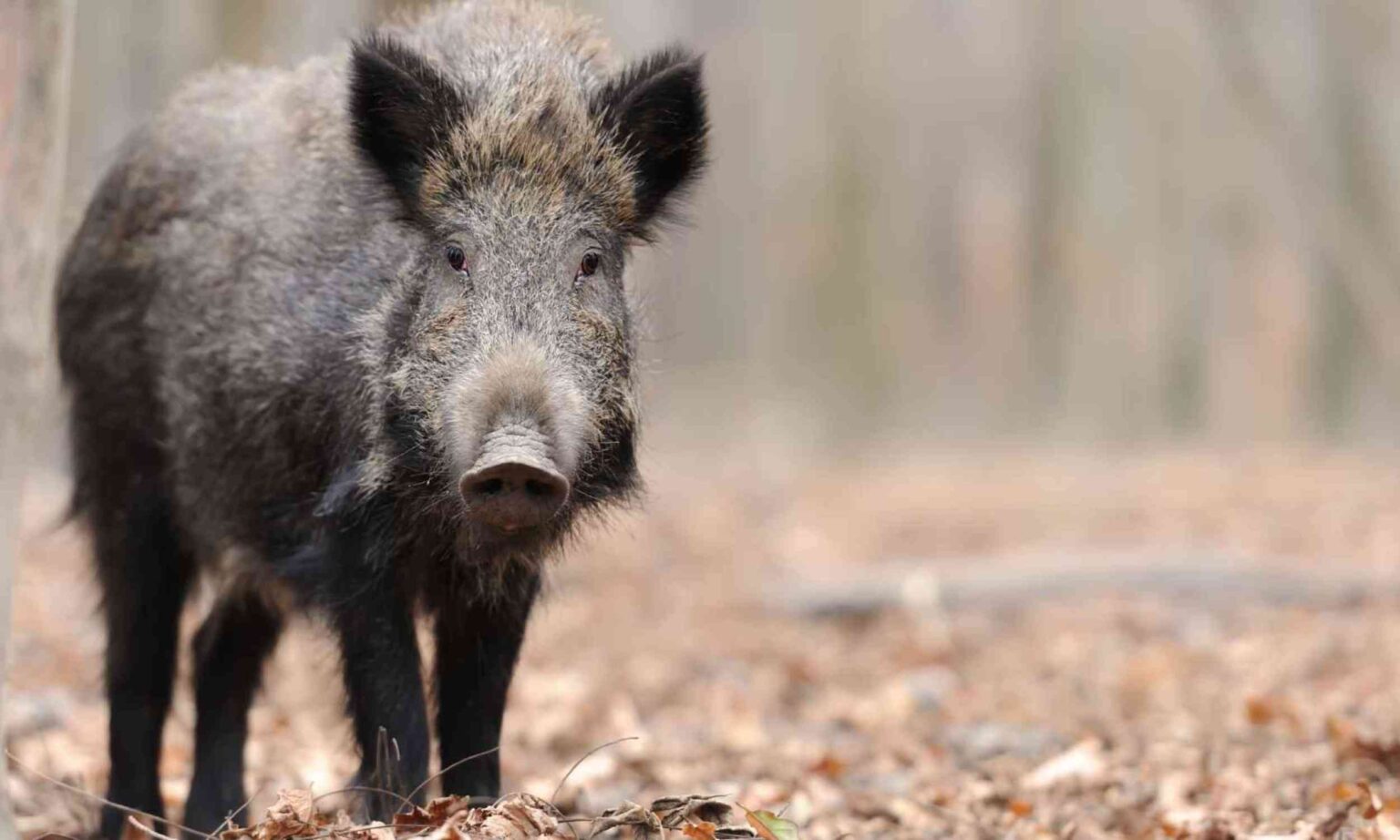
The animals are sika deer and wild boar, and the forecast comes from a team led by Takahiro Morosawa, a researcher at the Japan Wildlife Research Center (JWRC). They set out to learn what pushes both species across the map.
Climate and terrain were the obvious suspects. Yet the strongest signal in the data was plainer than that. Where deer and boar showed up next came down mostly to how close they already lived.
Warming winters and changing land use played a part, but a secondary one. The deer and boar are simply good at walking into new ground, and running forward, the model spreads them across most of Japan by 2050.
Two different animals
For all they share, the two animals behave differently. Sika deer keep their distance from people, thinning out where towns crowd the map, favoring forest and hill country.
Wild boar play by looser rules. They settle into places people already claimed, pushing into suburb edges and built-up districts that deer avoid. Nerve, more than habitat, guides them.
That split shows up in the forecasts. Deer fill the forested interior while skirting the crowded Kanto region around Tokyo. Boar, by contrast, are expected to creep into those built-up zones too.
As people leave
The human story sits underneath all of it. Japan’s population has been falling for years, and the decline cuts deepest in the countryside, where the young move to cities and the old stay behind.
As people go, the pressures that held the animals back ease off. Idle fields become abandoned farmland that grows over and feeds passing wildlife. With fewer people in the countryside, there are fewer hunters in the hills.
In the model, crowded places held the animals off, the deer most of all, an effect tied to hunting pressure. A separate study of Japan’s large mammals linked their advance into human territory to that same loosening grip.
The snow puzzle
Snow has long set the limits for both animals. Deep winter cover starves them and blocks their movement, which kept the cold, snowy north off-limits for decades after the war.
As winters warm and the snow thins, that barrier is melting, and the animals are climbing into ground that once froze them out. Snow-tolerant conifers now shelter deer through winter in heavy-snow regions where none used to be seen.
For boar, snow’s role is murkier. Their short legs bog down in deep drifts, so how far north they climb depends on how much winters ease, a question the team leaves open. A 2016 paper had already tied thinning snow to the deer’s spread.
A long comeback
This return runs deeper than recent decades. In the prehistoric Jomon period, deer and boar ranged across Honshu, Japan’s main island, before centuries of hunting squeezed them into pockets.
Their numbers bottomed out around 1950, worn down by hunting more than weather or predators. Then the country replanted vast forests after World War II, and the animals found room to recover.
The rebound has been steep. Between 1978 and 2018 the deer’s range grew nearly threefold and the boar’s almost doubled, and both have pushed back into the snowy north they once abandoned.
Here to stay
To build the forecast, the team divided Japan into thousands of squares, each about 3 miles (5 kilometers) across, and tracked which held deer or boar in 1978, 2003, and 2014. Once the animals take ground, they almost never give it back.
Over that first stretch, deer vanished from fewer than 2% of their squares, and boar from around 6 percent. Such permanence stands out. An earlier projection put deer across 70% of the country by 2103, and this model pulls that nationwide spread forward by more than half a century.
The wild boar forecast breaks new ground on its own. No one had mapped where the species was likely to spread across Japan before this. It is a first for Japan and provides a forward look managers never had.
Planning for arrivals
More animals are expected across far more land. Deer and boar strip young trees and farm crops, and they cause crashes on rural roads. They also carry ticks and disease, a risk one study tied to rising deer numbers in Japan’s forests.
The work hands managers a head start. With a map of where deer and boar are likely to land, officials can aim hunting and raise fences before the animals arrive, instead of reacting after the damage is done.
For decades, the open question was whether snow or cities would halt the spread. This work answers it. Left alone, neither will halt the spread, and as rural Japan empties, the deer and boar look set to inherit much of the ground people leave behind.
The study is published in Scientific Reports.
—–
Like what you read? Subscribe to our newsletter for engaging articles, exclusive content, and the latest updates.
Check us out on EarthSnap , a free app brought to you by Eric Ralls and Earth.com.
—–