

Listen to this article
Estimated 4 minutes
The audio version of this article is generated by AI-based technology. Mispronunciations can occur. We are working with our partners to continually review and improve the results.
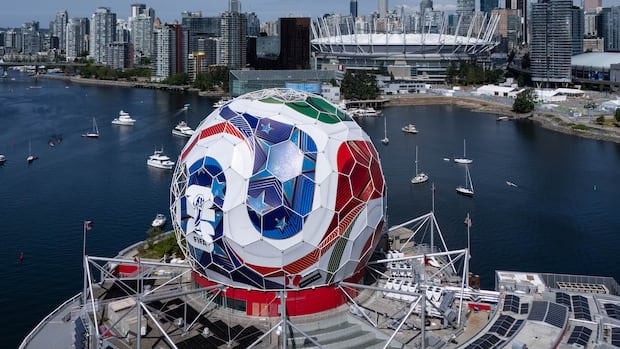
The giant soccer ball that has engulfed Science World’s signature dome is quickly becoming the showpiece image of the FIFA World Cup 2026 in Vancouver, certain to be shown on international broadcasts and in the social media posts of fans and non-fans alike.
But Adidas, supplier of the official World Cup Trionda ball that the installation is modelled after, isn’t paying a cent for what is essentially a giant, three-dimensional billboard, even though the company’s three stripe logo features prominently. Nor is FIFA, whose larger-than-life logo is also on the dome.
In a statement, Science World said the installation, entitled the Beautiful Dome, was paid for collaboratively by Destination Vancouver, Science World, British Columbia, the City of Vancouver and the Vancouver Hotel Destination Association.
It said both FIFA and Adidas Canada granted the group permission to use their branding.
Destination Vancouver is the primary funder of the installation, although according to CEO Royce Chwin the price tag is protected by a non-disclosure agreement.
“We are not funded by taxpayers,” said Chwin. “So, the taxpayer impact was very, very small.”
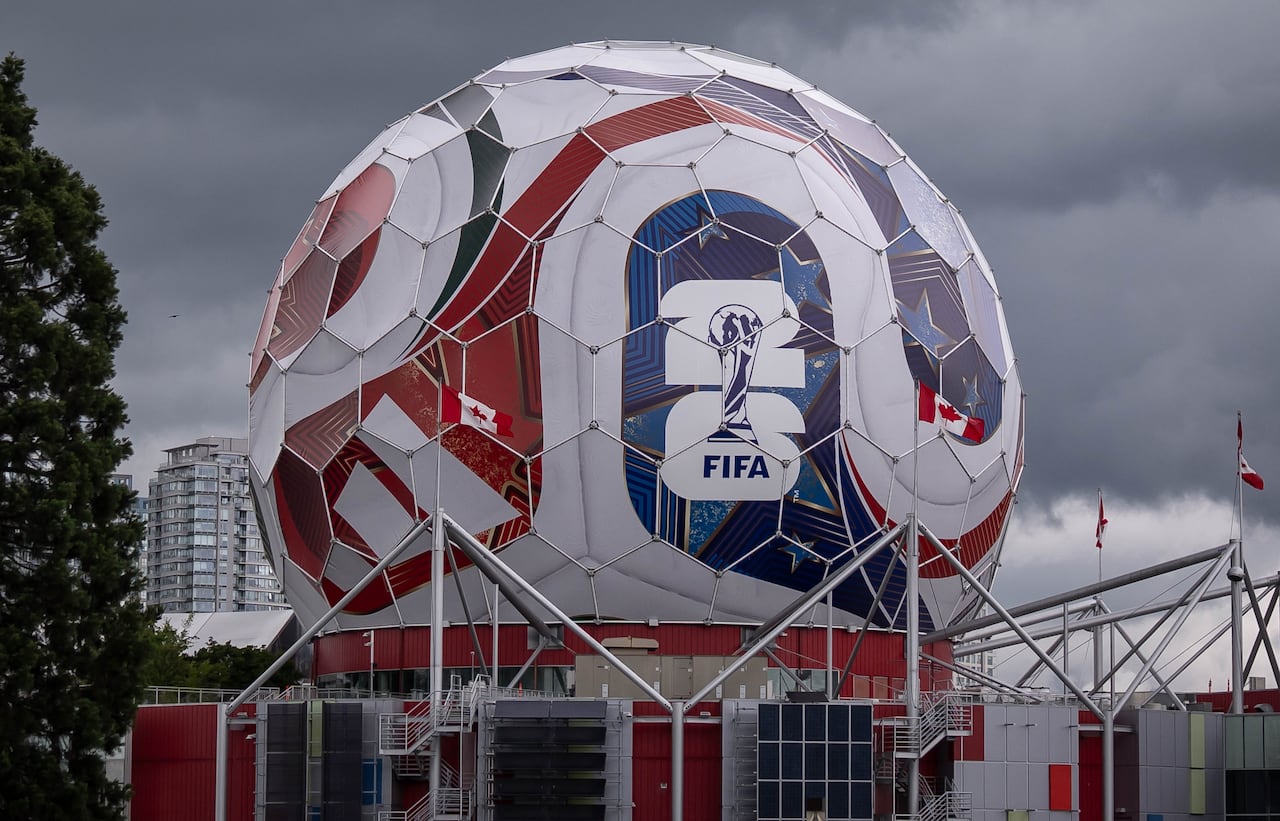
Adidas and FIFA branding figures prominently on the Beautiful Dome installation over Science World. (Ethan Cairns/CBC)
The province contributed $150,000 to the project, according to a statement from the Ministry Tourism, Arts, Culture and Sport.
“Transforming Science World into the TRIONDA™ match ball reimagines one of Vancouver’s most recognizable landmarks into a striking global symbol, positioning the city and British Columbia at the centre of the world’s largest sporting event,” said the ministry.
Iconic, sharable
Vancouver branding and marketing expert Trina Notman says the Science World conversion is the best creative execution of a marketing strategy in any of the 16 World Cup host cities.
“The star of that installation isn’t the Adidas logo. The star is the Vancouver skyline and the iconic landmark that is Science World,” said Notman, principal of West of Ordinary Strategies.
“If it was a plain soccer ball it wouldn’t have the shareability that it has as the official FIFA soccer ball,” she said.
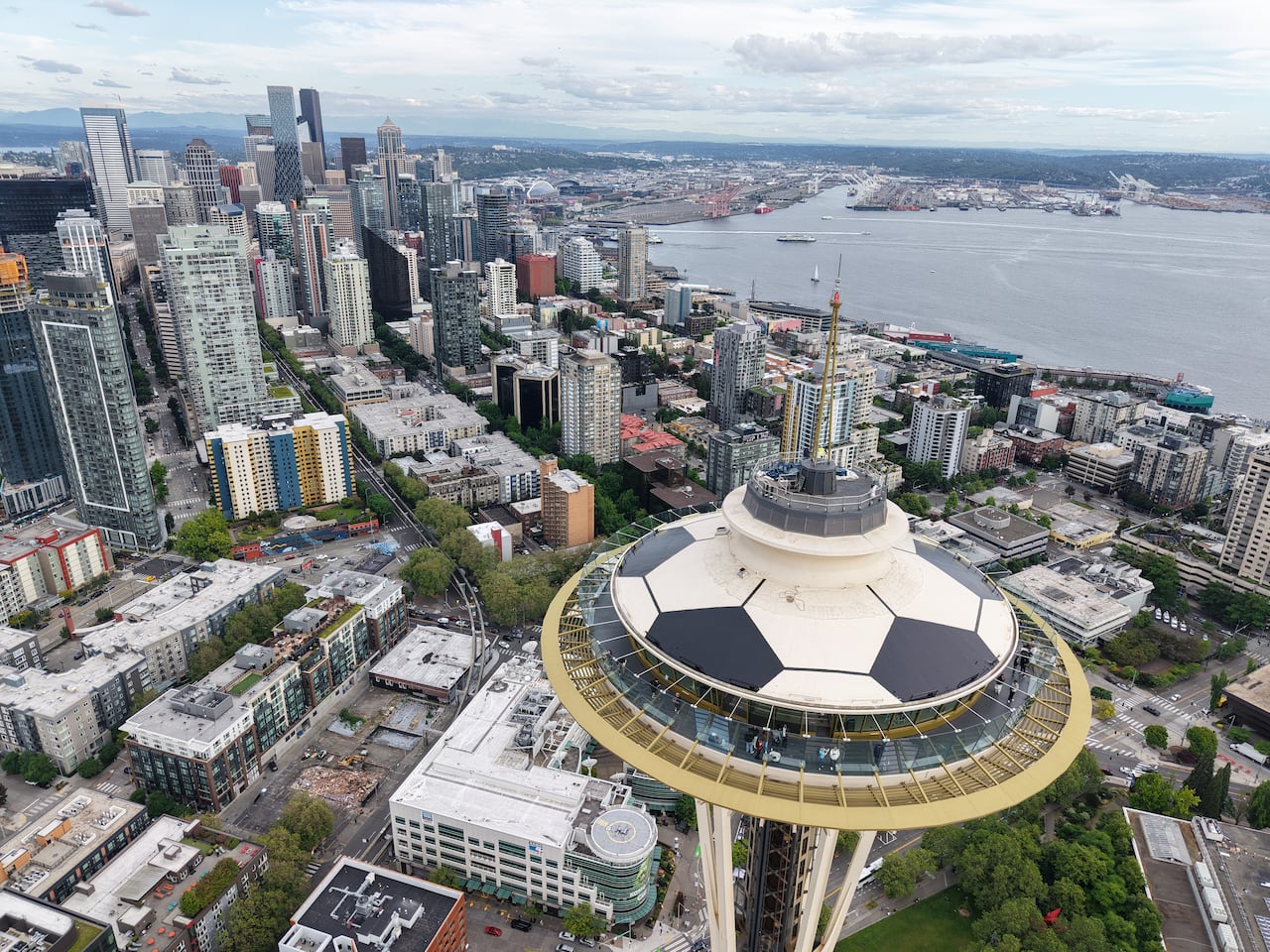
Seattle’s Space Needle has turned its roof into a giant, generic soccer ball to mark the arrival of the World Cup. (submitted by Space Needle)
In Seattle, one of that city’s most recognizable landmark has undergone a similar transformation. There, the curved roof of the Space Needle has been painted to look like a black-and-white soccer ball. Seattle is hosting six World Cup matches.
A Reuters photo of Vancouver’s Beautiful Dome has already been picked up by over 100 media outlets around the world, according to Notman. She predicts the reach of the installation will total 100 million impressions by the time the World Cup leaves town.
Adidas may be getting a freebie with Science World, but the head of Vancouver’s World Cup organizing committee says the company is providing support in other ways.
“One of the things about being one of 16 host cities is that like with any investment, a lot of the commercial affiliates have to figure out how to spread their money across the 16 cities,” said Jessie Adcock.
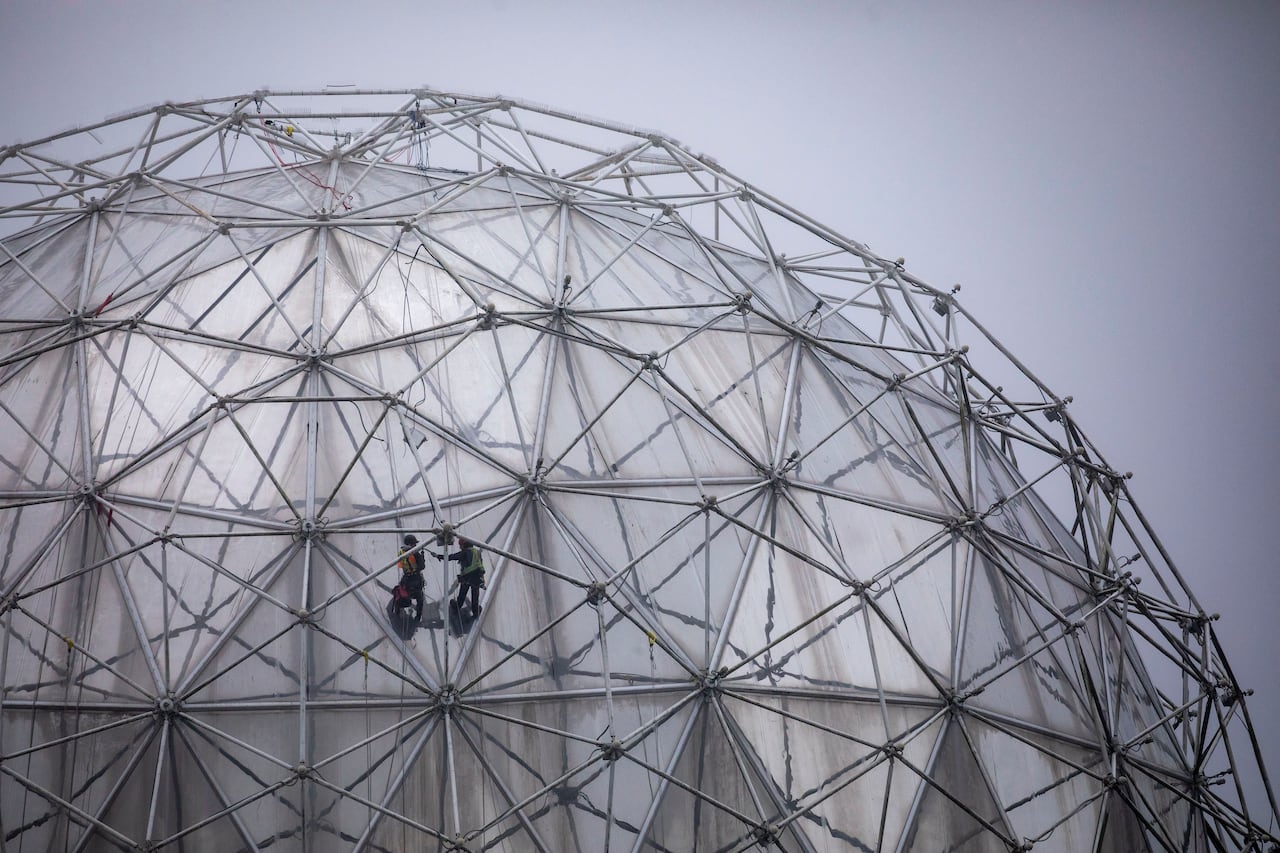
Workers are pictured repairing lights on the outside of the Science World dome in downtown Vancouver on Jan. 26, 2023. (Ben Nelms/CBC)
CBC reached out to Adidas but did not hear back by time of publication. Adidas is the second largest sportswear manufacturer in the world with over $28 billion US in revenue last year. FIFA expects to generate $13 billion in revenue from the 2026 World Cup.
Science World is a non-profit charity with two levels of government investment — the city owns the land and the province owns the geodesic dome and building.
In 2023, the province gave it $20 million to fund a long list of badly needed repairs. The following year the federal government kicked in another $19 million.
At the high end, estimates put the cost of Vancouver’s seven World Cup games at $729 million, an average price tag of $104 million per game.
The province projects that offsetting revenues, including $216 million from federal tax revenue, will result in a maximum net cost to B.C. taxpayers of $114 million.
The province has predicted the World Cup will drive one million additional out-of-province visitors and $1 billion in additional GDP to B.C.’s economy by 2031, although experts dispute those claims.