
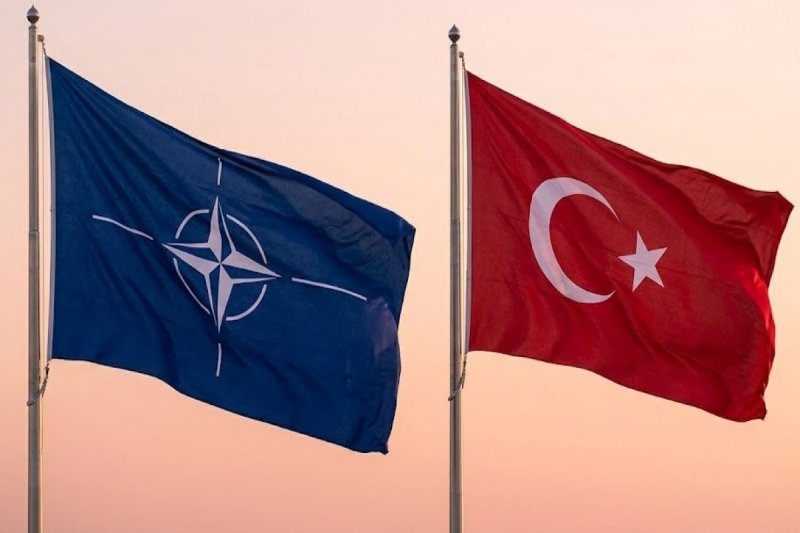
NATO to deploy another air defense system in Türkiye: Why is it important?
NATO’s decision to deploy an additional air defense system in Türkiye has once again drawn attention to the country’s strategic importance within the alliance and the growing emphasis on strengthening air and missile defense capabilities across NATO’s southern flank, News.az reports.
According to information released by the Turkish Ministry of National Defense, the Italian-operated SAMP/T air defense system will be deployed to the 3rd Main Jet Base in Konya. Turkish authorities stated that the primary objective is to enhance air defense capabilities and contribute to regional security.
The move comes at a time when security concerns across the Middle East, Eastern Mediterranean, Black Sea region, and broader Eurasia continue to evolve. Increasing missile proliferation, drone warfare, and regional conflicts have led NATO members to place greater emphasis on integrated air and missile defense systems.
But what exactly is the SAMP/T system, why is it being deployed in Konya, and what does this decision mean for Türkiye and NATO?
What Is the SAMP/T Air Defense System?
SAMP/T, short for Sol-Air Moyenne Portée/Terrestre, is one of Europe’s most advanced ground-based air defense systems. Developed jointly by France and Italy, it is designed to intercept and destroy a wide range of aerial threats.
The system is capable of engaging:
Unlike traditional anti-aircraft systems designed primarily against aircraft, SAMP/T is specifically built to counter modern threats that have become increasingly common in contemporary conflicts.
Its primary interceptor missile, known as Aster 30, can engage targets at significant distances and altitudes, providing protection for military bases, critical infrastructure, and population centers.
Military analysts often describe SAMP/T as Europe’s answer to some of the world’s most advanced air defense systems due to its ability to engage multiple targets simultaneously.
Why Is NATO Deploying the System in Konya?
Konya occupies a strategically important position in central Türkiye.
The city hosts the Turkish Air Force’s 3rd Main Jet Base, one of the country’s most important military aviation facilities. It has also played a significant role in NATO operations and multinational military exercises for years.
Several factors likely influenced NATO’s decision.
First, Konya serves as a critical hub for Turkish and NATO air operations. Protecting such a facility from potential missile, drone, or air attacks is considered a strategic priority.
Second, its central geographic location allows air defense assets deployed there to contribute to broader national air defense coverage. Unlike systems placed near a border, a deployment in central Türkiye can support layered defense across multiple regions.
Third, NATO continues to strengthen its southern defense architecture as regional security challenges become increasingly complex.
The deployment demonstrates NATO’s effort to maintain readiness against both traditional and emerging threats.
Why Does Türkiye Need Additional Air Defense Systems?
Türkiye faces one of the most challenging security environments among NATO member states.
The country is located at the intersection of Europe, the Middle East, the Caucasus, and the Black Sea region. As a result, developments in several neighboring regions can directly affect Turkish national security.
In recent years, conflicts around Türkiye have highlighted the growing importance of air defense systems.
Several trends have contributed to this reality:
-
The widespread use of drones in modern warfare
-
The growing availability of ballistic missiles
-
Increasing use of cruise missiles
-
Regional military modernization efforts
-
Rising concerns over critical infrastructure protection
Conflicts in Ukraine, the Middle East, and the South Caucasus have demonstrated how modern wars increasingly rely on missile and drone attacks.
As a result, countries across Europe and NATO have accelerated investments in integrated air defense networks.
The deployment of SAMP/T contributes to Türkiye’s broader effort to strengthen its air defense architecture against evolving threats.
How Does the SAMP/T Compare to Other Air Defense Systems?
The SAMP/T system is often compared with several other prominent air defense platforms around the world.
These include:
While each system serves different operational purposes, SAMP/T is particularly valued for its ability to engage both aircraft and ballistic missile threats.
Military experts note that modern air defense strategies increasingly rely on layered protection.
Rather than depending on a single system, countries typically combine multiple platforms with different ranges and capabilities.
In this context, SAMP/T represents an important component within NATO’s integrated air and missile defense structure.
Its deployment in Türkiye enhances the alliance’s ability to respond to a broad spectrum of aerial threats.
What Is NATO’s Integrated Air and Missile Defense Strategy?
NATO’s air defense concept has evolved significantly since the Cold War.
Originally focused on defending against conventional aircraft, NATO’s modern strategy now addresses a much wider range of threats.
Today’s challenges include:
-
Ballistic missiles
-
Cruise missiles
-
Armed drones
-
Swarm drone attacks
-
Hypersonic weapons
-
Advanced aircraft
To counter these threats, NATO has developed an integrated air and missile defense architecture that combines sensors, radars, command systems, and interceptor platforms from multiple member states.
The goal is to create a unified defense network capable of detecting, tracking, and neutralizing threats before they reach their targets.
Deployments such as the SAMP/T system in Konya contribute directly to this broader alliance strategy.
Does This Deployment Signal Growing Security Concerns?
The decision should be viewed within the broader context of evolving regional security dynamics.
Although Turkish authorities emphasized that the deployment is intended to strengthen air defense capabilities, it also reflects wider concerns shared across NATO.
The security environment surrounding Europe has become increasingly complex over the past decade.
The war in Ukraine, instability in parts of the Middle East, tensions in the Eastern Mediterranean, and the proliferation of advanced missile technologies have all influenced NATO’s defense planning.
As a result, member states have increasingly prioritized deterrence, readiness, and defensive capabilities.
Deploying advanced systems does not necessarily indicate an imminent threat. Rather, it reflects a long-term effort to ensure preparedness in an unpredictable security environment.
What Does the Deployment Mean for NATO-Türkiye Relations?
The deployment also highlights Türkiye’s continued importance within NATO.
Türkiye possesses NATO’s second-largest military and occupies one of the alliance’s most strategically significant geographic positions.
Its location provides NATO with access to critical regions including:
Despite occasional political disagreements between Türkiye and some NATO allies, military cooperation remains extensive.
Joint exercises, intelligence sharing, defense planning, and integrated air defense initiatives continue to form the foundation of alliance cooperation.
The deployment of an Italian-operated SAMP/T system illustrates practical military collaboration among NATO members and demonstrates the alliance’s commitment to collective defense.
Could More Air Defense Systems Be Deployed in Türkiye?
Defense experts believe future deployments remain possible as NATO continues adapting to emerging security challenges.
The growing role of missile defense, drone defense, and integrated air defense networks means that NATO members are likely to invest further in such capabilities.
Türkiye has also pursued its own efforts to strengthen national air defense through domestic programs and international partnerships.
As military technologies evolve, air defense is expected to remain one of the most important components of national and alliance security strategies.
Future deployments will likely depend on regional developments, NATO planning requirements, and assessments of evolving threats.
The Bottom Line
NATO’s decision to deploy the Italian-operated SAMP/T air defense system to Konya represents more than a routine military move. It reflects the growing importance of air and missile defense in an era defined by drones, ballistic missiles, and increasingly sophisticated aerial threats.
For Türkiye, the deployment strengthens protection of critical military infrastructure and enhances national air defense capabilities. For NATO, it contributes to the alliance’s broader strategy of maintaining readiness and deterrence across its southern flank.
As regional security challenges continue to evolve, advanced air defense systems such as SAMP/T are likely to play an increasingly central role in protecting both national territory and collective alliance interests.