
African geopolitics is rapidly transforming amid intensifying global competition for resources, connectivity and security.
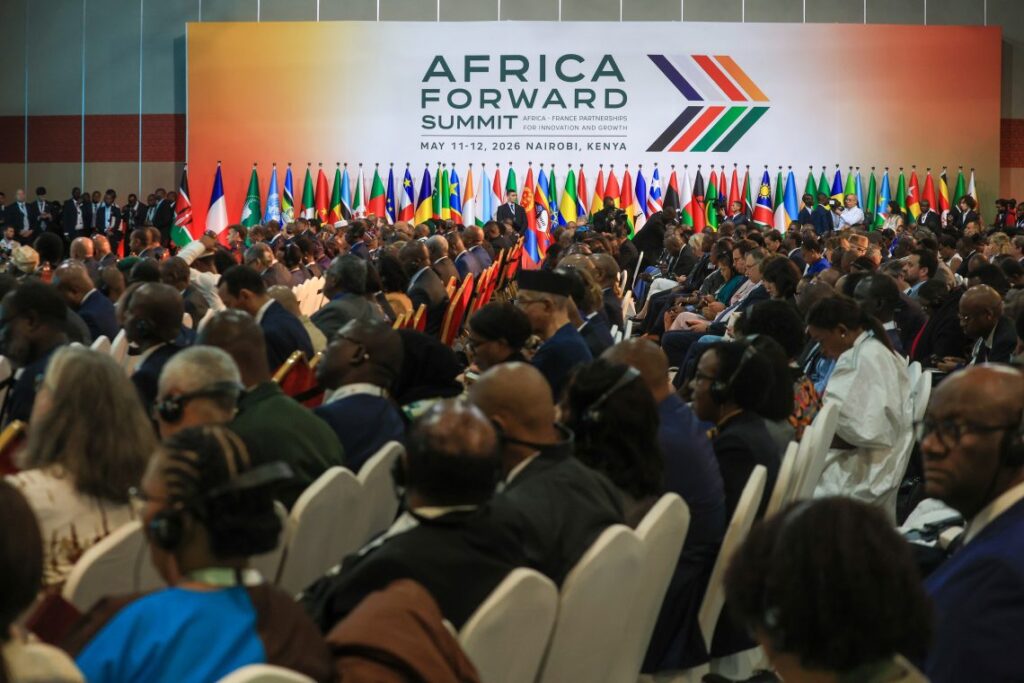
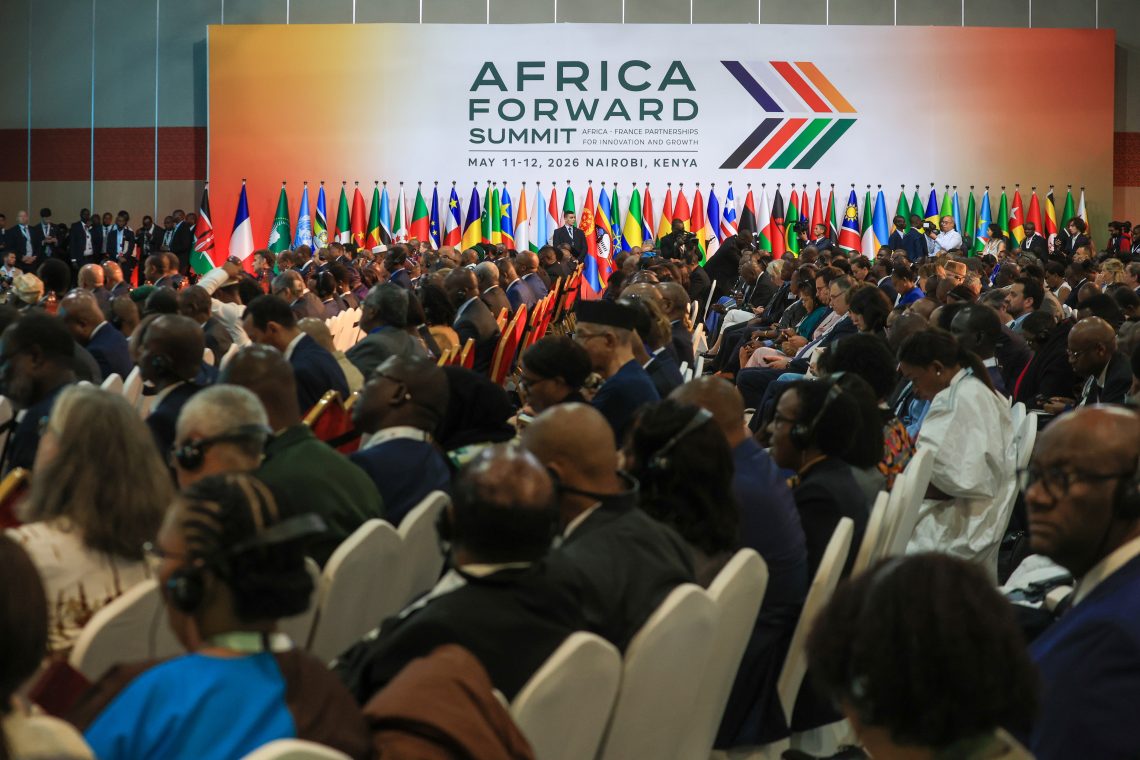 May 12, 2026: African leaders, business representatives and technology entrepreneurs attend the Africa Forward Summit hosted by Kenya and France in Nairobi, Kenya. © Getty Images
- Africa’s vast mineral and land wealth attract foreign attention
- States pursue multi-alignment, maximizing autonomy over rigid allegiances
- Fragmentation is likely; deeper continental integration faces steep obstacles
- For comprehensive insights, tune into our AI-powered podcast here
As the world shifts toward a more fragmented and multipolar order, so too does Africa. The continent is undergoing internal reconfiguration amid intensified external competition, the emergence of new strategic regions and the rise (and fall) of new and established powers. The transformation is being shaped by three factors: resources, connectivity and security.
Africa holds around 30 percent of the world’s mineral reserves and produces 70 percent of global cobalt, a critical component for electric vehicle batteries. The continent also has significant reserves of lithium, manganese, graphite and rare earth elements which are essential for the energy transition and high-tech industries. It is home to 60 percent of the world’s uncultivated arable land.
Connectivity remains central to Africa’s transformation. The benefits of the African Continental Free Trade Area (AfCFTA) can only be realized if infrastructure enables the free movement of goods and services, including maritime access as seaborne transport is becoming increasingly important. Around 80 percent of global trade by volume is transported by sea, making the stability of shipping routes, ports and overland logistical corridors a critical component of economic resilience.
This vital interconnected system remains extremely vulnerable to geopolitical disruption.
Yet, as recent events suggest, this vital interconnected system remains extremely vulnerable to geopolitical disruption. Conflicts, trade rivalries and strategic competition are reshaping routes, increasing costs and forcing a reorganization of global supply chains. In this context, the Red Sea and the South Atlantic coast of Africa may see their strategic and geoeconomic relevance increase.
Security and stability − essential for sustaining growth and attracting investment − will be decisive in shaping the balance of power in Africa. Ongoing conflicts will influence allegiances both within the continent and with external actors, with significant geoeconomic and geopolitical consequences.
Agency in a contested geopolitical arena
In recent decades, as competition for influence across the continent intensified, African states sought to increase their agency and leverage. The reconfiguration of power in Africa reflects two distinct trends: shifting regional balances and growing competitive dynamics among global and middle powers seeking access to African resources, infrastructure and influence. The continent’s states are, in general, responding to systemic shifts with pragmatism. Rather than aligning rigidly with any single external power, many governments, from Abuja to Nairobi, are pursuing multi-alignment to maximize autonomy.
Despite the strides made by African nations to boost their influence, they still face remarkable challenges. Ethiopia and Nigeria, two of Africa’s most populous nations, are grappling with ethnic fragmentation and regional rivalries that call into question the long-term viability of current political frameworks. Countries like Zambia and Ghana, despite their economic potential, are increasingly threatened by mounting debt burdens as borrowing costs rise and currency pressures strain their ability to service external obligations.
Competition among foreign actors for influence in Africa has intensified and diversified over the last two decades. While the United States and China remain important players, they now operate in a more crowded field that includes Russia, India, Turkiye, the Gulf states and the European Union.
China’s presence is particularly entrenched, combining infrastructure development, financing and resource access. After deploying its “go out and buy” strategy, Beijing launched the Belt and Road Initiative, thus adopting vertically integrated approaches within a logic of connectivity. India, by contrast, has pursued a more diversified and partnership-oriented model, blending lines of credit, capacity-building and private sector engagement.
Turkiye, in turn, has presented itself as a third way between China and the U.S., pursuing a flexible, multifaceted long-term strategy that combines soft power with military cooperation, including so-called “drone diplomacy.”
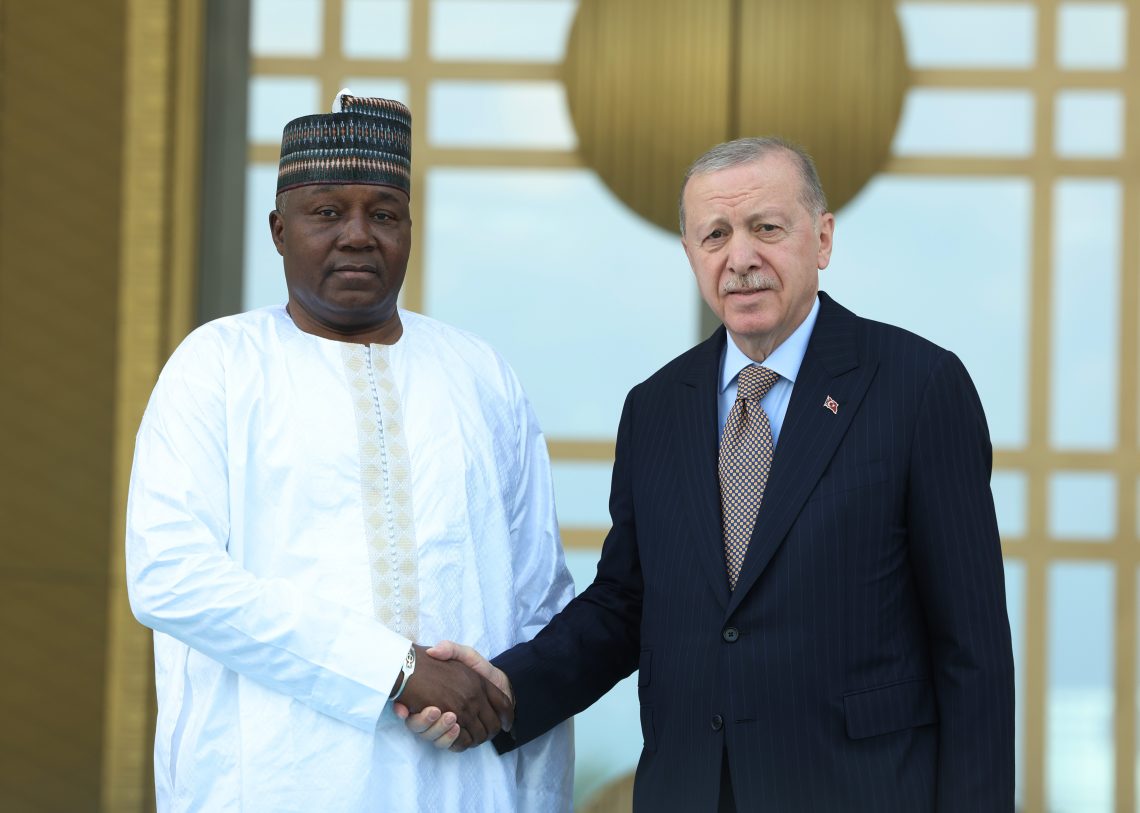 June 4, 2026: Nigerian President Abdourahamane Tchiani (left) with Turkish President Recep Tayyip Erdogan (right) at the Presidential Complex in Ankara, Turkiye. © Getty Images
The EU, historically Africa’s largest trading partner, is adjusting to a relative decline in its economic importance, as Asia becomes the continent’s primary trading partner. In response, Brussels has launched initiatives such as the 150 billion-euro Global Gateway Africa-Europe Investment Package, aimed at mobilizing significant investment in digitalization, energy, transport and the health sector. At the same time, regulatory frameworks such as the Critical Raw Materials Act signal a shift toward securing supply chains critical to European industrial policy. But the most interesting trait of the EU approach is that it is becoming more flexible and pragmatic, inspired by initiatives such as Italy’s Mattei Plan.
Competition among external actors in Africa is most visible in two domains: security, as evidenced by dynamics across the Sahel and the Horn of Africa; and sectors tied to critical minerals, as illustrated by initiatives such as the Lobito Corridor. This rivalry is not limited to the extraction of the continent’s mineral reserves but extends to entire value chains, including logistics, processing and export infrastructure.
African regional overview
Power dynamics in Africa are shaped by a blend of structural and institutional factors. Geography remains central, particularly proximity to maritime and logistical corridors. Equally, control over critical resources is a key dimension, especially in the context of the global energy transition.
North Africa acts as a strategic bridge connecting Africa, Europe and the Middle East. Morocco, a signatory to the Abraham Accords, has consolidated its position through political reforms and economic dynamism following the Arab Spring. Countries in this region serve as key commercial hubs linking sub-Saharan Africa to global markets, giving it outsized importance in trade, infrastructure and diplomacy.
Europe relies heavily on North Africa to advance two crucial priorities: energy security and migration management. Algeria has become an important and reliable external supplier of natural gas to Spain, Italy and France. Meanwhile, as Libya and Tunisia serve as central transit points for Mediterranean migration routes, cooperation with them has become essential for European immigration policy and border control strategies.
Southern Africa remains strategically important, owing to its relatively strong institutional capacity, historical significance and endowment of strategic resources. However, its future is increasingly uncertain, largely due to the potential decline of South Africa.
Long regarded as one of the continent’s leading powers with a robust industry, in recent years South Africa has experienced a combination of political drift, underinvestment in infrastructure and economic stagnation that has weakened its standing. Persistent corruption, sluggish growth, high unemployment and deep-rooted structural challenges (most notably the ongoing crisis at the power company Eskom and recurrent energy shortages) have constrained economic performance and eroded investor confidence.
West Africa, in turn, is among the most promising areas on the continent, due to a combination of dynamic and diverse economies, demographic growth and expanding regional integration supported by infrastructure development.
Central Africa stands out for its remarkable geoeconomic potential, which is countered by deep-seated political fragility. It is endowed with vast natural resources, but in most countries this potential is severely undermined by weak governance structures, frequent conflict and limited state capacity.
However, considering current global geopolitical dynamics, the Horn of Africa is arguably the most strategically significant region in Africa. Its location, connecting the Red Sea, the Gulf of Aden and the Indian Ocean, places it at the heart of global maritime trade routes linking Europe and Asia. The importance of the region is reflected in the growing density of foreign military outposts in the Horn and its increasing economic weight.
The devil is in Africa’s details
Power within Africa is being reshaped through a gradual redistribution of importance and sway among established and emerging actors.
While countries such as South Africa, Nigeria or Morocco continue to exercise considerable influence driven by their economic scale (even if, in some cases, strained), diplomatic outreach and institutional capacity, countries such as Tanzania, Angola or Ivory Coast are gaining salience within their respective regional contexts due to their strategic locations, access to key resources and sufficient scale. Smaller but highly successful states, such as Rwanda, despite their notable developmental achievements, do not possess these advantages to the same degree.
Read more by African affairs expert Teresa Nogueira Pinto
There are also states with extraordinary geoeconomic potential but major structural constraints, a conundrum that hinders growth and development. The Democratic Republic of the Congo, for instance, has vast mineral wealth, while Sudan possesses significant reserves of gold and arable land. Yet in both cases, the gap between economic potential and effective political leadership remains substantial, largely due to institutional fragility, conflict and territorial fragmentation.
Ultimately, the African states best positioned to assume leading roles at the continental level in the coming years are those that successfully combine strategic resources and advantageous geography with a more reliable state. The latter includes political stability, effective administrative structures and the development of critical infrastructure capable of ensuring connectivity and integration into regional and global networks.
Scenarios
More likely: Africa fragments as multi-alignment grows
Under a first, more likely, scenario, Africa becomes an even more competitive geopolitical arena. African countries will pursue strategies of selective engagement and strategic ambiguity with external actors, leading to multi-alignment and overall fragmentation.
One of the consequences of this is increasing divergence in the development trajectories of countries and regions across the continent. Nations that are geographically isolated and not connected to strategic corridors, lack critical resources, or are politically or socially unstable, will struggle to integrate global or regional value chains.
West and East Africa would be the main winners, with Tanzania in the east and Ivory Coast in the west well positioned to become regional powers.
Less likely: Deeper continental integration
Under a second, less likely scenario, a coalition of leading regional powers drawing inspiration from the EU’s experience drives Africa toward deeper continental integration. Building on the foundations laid by AfCFTA, this pathway results in a gradual strengthening of common institutions, regulatory harmonization and enhanced intra-African connectivity.
However, such a trajectory faces significant structural obstacles and will be difficult to attain due to the continent’s high degree of political and economic heterogeneity, persistent infrastructure and connectivity gaps, diversity of external partnerships and evolving strategic realignments.
Contact us today for tailored geopolitical insights and industry-specific advisory services.

Receive insights from our experts every week in your inbox.