
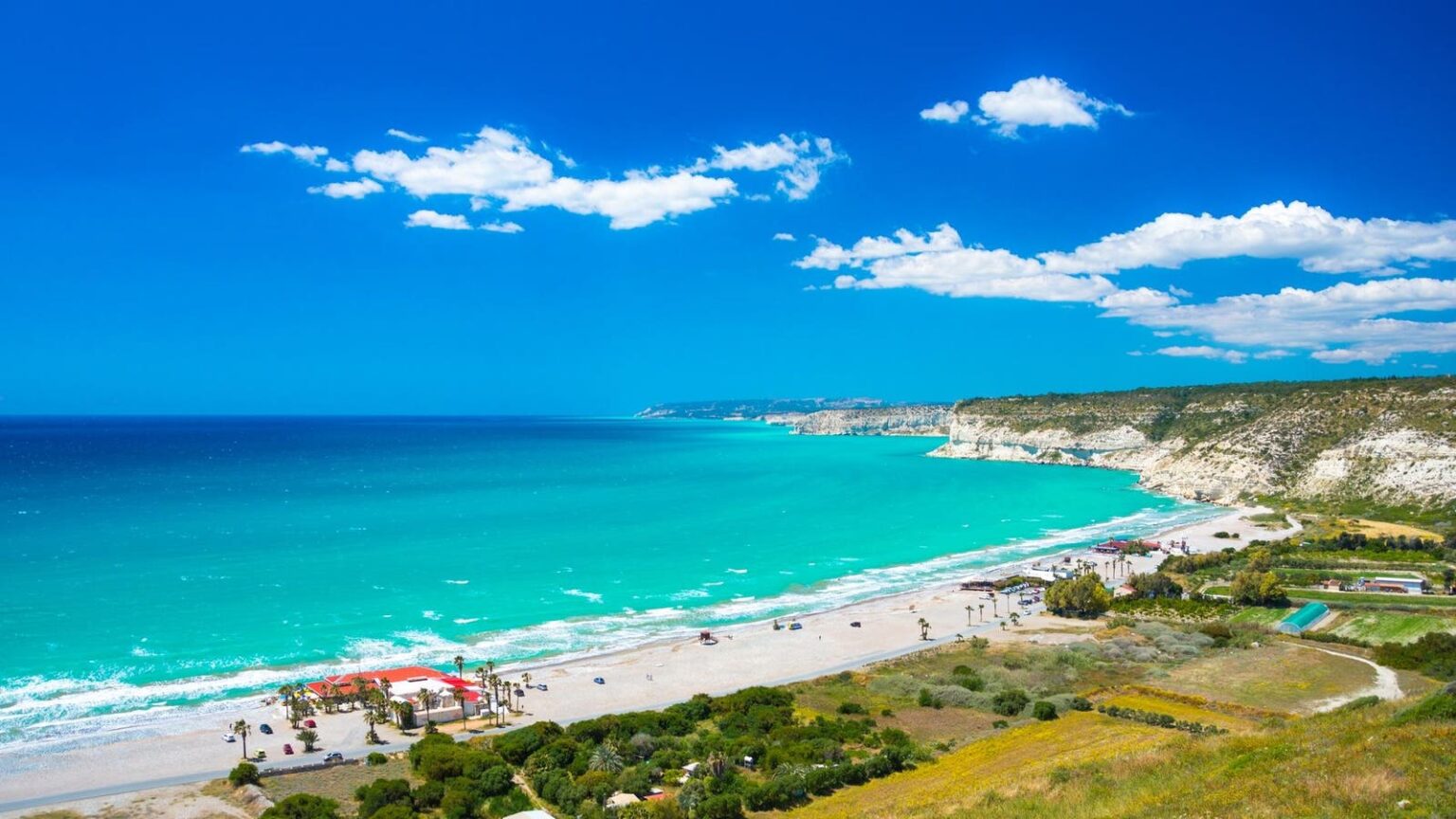
Kourion Beach, Cyprus.
getty
According to just-released figures from the European Commission, close to 44,000 people have been barred from entering the Schengen Area under the newly implemented Entry/Exit System (EES).
The system, which applies to all non-EU nationals of all ages traveling to the 29 participating European countries for a short stay of up to 90 days within any 180-day period, began with a partial rollout in October of 2025 before becoming fully operational on April 10, 2026. Teething problems have included airport delays of up to five hours for some travelers and entry refusal for tens of thousands.
Reasons for refusal ranged from insufficient justification for the visit (which would take the form of adequate evidence for the purpose and conditions of a stay, such as proof of accommodation or proof of onward or return travel) to exceeding the permitted time limits and other document-related issues.
For U.S. travelers, the EES involves digitally registering your first entry into the 29 country zone. Border agents digitally scan your fingerprints and take your facial photo. This profile is then saved in the system for a three-year period.
The EES also registers your exit from the zone and automatically tracks the 90-day limit for short stays in any 180-day period.
The 29 participating EES countries are Austria, Belgium, Bulgaria, Croatia, Czech Republic, Denmark, Estonia, Finland, France, Germany, Greece, Hungary, Iceland, Italy, Latvia, Liechtenstein, Lithuania, Luxembourg, Malta, Netherlands, Norway, Poland, Portugal, Romania, Slovakia, Slovenia, Spain, Sweden, and Switzerland.
The EU’s official Travel to Europe mobile app allows travelers to pre-register some basic data—like passport details, a photo, and answers to entry questionnaires—up to 72 hours before departure. However, upon first entry into the EES zone, queuing up at the border to have your biometrics taken in person is unavoidable.
Of course, it’s important to note that tens of millions of travelers have traveled into and throughout the participating countries since the EES rollout with little to no hassle. However, if you want to avoid the system completely but still enjoy some time in Europe, you have good options.
Here are three of my favorites…
1. Ireland
Ireland is not part of the Schengen Area and so it does not participate in the EES. This means U.S. travelers can still visit the Emerald Isle without the need for border security to take your fingerprints or photo.
Currently 17 U.S. states offer non-stop flights to Ireland and it’s a popular choice with around 1.5 million Americans making the trip each year.
I called Ireland home for seven years, am the proud holder of an Irish passport, and visit often. My family and I lived in Waterford, a coastal county in the southeast of the country offering long stretches of golden sand beaches, mountains, waterfalls, castles, and rich history.
The Copper Coast, County Waterford, Ireland.
getty
If you’re among the estimated 30 million Americans who claim Irish heritage you may even qualify for citizenship. Ireland recognizes its diaspora with one of the best ancestral citizenship programs around. If any of your parents or grandparents were born in Ireland, chances are you’re entitled to Irish citizenship and an EU passport.
2. Cyprus
Blessed with year-round warm weather, clear blue waters, and over 400 miles of coastline, the small island of Cyprus has much to offer travelers.
The Sanctuary of Apollo at the Kourion World Heritage Archaeological site near Limassol, Cyprus.
getty
The people are welcoming, English is widely spoken, and it’s wonderfully affordable.
In terms of the EES, Cyprus has a similar situation to Ireland. It’s an EU member state but not part of the Schengen Area and so has not implemented the system. However, Cyprus is expected to join the Schengen Area in the future and once it does its borders would become subject to EES rules.
Another thing to consider is the route you take. Connecting through EES countries will likely trigger the system and see you caught up in long lines at the airport. To avoid this, opt for a route through the U.K., Turkey, or the Middle East.
3. Montenegro
Montenegro, a tiny Balkan country in Eastern Europe, offers a unique geography of towering mountains, dramatic coastline, and Mediterranean lowlands.
Here medieval villages and glittering marinas lie in perfect harmony. Along the coast, you can enjoy a Mediterranean climate with hot summers and mild winters.
Montenegro is not currently part of the European Union or the Schengen Area but it is an EU candidate country working towards EU ascension in the next couple of years. For now, there’s no EES requirement here but again, travelers from the U.S. will want to connect through the U.K., Turkey, or the Middle East to eliminate the chance of being pulled into the system on a layover.
Tourism to Montenegro has been rising in recent years but it’s still something of a hidden gem for U.S. visitors with low costs, welcoming locals, and a variety of landscapes and lifestyles to explore.
MORE FROM FORBESForbesEurope’s Great Bargains—5 Countries Where Your Dollar Still Goes FurtherBy Kathleen PeddicordForbesWhere To Find A Dream Home In Europe For Less Than A Cup Of CoffeeBy Kathleen PeddicordForbesThe Safest Havens In Europe You Don’t Know YetBy Kathleen Peddicord