
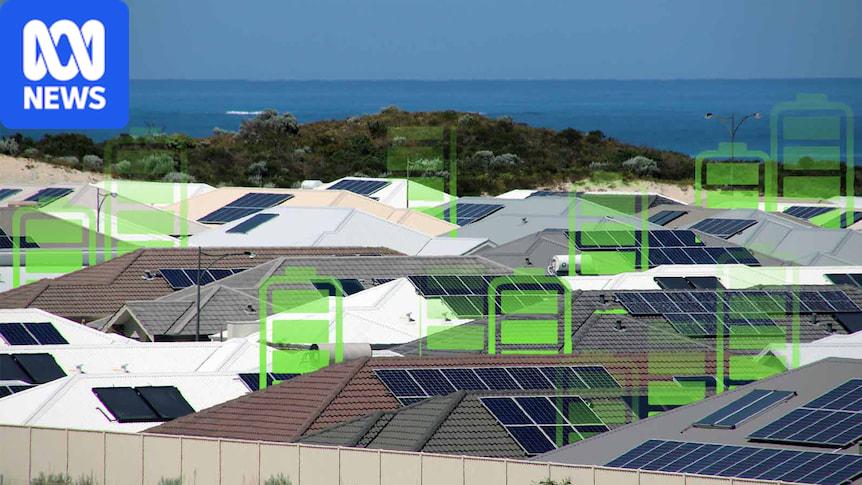
Battery installation rates collapse as ‘solar-coaster’ strikes back
https://www.abc.net.au/news/2026-07-18/battery-installation-rates-collapse-solar-coaster-strikes-back/106909726?utm_source=abc_news_app&utm_medium=content_shared&utm_campaign=abc_news_app&utm_content=other
10 Comments
Just to note that the government didn’t scale back the gift of free gas to gas exporters in this time. Choice is to massively subsidise fossil fuel exporters but to limit/restrict things for Australians. Oh and to borrow money to give away gas for free.
>Warwick Johnston, the managing director of solar consultancy SunWiz, said much of the extra demand leading up to the end of April was artificial.
>Mr Johnston said it was demand that had been brought forward by the government’s own deadline for changes to the scheme.
>In any case, he said it was symptomatic of an industry that had been characterised by wild swings in demand depending on government incentives.
>”This often happens in solar industries when subsidies shift,” Mr Johnston said.
>”You’ve brought forward a lot of customers that might otherwise have bought in an orderly fashion. They have all rushed to buy before that deadline.
>”So you’re actually going to have a quiet period afterwards.
This.
1000 batteries per day is hardly a collapse. It might mean there’s a saturation point somewhere ahead.
Just had my battery installed. I knew there would be a lull now.
The initial scheme was dominated by Jeremy Clarkson wannabes who wanted “more power” and installed 50kw batteries on a house that uses 15 kw a day. They thought they’d make hundreds of dollars a month selling into the system during spikes and spent tens of thousands of dollars for massively over-specced setups. Now their daily posts on the electricity subs boasting of how much they made the night before are few and far between.
This latest phase is a sensible revision by the Albanese government. I got a welcome bit of government assistance to install a system that’s just enough to take me off grid for all the time but the free hours in the middle of the day. That reduces pressure on the grid and eventually helps reduce prices for all, and encourages me to make an investment that will take six years to pay itself off.
[deleted]
Often you get diminishing returns on investment with technology, the widespread adoption negates the benefit so adoption becomes a decay curve.
Just got a battery installed. All I needed was a system to help reduce dependency on the grid, and so far so good. I’m actually away from home at the moment, so most of the day is just feeding in. Making bank y’all!! (If 60 cents is considered bank)
Shit headline really. The installation rate peaked in May and will now fall back to a more sustainable level.
Either way, its doing the job its intended to do now.
I’m pretty naive to this but I’ve been holding off because we already have an EV. Wisdom at the time was that why pay for a battery when you have one sitting in your driveway 90% of the time.
But fucking Elon only supports V2H/V2L on the god damn cybertruck, so while he sells batteries he’ll probably never turn it on for the legacy models.
Australia has the highest number of solar installations per capita in the world because we’ve been subsidising it for decades. It’s a system that very clearly works, and will work for battery installations as well.
Once the industry is established, the cost of installation will go down over time. As the technology improves, we’ll keep getting more storage on the grid. And as CATL and HiNa Battery appear to have the cracked the commercialisation of sodium battery technology, we’re looking at longer lasting, more recyclable, and cheaper battery installations that can operate in colder temperatures and are more thermally stable.