
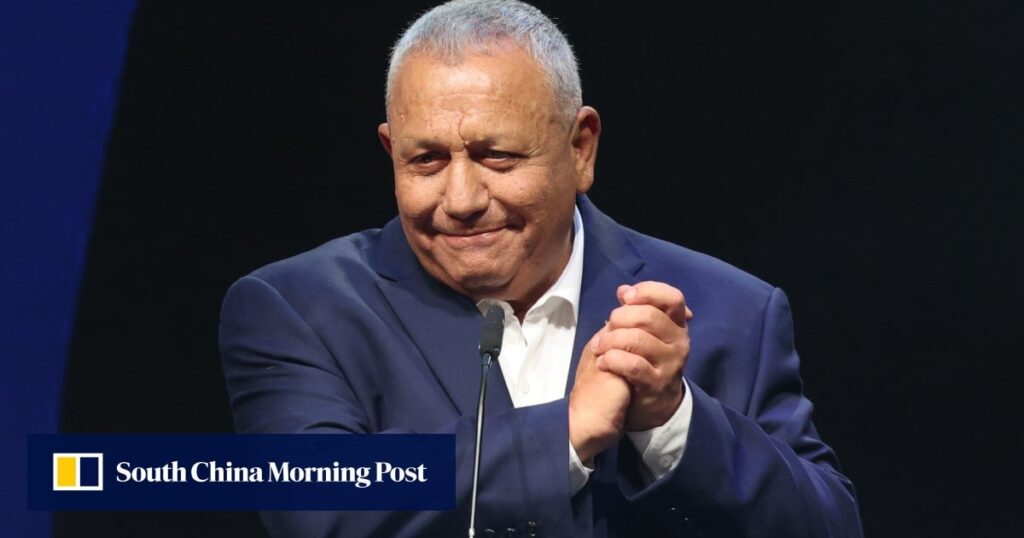
As Israel heads into a fiercely contested general election on October 27, former military chief Gadi Eisenkot has emerged as the principal challenger to Prime Minister Benjamin Netanyahu.
Eisenkot’s rise comes at a pivotal moment in Israeli politics, with the election widely viewed as a referendum on the long-serving premier’s leadership in the violent aftermath of Hamas’ October 7, 2023, attack on Israel.
A recent Channel 12 poll put Eisenkot’s new party, Yashar (Hebrew for “Straight” or “Upright”), ahead of Netanyahu’s Likud, projecting 23 seats to Likud’s 22 in the 120-member Knesset.
The same survey found that 43 per cent of respondents considered Eisenkot, 66, the most suitable candidate for prime minister, compared with 34 per cent for Netanyahu.
Eisenkot – who has dismissed calls for a future Palestinian state as irrelevant after the October 7 attacks and pioneered Israel’s strategy of disproportionate military responses in Lebanon – has built his campaign around a 10-point platform that he says would restore Israel’s security, unity and democratic institutions.
Chief of staff of the Israeli military between 2015 and 2019, Eisenkot was among those credited with developing the “Dahiya Doctrine”, named after a Beirut suburb that is a Hezbollah stronghold.