
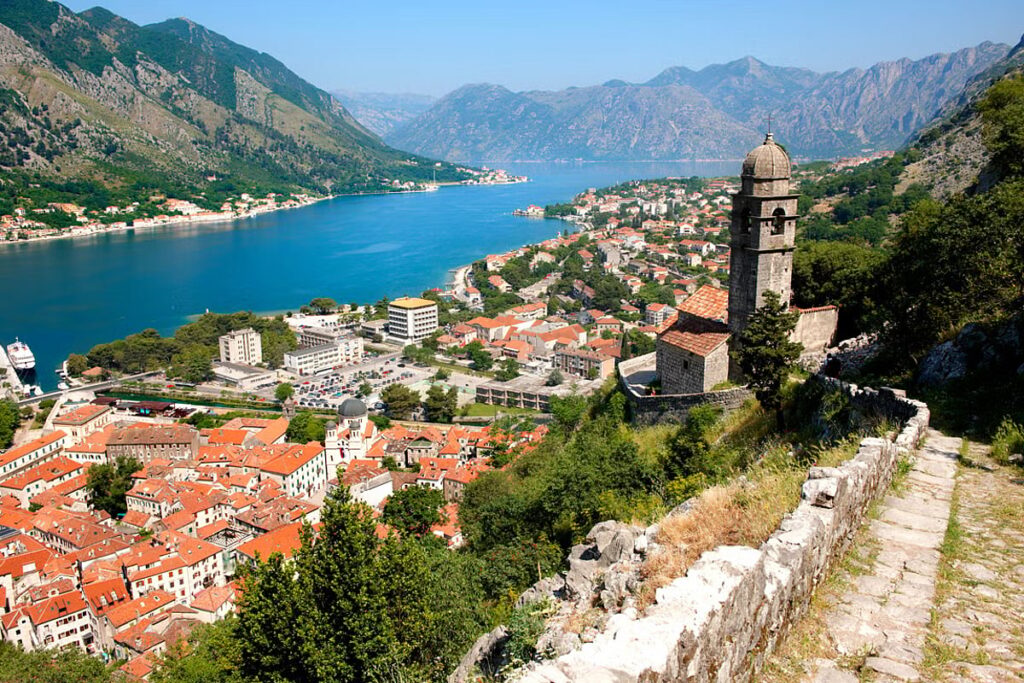
Climb to San Giovanni Fortress
Above Kotor, a zig-zagging trail of around 1,350 steps leads up to San Giovanni (St John’s) Fortress, with the bay unfolding beneath you as you climb. The views are the whole reward, and they’re spectacular. Go early morning or late afternoon to dodge both the heat and the cruise crowds, before around 9am the mountain still shades the trail.
Cost: Around €15 (about Dh60) at the main entry gates during peak season, April to October. It was historically €8 for some lower wall sections or off-season entry, but the official fee at the main checkpoint has risen to €15
Take a boat out on the Bay of Kotor
Often called Europe’s southernmost fjord, the Bay of Kotor is best seen from the water. Boat trips run out to Perast and the tiny man-made island of Our Lady of the Rocks, with its church and small museum. It’s the classic Montenegro postcard shot.
Cost: From around €20 (about Dh80) per person
Go inland for food and mountains
Montenegro’s interior is a different world from the coast, quieter, greener and cheaper. Food and drinks tours around Lovćen National Park, Cetinje (the old royal capital) and the Njeguši region are popular, often combining winery visits with local tastings. Renting a car gives you the most freedom to explore inland.
Accommodation ranges from hostel dorms at around €19 to €27 (Dh76 to Dh108) a night, to mid-range rooms at €50 to €80 (Dh200 to Dh320), up to Porto Montenegro’s marina five-stars at €200-plus (Dh800-plus).
A few notes for UAE travellers
Montenegro uses the euro, so it’s worth sorting some cash before you go. It’s genuinely a cash-and-card country rather than card-only, and knowing where each works will save you a headache.
Where you’ll strictly need cash. Many independent taxi drivers don’t take cards, and paying bus drivers directly or buying tickets at smaller stations usually means cash too. Bakeries (pekara) for that morning burek and local green markets for fresh produce are cash-only. So are most small incidentals, beach sunbed rentals, public restrooms, parking attendants and tipping. And the further inland you go, toward Lovćen, Virpazar or the northern national parks, the rarer card terminals become.
Where cards work fine. Large supermarkets like Voli and Idea in the major towns, hotels, upscale restaurants and beach bars across Kotor, Budva, Tivat and Podgorica, plus car rental agencies and the bigger tour operators, all take cards without issue.
Two money tips worth knowing. Carry small denominations, taxi drivers and small shop owners often can’t change a €50 or €100 note, especially early in the day, so keep a stash of €5, €10 and €20 notes handy. And watch ATM fees: independent machines like Euronet tend to charge more per withdrawal than local banks such as CKB or Erste, so use bank ATMs where you can.
Beyond the cash question, two more things. Summer (June to August) is peak season, meaning the best weather but the highest prices and biggest crowds, so the shoulder months of May and September often hit the sweet spot of warm days and lighter footfall. And a small mandatory daily tourist tax applies at most accommodation, usually around a euro a night, worth factoring in.
One last tip that comes up again and again: base yourself in Kotor for atmosphere, day-trip to everything else, and don’t be surprised if you leave wishing you’d booked a week instead of a long weekend.

I’m a passionate journalist and creative writer graduate specialising in arts, culture, and storytelling. My work aims to engage readers with stories that inspire, inform, and celebrate the richness of human experience. From arts and entertainment to technology, lifestyle, and human interest features, I aim to bring a fresh perspective and thoughtful voice to every story I tell.