
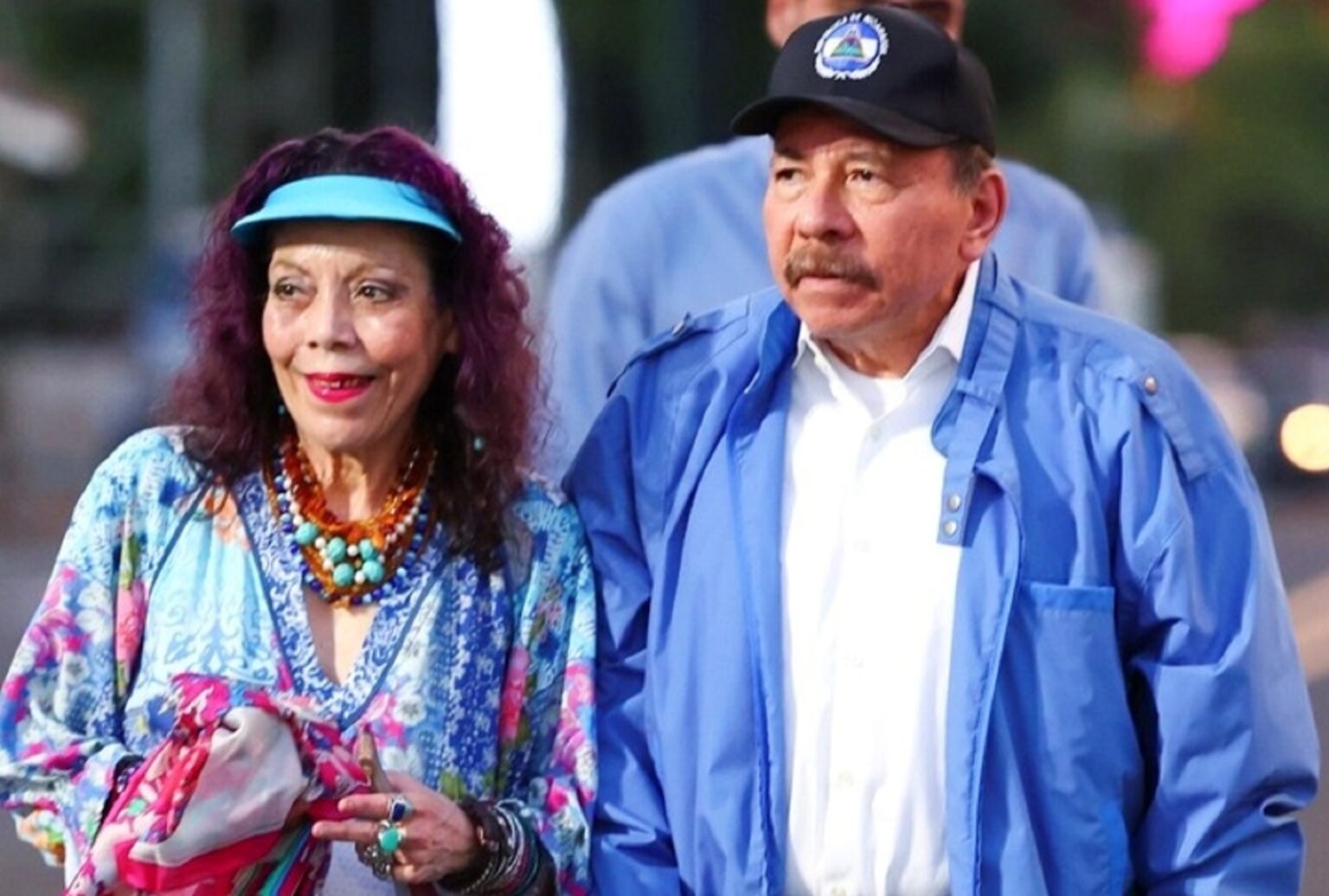

Constitutional reforms and growing power concentration are reshaping Nicaragua’s political landscape. Credit: el19digital.com / Public-Domain
Daniel Ortega’s words did not go unnoticed. During the celebration of the 47th anniversary of the Sandinista Revolution on July 19, 2026, the Nicaraguan president declared that his country would “no longer have elections” as they had been known until now. Delivered during an official ceremony broadcast on state media, the statement marked a turning point in the regime’s public narrative and reignited a question that, until only a few years ago, would have seemed far-fetched: Is Nicaragua following the same path that transformed North Korea into one of the world’s most closed political systems?
Beyond the shock value of the remark, what made it particularly significant was the context in which it was delivered. Ortega was not speaking from a democracy with independent institutions or from a political system where the opposition still has a realistic chance of competing for power. He spoke after nearly two decades of constitutional reforms, legal changes, and political decisions that have steadily concentrated authority within an increasingly small circle led by himself and his wife and co-president, Rosario Murillo.
The international community viewed the statement as far more than political rhetoric. Reuters, for example, reported that Ortega defended abandoning Nicaragua’s traditional electoral model by arguing that it would prevent what he described as “coup plotters” from returning to power.
Associated Press, meanwhile, reported that only days later the National Assembly, overwhelmingly controlled by the ruling Sandinista National Liberation Front, began advancing initiatives designed to translate that vision into law, further fueling uncertainty over the presidential elections currently scheduled for 2027.
The international response was swift. United Nations High Commissioner for Human Rights Volker Türk publicly condemned Ortega’s remarks, warning that eliminating elections would represent another serious setback for fundamental freedoms in Nicaragua. In an official statement, Türk said the country’s civic space is now “almost entirely closed” and cautioned that democratic guarantees continue to deteriorate at an alarming pace.
That assessment was not prompted by a single speech. Over the past several years, reports by the United Nations Group of Human Rights Experts on Nicaragua (GHREN), the Inter-American Commission on Human Rights (IACHR), the Office of the U.N. High Commissioner for Human Rights, Human Rights Watch, and Amnesty International have consistently documented a sustained pattern of power concentration, persecution of political opponents, and the systematic weakening of democratic institutions.
It is precisely that accumulation of developments, not one isolated event, that has led a growing number of analysts to draw comparisons with North Korea. Not because the two countries share the same economic system or geopolitical reality, but because the evolution of Nicaragua’s political model is beginning to display characteristics commonly associated with some of the world’s most entrenched authoritarian regimes.
Democracies rarely disappear overnight
Democracies do not usually collapse because of a single decree. More often, they erode gradually. Institutions lose their independence, the rules of the political system are rewritten, checks and balances weaken, and eventually power becomes concentrated in the hands of a single leader or a small group capable of controlling nearly every branch of government.
Nicaragua’s political trajectory over the past two decades increasingly reflects that pattern. When Daniel Ortega returned to the presidency in 2007, he did so after winning an election. At the time, Nicaragua still had a multiparty political system, an organized opposition, independent media outlets, and public institutions that, at least formally, retained a degree of autonomy.
That landscape has changed dramatically as constitutional reforms removed effective presidential term limits and gradually expanded the powers of the executive branch. The Supreme Electoral Council came under growing influence from the ruling party. The National Assembly evolved into an institution overwhelmingly dominated by the Sandinista National Liberation Front, while the judiciary increasingly aligned itself with government priorities.
At the same time, Rosario Murillo’s political influence expanded well beyond that of a traditional vice president or first lady. She became the country’s second most powerful political figure, and constitutional reforms approved in 2025 formalized the system of co-presidency while extending presidential terms from five to six years, further reinforcing the continuity of the ruling political project.
The turning point came in 2018 when anti-government protests that erupted that year were met with a crackdown widely documented by international organizations. The United Nations Group of Human Rights Experts on Nicaragua concluded that there were reasonable grounds to believe serious and systematic human rights violations had been committed.
The Inter-American Commission on Human Rights reached similar conclusions, documenting patterns of persecution targeting students, journalists, human rights defenders, civic leaders, and political opponents. From that moment forward, the closing of Nicaragua’s democratic space accelerated.
According to figures compiled by international organizations such as Human Rights Watch, more than 5,600 nongovernmental organizations have lost their legal status since 2018, making Nicaragua one of the countries with the most extensive dismantling of civil society organizations in Latin America in recent decades.
Private universities have been taken over or shut down, independent media organizations have ceased operating inside the country, and dozens of journalists now continue reporting from exile.
The crackdown has also extended to political and religious leaders. According to the U.N. Office of the High Commissioner for Human Rights, hundreds of opposition figures have been detained at different times, while more than 300 people have been stripped of their nationality, including politicians, journalists, intellectuals, and human rights advocates.
Meanwhile, hundreds of thousands of Nicaraguans have left the country in recent years, contributing to one of Central America’s largest migration waves. Freedom House currently classifies Nicaragua as “Not Free,” while the international Varieties of Democracy (V-Dem) project ranks it among the electoral autocracies that have experienced some of the world’s sharpest democratic declines in recent years.
Taken together, these developments help explain why Ortega’s remarks about eliminating elections were not interpreted as merely another political speech. For many, they represent the logical culmination of a political project that, over nearly 20 years, has steadily dismantled the institutional mechanisms designed to limit presidential power.
And it is precisely there that comparisons with North Korea begin, not because Nicaragua has reached the same level of isolation or total control exercised by Pyongyang, but because both cases raise an increasingly uncomfortable question: At what point does a political system cease to preserve the conditions necessary for power to change hands? That question now concerns not only Nicaragua’s opposition but also a growing share of the international community.
More than a dictatorship, a political model that increasingly resembles North Korea

Daniel Ortega’s consolidation of power is fueling comparisons between Nicaragua and North Korea. Credit: Presidence Of Russia / CC BY 4.0
Comparisons between countries are often misleading when reduced to headlines. Nicaragua and North Korea have profoundly different histories, economic systems, and geopolitical realities.
While Pyongyang remains largely isolated from the rest of the world, operates under a centrally planned economy, and has functioned as a one-party state for more than seven decades, Nicaragua continues to depend on international trade, foreign investment, and, perhaps most importantly, the billions of dollars in remittances sent home every year by Nicaraguans living abroad.
Yet the growing comparison between the two governments is not rooted in economics or foreign policy. It is rooted in how power is organized and preserved. One of the most striking parallels is the increasing identification of the state with a single ruling family.
In North Korea, political authority has remained within the Kim family for more than 70 years. Kim Il Sung established the regime after World War II, his son Kim Jong Il inherited power following his death, and since 2011 the country has been led by Kim Jong Un.
Government institutions, the ruling Workers’ Party, the military, and much of the country’s political identity revolve around preserving that family’s control over the state.
Nicaragua has not reached that point, and equating the two systems would ignore important differences. Even so, the country’s recent political evolution has prompted inevitable comparisons. Rosario Murillo ceased being viewed merely as the president’s spouse years ago. Today she occupies one of the most influential positions in government, and the constitutional reforms that formalized the system of co-presidency further strengthened her institutional authority.
For many observers, those changes also raised broader questions about whether Nicaragua is gradually moving toward a model in which political succession is designed to remain within the same family structure rather than being determined through genuine electoral competition.
That possibility becomes even more significant when viewed alongside another defining feature of long-lasting authoritarian regimes: The progressive disappearance of meaningful political competition. North Korea does hold elections, but they are widely regarded as ceremonial exercises rather than competitive democratic contests. Candidates are approved by the ruling establishment, and voters are offered no genuine alternative capable of replacing those in power.
Nicaragua formally maintains an electoral calendar, yet the international debate is increasingly centered on whether future elections can still be considered competitive. The 2021 presidential election was broadly criticized by democratic governments after nearly all major opposition candidates in Nicaragua were either imprisoned or barred from running before voting took place.
Against that backdrop, Ortega’s declaration that Nicaragua would no longer hold elections “as they have been known” dramatically changed the conversation. The central question is no longer simply whether elections will take place. It is whether they will continue to serve their original democratic purpose.
If the country’s highest political authority openly states that competitive elections are no longer necessary and the legislative branch begins adapting the legal framework accordingly, what role will voting ultimately play within Nicaragua’s political system?
The comparison with North Korea also extends to the flow of information. North Korea maintains one of the world’s most restrictive information environments. The media are entirely state-controlled, internet access is heavily restricted, and independent journalism is virtually nonexistent inside the country.
Nicaragua remains far from that level of isolation, yet independent journalism has come under sustained pressure. Many news organizations now operate from exile after facing confiscation of assets, criminal investigations, or regulatory actions inside the country.
Journalists continue reporting from Costa Rica, the United States, Spain, and other countries after concluding they could no longer work safely at home. Reporters Without Borders consistently ranks Nicaragua among the countries with the most severe restrictions on press freedom in the Americas.
Despite these similarities, the differences remain substantial and should not be overlooked. North Korea possesses one of the world’s largest standing militaries relative to its population and has built its national security strategy around nuclear weapons and ballistic missile development.
Nicaragua has no comparable military capacity and occupies a very different position within the international system. Likewise, North Korea imposes extraordinary restrictions on its citizens’ ability to leave the country. Nicaragua, by contrast, has witnessed a massive outward migration precisely because its citizens have been able to leave, although many have done so after concluding that political persecution, shrinking civil liberties, or economic uncertainty left them little choice.
Those distinctions matter, as claiming that Nicaragua has already become another North Korea would oversimplify two very different national realities.
What can reasonably be argued, however, is that Nicaragua increasingly exhibits institutional dynamics commonly found in entrenched authoritarian systems: The concentration of power within a single political leadership, the weakening of meaningful political competition, the shrinking of independent civic space, and the growing fusion between the governing leadership and the institutions of the state itself.
The defining test may come in 2027
If one date is likely to determine whether these comparisons continue gaining traction, it is 2027. Under Nicaragua’s current political calendar, that is when the country is expected to hold its next national elections. Yet Ortega’s recent statements, combined with the constitutional reforms approved over the past several years, have created an unprecedented level of uncertainty about what those elections might actually look like.
Today, the unanswered questions outweigh the certainties. Will opposition candidates be allowed to compete freely? Will international election observers be invited to independently evaluate the process? Will political leaders forced into exile be permitted to return and campaign? Or will future legal reforms continue reshaping the electoral system until voting remains largely symbolic rather than serving as a genuine mechanism for transferring political power?
Comparative political history offers an important lesson. Authoritarian governments rarely eliminate democratic institutions all at once. Instead, they often preserve their formal existence while gradually stripping away their substance.
Elections continue to be held, but no longer create the possibility of political alternation. Legislatures remain in place but lose their independence. Courts continue operating but increasingly function in alignment with executive power rather than as a constitutional check on it.
That gradual process is precisely the major concern at this point. Institutional erosion often advances incrementally enough that its cumulative impact becomes fully visible only after many of the safeguards designed to protect democracy have already disappeared.
In that sense, Nicaragua’s trajectory extends far beyond its own borders. It has become part of a broader international debate over how democracies weaken and how leaders who initially rise to power through elections may later reshape the very rules that allowed them to govern in the first place.
For now, the more consequential question is how far the Ortega government is prepared to go to preserve its hold on power and whether Nicaragua’s remaining institutions still possess the capacity to prevent the country from crossing a point of no return.
The answer may begin to emerge well before 2027, and it is likely to shape not only Nicaragua’s political future, but also how Latin America understands one of the most consequential cases of democratic erosion in the region during the 21st century.