
From reproductive rights to climate change to Big Tech, The Independent is on the ground when the story is developing. Whether it’s investigating the financials of Elon Musk’s pro-Trump PAC or producing our latest documentary, ‘The A Word’, which shines a light on the American women fighting for reproductive rights, we know how important it is to parse out the facts from the messaging.
At such a critical moment in US history, we need reporters on the ground. Your donation allows us to keep sending journalists to speak to both sides of the story.
The Independent is trusted by Americans across the entire political spectrum. And unlike many other quality news outlets, we choose not to lock Americans out of our reporting and analysis with paywalls. We believe quality journalism should be available to everyone, paid for by those who can afford it.
Your support makes all the difference.
Read more
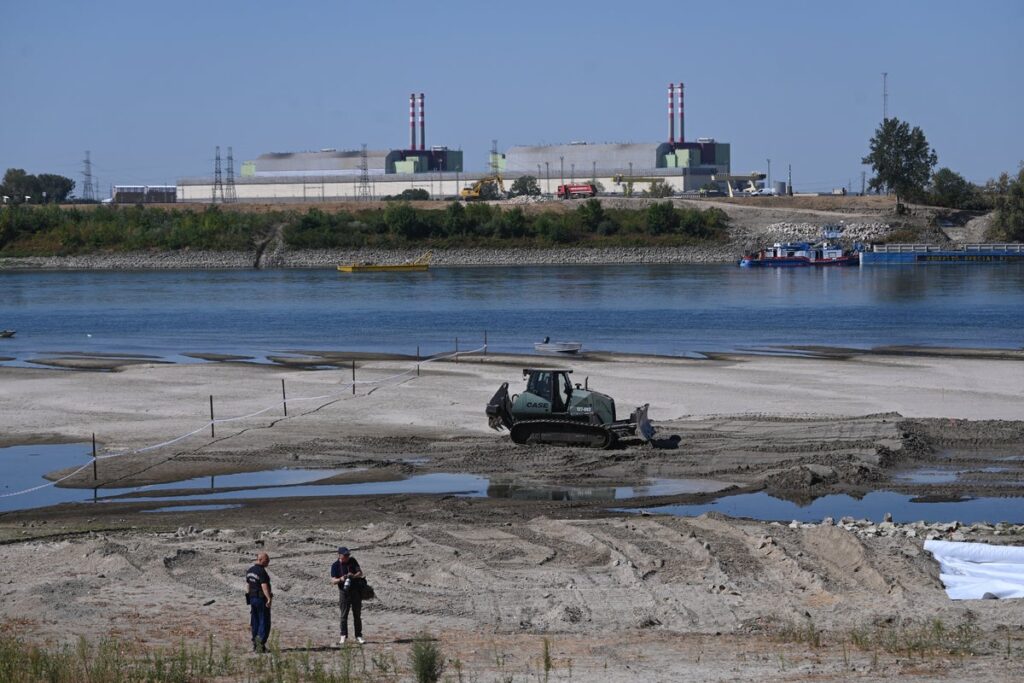
Authorities in Hungary will sink two barges today to raise the water level at the Paks nuclear plant in the Danube, Prime Minister Peter Magyar said on Friday.
The plant currently operates at around 25% of its capacity due to a historic drought and record low water levels on the Danube river, from which the nuclear plant draws its coolant.
Neighbouring Romania shut down its last working reactor on Thursday as drought this summer has wreaked havoc in European power production, shipping and public health systems. The drought also raised questions in Hungary and Romania about how to adapt atomic energy to an increasingly extreme climate.
Hungary’s government announced on Wednesday that it would build a riverbed “sill”, a submerged, dam-like structure built crosswise on the bottom of a river channel, to manage water flow. That will take weeks.
The government also said that two 80-metre (260-foot) barges would be submerged near the nuclear plant to raise the water level in the short term so that the plant’s two turbines could be kept working while the riverbed sill was under construction.
“The controlled sinking (of the barges) is expected to begin late this afternoon in order to raise the water level on the Danube,” Magyar said in a Facebook video from Paks on Friday.
Sinking of the barges could raise the water level by 20 centimetres (8 inches) in the short term, while the river sill is expected to raise it by up to 1 metre.
It comes as wrecks of World War Two German warships have resurfaced further up the Danube River in eastern Serbia as record-low water levels exposed sandbanks and stranded boats.

A woman stands on a sunken German warship from World War II, exposed due to low Danube river levels caused by drought and extreme heat near Prahovo (Reuters)
Rusted hulls that have lain submerged for decades since 1945 have emerged, while further north in Novi Sad many small boats docked in marinas remain stranded.
“This has literally never happened before, these wrecks we’re heading towards right now have never been visible like this,” Ljubisa Karalic, a local fisherman in Prahovo, told Reuters.
“They’ve always been completely submerged; what we’re seeing now is utterly unprecedented.” A succession of record-breaking heatwaves in Europe this summer has caused a severe drought in parts of the continent, affecting major waterways such as the Danube and the Rhine. The Danube water temperatures in Serbia hovered around an all-time maximum of 28 degrees Celsius.
“A record has been broken regarding the Danube’s discharge. We hope this represents the minimum, given that rain is forecast for upstream stretches, which should help the situation improve,” Jelena Jerinic of Serbia’s Hydrometeorological Service said. She warned that the river’s biodiversity is threatened as well.
“High (water) temperatures, alongside low water volume, accelerate the proliferation of microorganisms and bacteria while depleting dissolved oxygen levels.”