
© Ints/stock.adobe.com
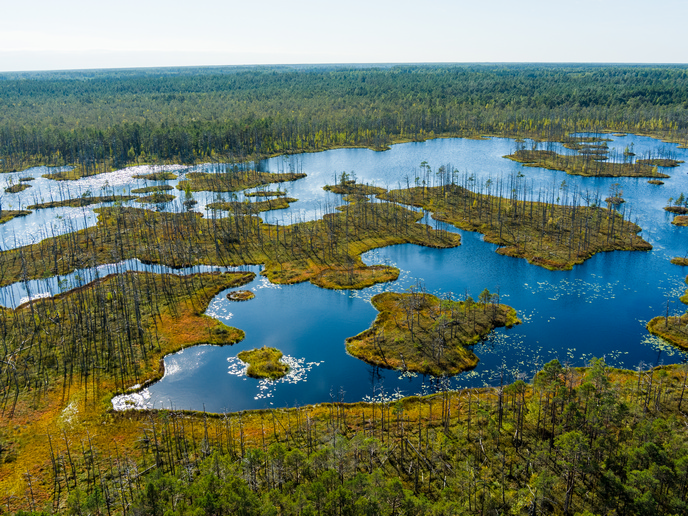
Peatlands and coastal lagoons are among Europe’s most vital yet threatened ecosystems. Although they cover a small fraction of the continent’s land surface, they provide disproportionate benefits, including carbon storage, flood regulation, water purifications and support for rich biodiversity. However, decades of drainage, land use change, pollution and climate change have left these habitats in decline. A new knowledge synthesis report(opens in new window) prepared by the Science Service for Biodiversity under the EU-funded BioAgora(opens in new window) project now offers a robust scientific foundation to reverse this trend. Requested by the European Commission’s Directorate-General for Environment, the report supports key legislation, such as the Habitats Directive, the Water Framework Directive and the Nature Restoration Regulation.
The core message is clear: protecting these ecosystems requires looking beyond simple maps or species counts. Effective assessment must focus on how these wetlands function. For peatlands, water levels are the deciding factor; a stable, high water table is essential to prevent the release of stored carbon and maintain unique vegetation. In coastal lagoons, the delicate balance between salt and fresh water drives productivity, yet this same variability makes it difficult to distinguish natural changes from human-caused damage. The report highlights that degradation is rarely caused by a single factor. Instead, multiple pressures interact in complex ways, creating a cascade of damage that is hard to detect and even harder to reverse without precise, context-specific data.
A blueprint for harmonised monitoring
To address these challenges, the report proposes a unified approach to monitoring that combines satellite imagery with on-the-ground measurements and modelling approaches. Currently, assessment methods vary significantly across the EU, leading to inconsistent data and fragmented restoration efforts. The BioAgora team recommends a tiered indicator framework that distinguishes between essential variables, such as water table depth and organic matter, and complementary variables, such as drainage system maintenance and pesticide use. This system aims to create a consistent language for evaluating wetland health across borders.
Crucially, the report warns against relying on a single metric. No single indicator can capture the complex reality of a wetland ecosystem. Instead, robust assessment requires multiple lines of evidence, integrating field-based measurement with remote sensing and expert ecological interpretation. For instance, while satellites can track large-scale changes in water levels or vegetation cover, ground measurements are still needed to validate these findings and understand the underlying biological processes.
The report published under the BioAgora (Bio Knowledge Agora: Developing the Science Service for European Research and Biodiversity Policymaking) project provides a crucial scientific basis for implementing EU policies. In addition, it calls for the next critical step: the development of calibrated, habitat-specific thresholds to define what constitutes an ‘intact’ versus a ‘degraded’ site. By helping to bridge the gap between scientific research and policy implementation, it offers policymakers and environmental practitioners the tools they need to safeguard Europe’s wetlands.
For more information, please see:
BioAgora project website(opens in new window)