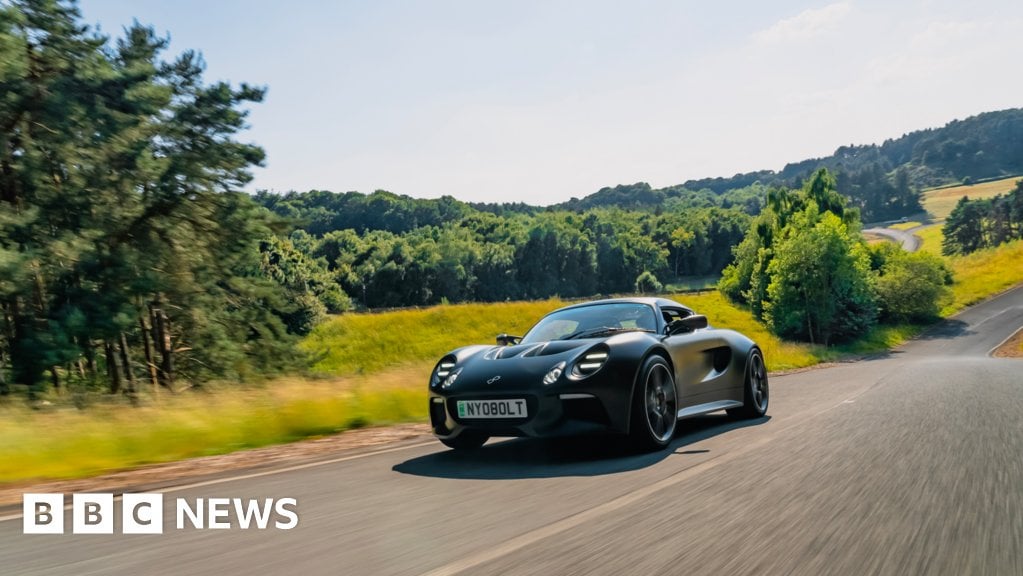
Electric car battery charges in under five minutes in track test
https://www.bbc.co.uk/news/articles/cz9dp3ye77do
Posted by m-1975

Electric car battery charges in under five minutes in track test
https://www.bbc.co.uk/news/articles/cz9dp3ye77do
Posted by m-1975
10 Comments
Have any of the major political parties pledged to improve EV charging infrastructure?
Charge quickly. Home charges when not. The cost of producing mass-scale cleaner energy from solar, wind, hydro, and nuclear is dwarfed by the energy stored in gasoline and the energy needed to deliver it.
Super quick charging… does this affect the life of the battery? Ie more battery’s needing to be disposed of? (Environmentally bad) And expensive battery replacements more often? (economically bad)
>It was achieved with a specially-built concept sports car
A lot of cars are the bottleneck for faster charging.
Charging on fast chargers works out about 50% more expensive than driving my old mild hybrid petrol car.
Very cheap in the city, if you can charge at home, but the moment you drive somewhere where you have to charge it becomes expensive to drive
What if we had electric vehicles permanently wired up so they wouldn’t need to stop to charge? Perhaps, to prevent congestion, we could attach loads of them together all going in the same direction on a designated track. This would also enable them to go faster. Instead of needing to have your own, they could be available for public use, following the most popular routes and stopping to let people on at the most popular places near people’s homes and jobs. You wouldn’t need to concentrate on driving either as that would be taken care of. Such a thing would cost money, of course, but we could run it as a public good and charge a usage fee that covers maintenance and reinvestment.
Or maybe the solution is to give more money to car manufacturers idk.
Sounds perfect for traffic lights. You stop at the lights and then your car, e-bike or e-scooter has been fully charged.
Tell us when this is a real thing for consumers and not a lab experiment
To address the concerns I had for anyone who doesn’t want to read the article:
– This gets you 120 miles of range
– This doesn’t break the battery immediately, it charges to 80% after 4000 cycles
– This uses a standard 350kW charger not a proprietary one, although these aren’t widespread they aren’t entirely new infrastructure
– This was done at a standard fast charging site during the heatwave, not under ideal conditions (where it gets 100% in 6 minutes)
This isn’t new, and isn’t really needed. In practise a simple 800v car is already so fast that you will barely have time to grab a coffee and take a piss.