
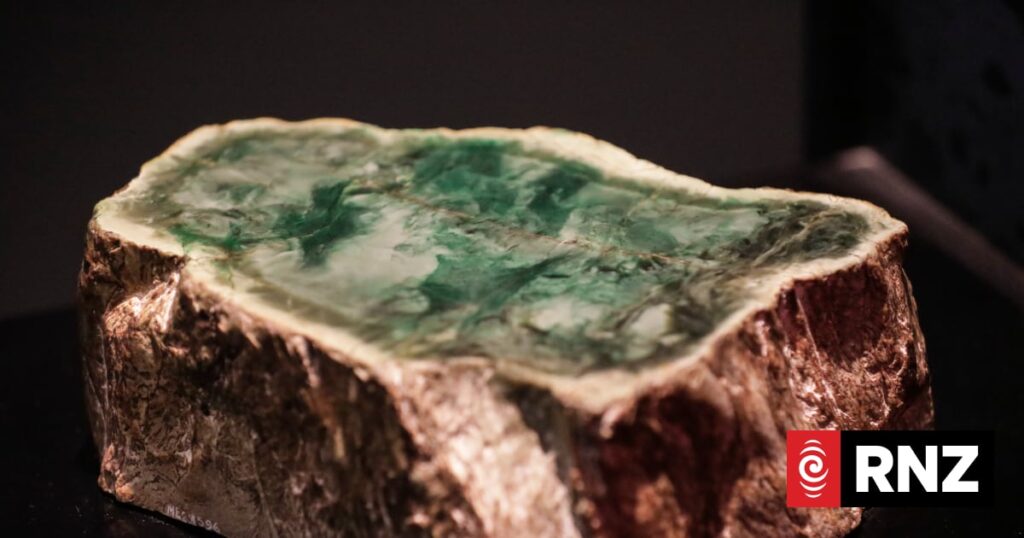
Pounamu is the toughest kind of jade – five times tougher than stones from other countries, scientists have found.
Scientists tested 16 samples of pounamu – a type of nephrite similar to jade – to discover the secrets of the stone’s strength.
University of Otago PhD student Natalia Seliutina said answers lay partly within the stone’s microscopic structures.
“The things we have discovered are that pounamu is a fibrous material, so individual grains that compose it are kind of elongated and fibrous.”
This structure allowed the material to be very resistant, because these fibres acted like metal rods re-inforcing a concrete block, she explained.
“If you put the fibrous re-inforcements like the metal rods, then the fracture would kind of have to put an additional force into propagating itself and now it’s harder to break this block.”
The research was undertaken in collaboration with Māori carvers, yielding a “surprising result”, said Seliutina.
Carvers helped pick stones for study by identifying stones they would prefer to carve.
Seliutina said their choices aligned “almost perfectly” with her resistance measurements – the stones identified as high-quality for carving recorded the greatest fracture toughness.
This meant carvers could correctly identify a material that was more likely to crack, simply by touch and sight.
“I’ve done as much statistical correlations as I could and, yes, the way they were choosing it and aligning their choice was absolutely amazing, absolutely insane for me.”
Earth Sciences New Zealand’s Simon Cox said the stone’s toughness attracted Māori carvers when they first came into contact with it.
“It really transformed how they used tools and it became a major trading commodity.”
He said these findings had practical applications, such as designing new materials based on pounami’s microscopic structures.
Another was in the fight against illegal trade, as the study of minerals within a stone could help scientists trace it back to its original location.