

Martin LELIEVRE/AFP via Getty Images
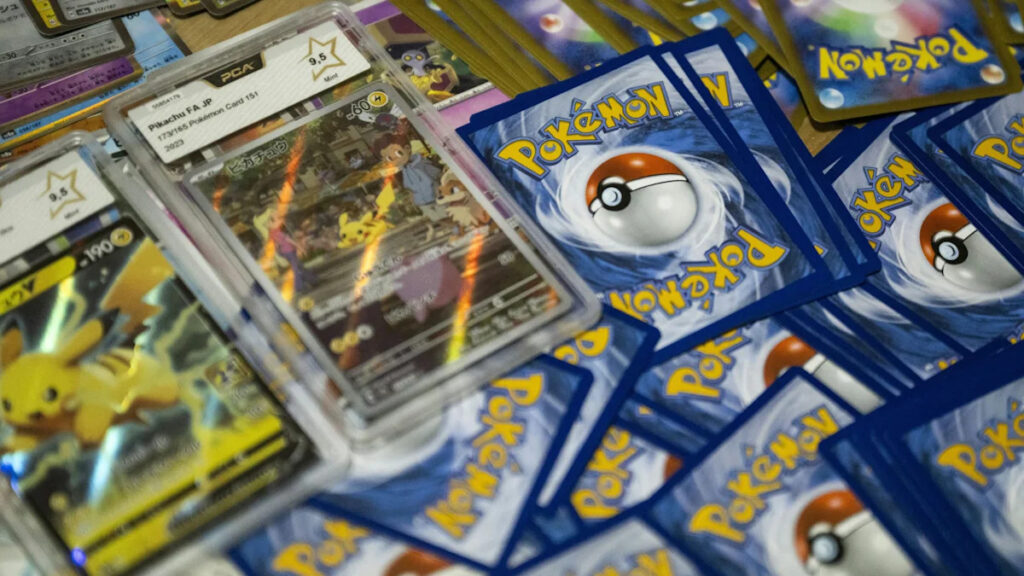
Retirees aren’t generally the sort of people you would expect to have a collection of Pokémon cards, but a senior in Woking, in the South of England, recently stumbled upon a set he assembled in the late 1990s that had been gathering dust in his attic.
It just sold for approximately $2 million, making it the most valuable trading card auction in U.K. history.
Must Read
The seller, who has chosen to remain anonymous, initially began collecting the cards when his son was young and began trading them at school.
“I thought they looked nice and wondered whether they might be a good investment,” he told the BBC. “He had his own cards, but he never got to touch these, I’m glad to say.”
The cards, some of which were bought on eBay, remained in mint condition all these years. And some of them proved to be extremely valuable. One collection, the Legendary Collection Complete Master Set, sold for 100,000 pounds (roughly $134,000). Legendary sets have highly sought-after cards, while master sets have every card in the set.
Another single card, which he originally paid 300 pounds for, sold for 75,000 pounds.
Increasing demand for nostalgic collectibles
Pokémon cards have been popular since they were first released, but a collectibles mania that caught on over the pandemic, as well as a rash of popular new Pokémon games, resulted in a resurgence of interest among collectors. Earlier this year, influencer Logan Paul sold his Pikachu Illustrator Pokémon trading card for nearly $16.5 million, a record sum. It was graded at a PSA 10, the highest quality appraisers give out. (Paul paid $5.27 million for the card in 2021).
While trading cards as a whole have seen price run-ups in the past few years, Pokémon has been the industry leader. As of July 2025, the value of those cards has increased 3,261% in the past 20 years, far surpassing the S&P 500 and most other investment vehicles.
In the 12 months prior to that, the average Pokémon card saw a 46% increase in value.
To put those numbers in context, the second most popular theme of collectible cards are American football cards. In that same 20-year period, the value of those has only increased 1,290%. Baseball cards gained 721%. The S&P 500 stock index? 421%.