
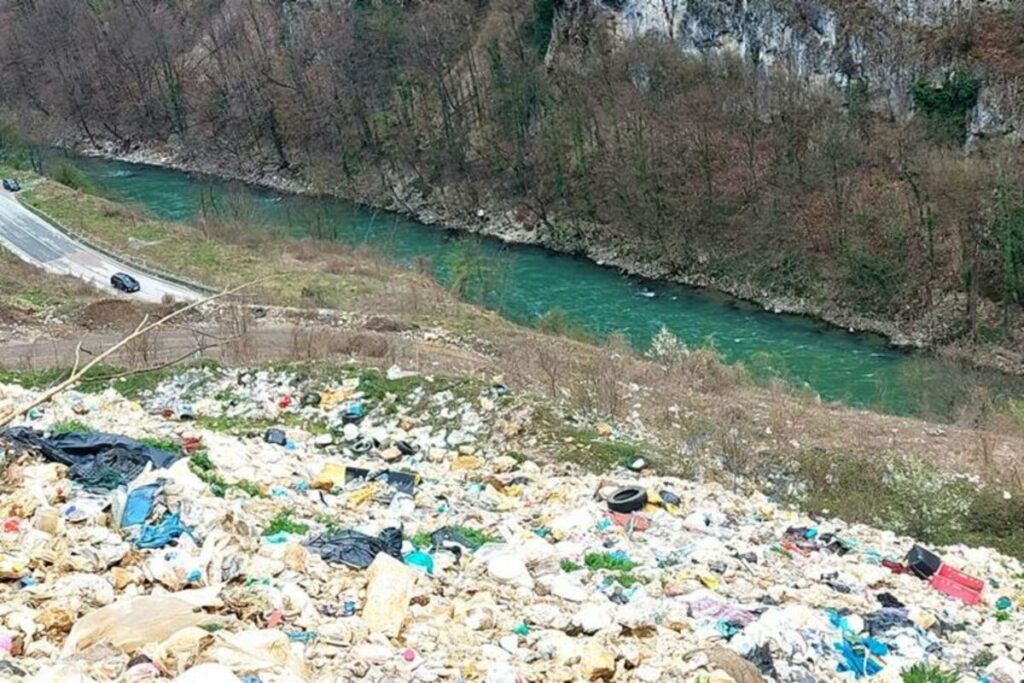
Last year, Montenegro had 401 thousand tons of municipal waste, of which 1.145 tons were recycled, or 0,28 percent of this type of waste was recycled, according to the research “Waste Generated and Processed in 2025” published by the Statistical Office of Montenegro.
In October last year, the Government of Montenegro adopted the National Waste Management Plan, which envisages increasing the recycling rate of municipal waste to 65 percent by 2035. Municipal waste is waste collected by utility companies from households, service industries and other users.
According to the previous Waste Management Strategy, Montenegro was supposed to reach a 50 percent recycling rate for municipal waste by 2030. It was published in 2015, and it states that 5.809 tons of municipal waste, or 2,38 percent, were recycled in 2013.
According to Monstat, 5,6 thousand tons or 1,8 percent of municipal waste was recycled in 2021. In 2022, that amount drops to 1.021 tons, in 2023 it is 1.089 tons, and in 2024 it is 1.016 tons.
Last year’s plan is aligned with a new European Union directive that requires a recycling rate of at least 65 percent for municipal waste by 2035. It also calls for the closure and rehabilitation of all unsanitary landfills by 2030 and a reduction in the amount of biodegradable waste going to landfills. To achieve all of these goals, 400 million euros will need to be invested in waste management over the first four years, or by the end of 2029.
The main objective of the Plan is to lay the foundation for a more efficient, sustainable and environmentally friendly system, which includes reuse, recycling and reduction of waste ending up in landfills. As a key infrastructure innovation, the establishment of four regional waste management centers is envisaged, in Podgorica, Nikšić, Bijelo Polje and Bar, along with the modernization and expansion of the existing waste recycling and treatment network.
The obligations and responsibilities of producers, whose work generates waste, are also foreseen, but the main means of achieving the goal is waste collection and compliance with new EU regulations. Special procedures are foreseen for different types of waste: paper, plastic, glass. medical waste, motor vehicles, electrical, industrial, mining waste…
The plan also envisages a series of other measures, such as strengthening inspections, institutional supervision over utility companies and waste producers, maintaining precise databases, etc.
According to Monstat data, a total of 1,32 million tons of waste of all types was generated in Montenegro last year, of which 49,3 percent or 654 thousand tons refers to waste from industry, mining, construction… 317 thousand tons or 23,9 percent of the total amount of waste was designated as hazardous waste.
In 2025, 401 thousand tons of municipal waste were generated, which is 6,9 percent more than in 2024. Utility companies collected 361 thousand tons, 21 thousand tons were delivered to landfills by citizens, producers and other legal entities, and 18,3 thousand tons was the amount of waste from citizens that was not included in the public municipal waste collection system, i.e. ended up in illegal dumps or dumped elsewhere.
The generated municipal waste per capita last year amounted to 644 kilograms, which is 6,9 percent more than in the previous year. In other words, on average, each resident of Montenegro generates 1,8 kilograms of municipal waste per day.
According to the Monstat report, 88,5 percent of the population is covered by municipal waste collection services, which is only slightly more than the year before when the percentage was 88,4. This means that almost 12 percent of the population disposes of their household waste or throws it away from the designated places.
Industry is also reducing recycling
Of the total amount of waste, including that generated in industry, of 1,32 million tons, 119 thousand tons are recycled, which almost entirely relates to industry, i.e. the reuse of waste in construction, wood processing, manufacturing industry… This is 30 percent less than the previous year, because in 2024 that amount amounted to 172,4 thousand tons.
The manufacturing industry and mining generated 654 thousand tons of waste last year, which is about seven thousand more than the year before, while the construction industry had a significant decline from 335 thousand tons in 2024 to 230 thousand tons last year.
Service industries generated 130 thousand tons of waste last year, while in the previous year that amount was 103 thousand tons.
Download the app and follow the news


FOLLOW US ON

News