
Seyit Kurt
02 November 2026•Update: 02 November 2026
- Yotova has opposed further military aid to Ukraine and called for diplomacy to end the war
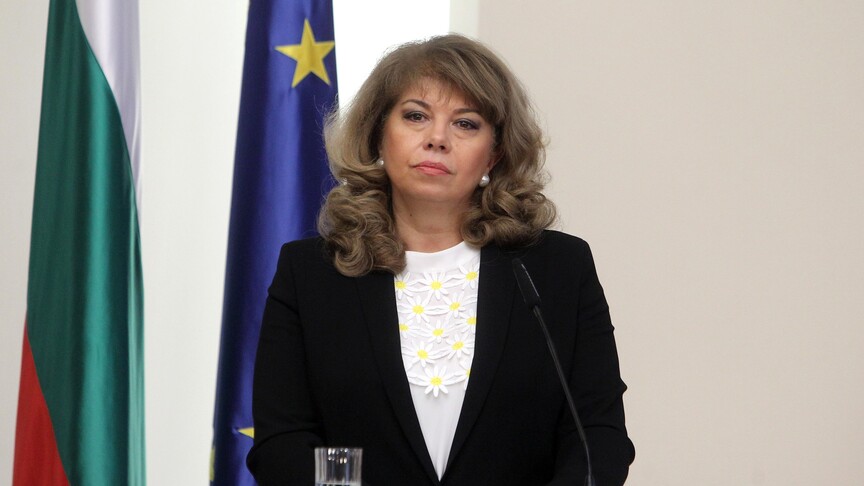
Iliana Yotova is poised to become Bulgaria’s first elected woman president, completing a political rise that has taken her from the European Parliament to the country’s highest office.
Yotova, who had been serving as president since Rumen Radev resigned in January, won Sunday’s runoff against former caretaker Prime Minister Andrey Gyurov, according to parallel counts.
A Trend parallel count based on 100% of polling stations put Yotova and her vice presidential candidate Kiril Valchev at 58.1%, compared with 38.9% for Gyurov and Georgi Kandev.
Her victory is another major milestone in a political career spanning European and Bulgarian institutions.
From European Parliament to vice presidency
Before entering Bulgaria’s presidential institution, Yotova served as a member of the European Parliament.
She later became Radev’s running mate and served as his vice president during both of his presidential terms.
Radev and Yotova were reelected in 2021, securing 63.9% of the vote in the second round.
Yotova’s political position changed significantly in January when Radev resigned as president to enter party politics.
Under Bulgaria’s constitutional rules, Yotova succeeded him as president.
Radev subsequently established Progressive Bulgaria, which secured 131 of the National Assembly’s 240 seats in April’s parliamentary election, giving it an outright majority.
The party backed Yotova in the presidential race.
How did she reach the presidency?
Yotova entered the Oct. 25 election as the incumbent but was seeking her first mandate directly from voters.
She and Valchev finished first in the opening round with 34.76% of the vote, narrowly ahead of Gyurov and Kandev on 31.95%.
Low turnout meant neither ticket could win outright, sending the two leading candidates into the Nov. 1 runoff.
The election came amid prolonged political instability in Bulgaria, which has held eight parliamentary elections since April 2021.
What are her political positions?
Foreign policy, particularly the Russia-Ukraine war, emerged as one of the main dividing lines in the campaign.
Yotova has opposed further Bulgarian military assistance to Ukraine, repeatedly arguing that the conflict has no military solution and calling for a “coalition for peace” focused on diplomacy.
Her position contrasted with Gyurov, who criticized reduced support for Ukraine and argued for closer coordination with NATO and EU partners.
Yotova has also emphasized Bulgaria maintaining greater room for independent decision-making in foreign policy while remaining part of a “strong Europe.”
After casting her ballot in the runoff, she said: “I voted for the president of peace.”
She said she wanted a Bulgaria that “makes its own decisions,” shapes its own future and builds national consensus through dialogue and functioning institutions.
As president earlier this year, Yotova also vetoed legislation restricting the number of polling stations available to Bulgarian citizens outside the EU, arguing that the changes risked limiting voting rights.
Her election now gives her a full mandate of her own after nearly a decade in Bulgaria’s presidential institution — first as vice president alongside Radev and, since January, as his successor.