
It is a project of global significance: Federal Chancellor Christian Stocker and State Secretary Alexander Pröll announced the Austrian federal government’s initiative to establish an international center for artificial intelligence under the auspices of the United Nations (UN) in the federal capital, Vienna.
State Secretary Pröll launched the initiative at the international diplomatic level during the “High-Level Virtual Meeting on the Control of Frontier AI Models.” The meeting, attended by top representatives from nearly 30 nations, was initiated by the Finnish and Norwegian heads of government—represented by Finnish President Alexander Stubb and Norwegian Prime Minister Jonas Gahr Støre. The alliance’s goal is to establish control mechanisms under international law for particularly powerful frontier AI models. UN Secretary-General António Guterres had also previously publicly welcomed the Scandinavian initiative.
Austria no longer wishes to merely act as a spectator in these global policy decisions. Rather, the planned Vienna AI Center is intended to bring together governments, the scientific community, and stakeholders from the business sector to research the risks of highly complex systems and develop global safety standards. The initiative is complemented by Foreign Minister Beate Meinl-Reisinger, who is pushing in particular for clear boundaries and international regulations in the area of autonomous AI weapons systems.
Nobel Prize Endorsement: Geoffrey Hinton Welcomes the Vienna Initiative
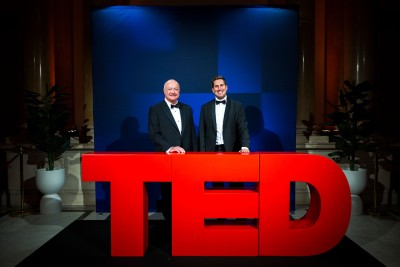
A particular highlight of the diplomatic offensive took place on the sidelines of the TEDAI Vienna technology conference at the Hofburg Palace in Vienna. There, Chancellor Stocker and State Secretary Pröll met with one of the most prominent figures in the tech world: the 2024 Nobel Prize winner in Physics, Geoffrey Hinton.
Hinton, who is considered one of the “fathers of modern AI” and was honored for his pioneering work on neural networks, has taken on the role of a voice of caution since leaving Google in 2023. He emphasizes the urgent need for international safety agreements: “AI is developing faster than our ability to control it. No single country or company can manage these risks alone, so I welcome every serious effort to build international cooperation on AI safety. Austria’s initiative is an important contribution to that.”
Chancellor Stocker expressed his delight at Hinton’s support: “When one of the ‘fathers’ of modern AI welcomes our initiative, it sends a strong signal to Vienna. We are not afraid of artificial intelligence; rather, we are providing it with a framework that alleviates people’s fears and ensures their safety.”
Domestic Talent and the National AI Strategy
Also at the negotiating table was Austrian developer Peter Steinberger. Steinberger gained worldwide recognition with the open-source AI agent project OpenClaw and is now responsible for developments at OpenAI. His presence underscored the question of how Austria can attract and retain top talent from the AI scene.
This geopolitical engagement is intended to go hand in hand with national legislation. State Secretary Pröll announced that on November 19, 2026, he would present the guiding principles of the updated Austrian AI strategy to the public in a keynote address at the Austrian National Library, titled “Austria in the Age of AI.” The UN AI Center is intended to serve as the first building block of a broader innovation and regulatory initiative.
Why Vienna? Advantages and Competition on the International Stage
Austria’s hopes of winning the bid stem from the historical tradition of the federal capital. Alongside New York, Geneva, and Nairobi, Vienna is one of the four official headquarters of the United Nations—and the only one within the European Union.
Thanks to the presence of organizations such as the International Atomic Energy Agency (IAEA) and the CTBTO (Comprehensive Nuclear-Test-Ban Treaty Organization), Vienna has decades of experience in monitoring and regulating high-risk key technologies. An AI center could function as a technical oversight and testing authority, similar to the IAEA.
Nevertheless, the road to a decision is long. Geneva is considered the most promising rival due to its focus on arms control, and Switzerland is seen as a more popular and trustworthy location. As recently as the summer of 2026, the Swiss diplomatic city hosted the first meeting of the UN-wide Global Dialogue on AI Governance, with over 3,000 participants.
Within the UN General Assembly, there is still disagreement over whether a completely new, independent body is necessary or whether existing bodies should be expanded. The Austrian Foreign Ministry will conduct in-depth negotiations on the mandate, structure, and financing in 2027.
Opportunities Still Exist
Austria is taking early action to secure a firm seat at the table of global AI regulation. Support from industry leaders such as Geoffrey Hinton lends significant weight to Vienna’s initiative. The key question in the coming months will be whether the international community can agree on a joint regulatory body—and whether Vienna can leverage its international profile as a haven for trustworthy technology.