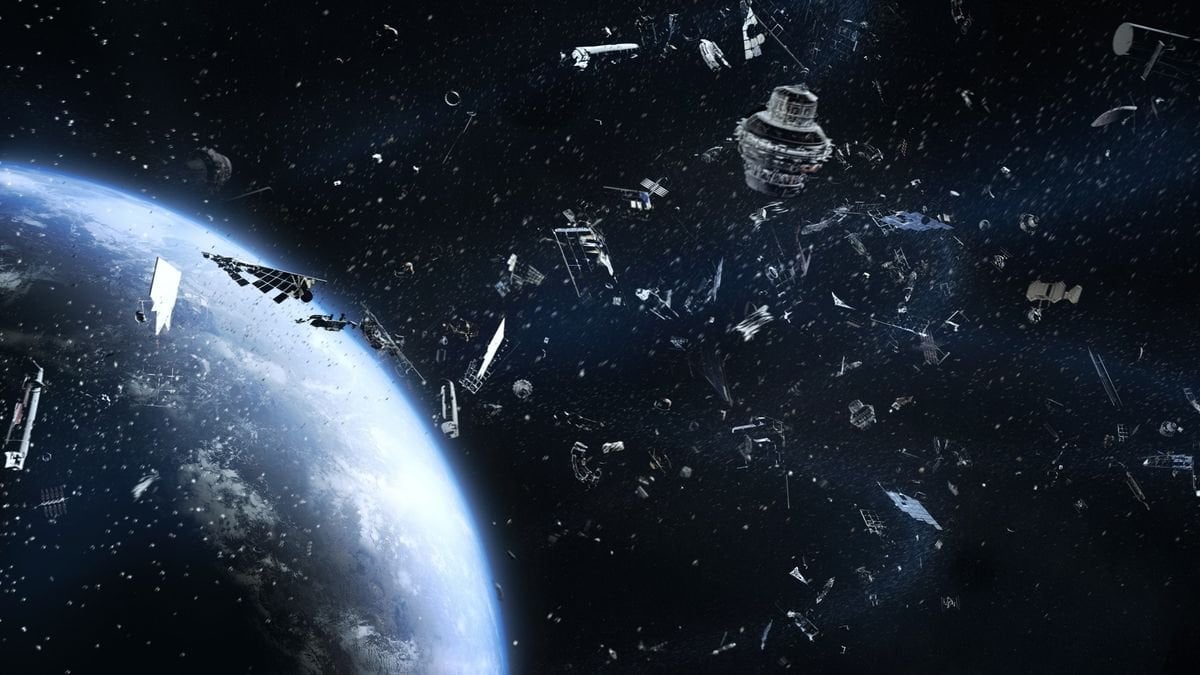
Space is becoming an ‘unsustainable environment in the long term,’ ESA says
https://www.space.com/european-space-agency-space-environment-report

Space is becoming an ‘unsustainable environment in the long term,’ ESA says
https://www.space.com/european-space-agency-space-environment-report
8 Comments
From the article
>At least, that’s one of the findings from the 2024 Space Environment Report published by the [~European Space Agency~](https://www.space.com/22562-european-space-agency.html) (ESA) on July 23. The report offers an accounting of satellites and debris accumulating in Earth’s orbit. ESA’s [~latest report~](https://www.sdo.esoc.esa.int/environment_report/Space_Environment_Report_latest.pdf), which has been published annually since 2017, is like a census for [~space~](https://www.space.com/24870-what-is-space.html) activities and shows how bad the problem is becoming. According to its data, there are more than 35,000 objects being tracked by surveillance networks, with approximately 26,000 being pieces of debris larger than 4 inches in size.
>The report suggests that despite an improved effort to mitigate this massive amount of [~space debris~](https://www.space.com/16518-space-junk.html), the junk has continued to pile up. So much so, in fact, that we are creating “an unsustainable environment in the long-term,” the report says.
hoo boy i agree with you ESA so lets maybe do something about envisat, eh?
https://en.wikipedia.org/wiki/Envisat
When this puppy breaks up on impact we’re in for a world of mess up there. a mission should be sent directly to this vessel to deorbit it IMO
at best midterm, should we really develop kessler syndrome the incentive to develop technology to clear up space would become a billion dollar business over night and I’d guess it take at best 20 years to clear it back to usable.
Aren’t there a lot of proposed solutions to de-orbit debris? This doesn’t seem like an intractable problem.
Orbital garbage collection and waste management is going to be a very important industry in the future.
If a state wanted to deny access to space, could they just blow up tons of debris in the right latitudes, thereby making a dangerous belt of chaff, or is the volume of space too great for this to be practical?
lol can’t wait for our space junk to streak across the vast wide universe
Need a satellite that gen get close and just bolt some thrusters either side and let them remote control it back down