The AI Search War Has Begun
https://www.theatlantic.com/technology/archive/2024/07/perplexity-ai-search-media-partners/679294/


The AI Search War Has Begun
https://www.theatlantic.com/technology/archive/2024/07/perplexity-ai-search-media-partners/679294/
9 Comments
Article excerpt:
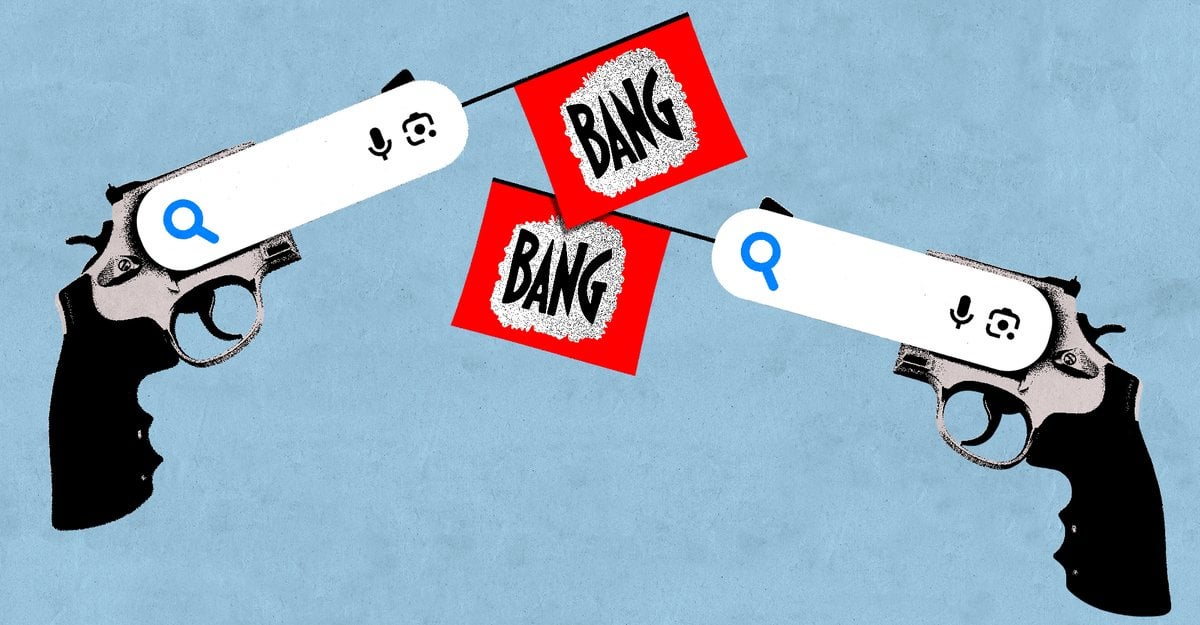
Every second of every day, people across the world type tens of thousands of queries into Google, adding up to [trillions](https://blog.google/products/search/how-we-keep-google-search-relevant-and-useful/) of searches a year. Google and a few other search engines are the portal through which several billion people navigate the internet. Many of the world’s most powerful tech companies, including Google, Microsoft, and OpenAI, have recently spotted an opportunity to remake that gateway with generative AI, and they are racing to seize it. And as of this week, the generative-AI search wars are in full swing.
The value of an AI-powered search bar is straightforward: Instead of having to open and read multiple links, wouldn’t it be better to type your query into a chatbot and receive an immediate, comprehensive answer? In order for this approach to work, though, AI models have to be able to scrape the web for relevant information. Nearly two years after the arrival of ChatGPT, and with users growing aware that many generative-AI products have effectively been built on stolen information, tech companies are trying to play nice with the media outlets that supply the content these machines need.
The race to become the go-to AI search platform is essentially just a race to the bottom as far as quality goes.
It seems like a bad idea. If you scrape web you essentially remove a chance for people to see advertisements and fund this project. So they either gonna incorporate ads into results or this whole idea is doomed.
We’ve already seen how badly Google has mishandled consumer trust with their search engine before the advent of AI chatbots.
When the first result when I Google literally anything is a product listing, it becomes obvious that serving as a functional search engine is only a secondary function. Connecting advertisers with consumers, and consumers with products has become Googles primary goal. This makes sense from a money-making standpoint, but I think Google has flown a little too close to the sun in this regard.
It seems that no matter what you search, Google tries to sell you something, even when that thing is wildly innappropriate, or an abstract concept one couldn’t possibly fit in a box.
I stopped using google a while ago because I was getting more ads than information I needed. Since their AI came out and had the issue of creating images of historical figures, there is no chance in hell I am ever using their AI that is not based in reality especially for searching things in real life.
Every so auto search is blatantly wrong because it lacks depth of understanding of complex topics. More often I read it and go well that can’t be right, and it isn’t because it took several nuanced sources and mushed them together wrong.
Big brain move of google to ruin their search so much in the past years that people used to it want better ways to search for information.
I feel like the real war is between the platforms forcing this on us vs the users who just want things to work as well as they did in 2014.
I feel like the real war is between the platforms forcing this on us vs the users who just want things to work as well as they did in 2014.