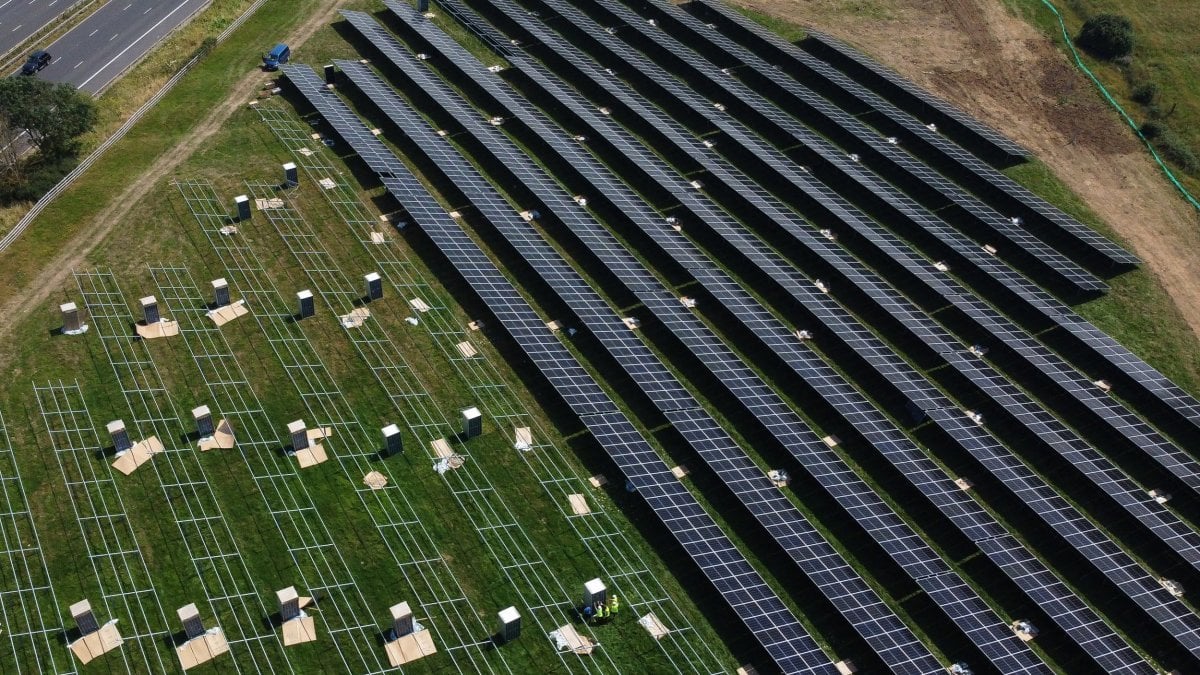
Solar energy breakthrough could mean solar panels will be a thing of the past
https://inews.co.uk/news/business/solar-energy-breakthrough-solar-panels-oxford-university-3219693
Posted by BestButtons

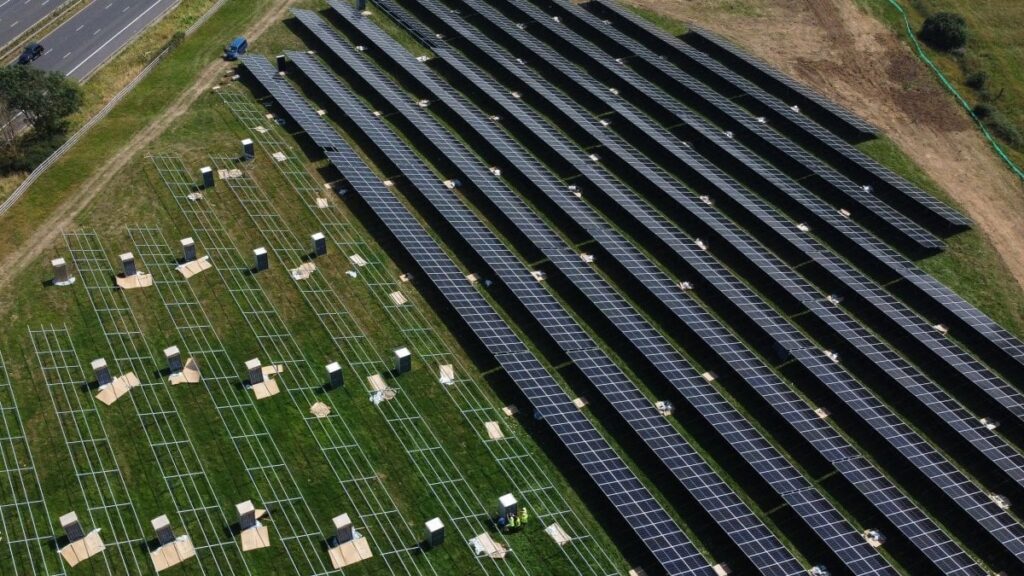
Solar energy breakthrough could mean solar panels will be a thing of the past
https://inews.co.uk/news/business/solar-energy-breakthrough-solar-panels-oxford-university-3219693
Posted by BestButtons
9 Comments
> The new approach involves coating a new power-generating material onto the surfaces of everyday objects such as rucksacks, cars, and mobile phones, the university said.
> They say they have developed an ultra-thin material capable of being stuck to any everyday object to harness the power of the sun. The material can be applied as a coating and is far smaller than current solar panels as well as being more energy efficient, meaning it can convert more of the sun’s energy.
> Oxford University’s Dr Shuaifeng Hu said that after just five years experimenting the team have raised power conversion efficiency from about 6 per cent to over 27 per cent, close to “the limits of what single-layer voltaics can achieve today.” He said the research team believe this could be extended to up to 45 per cent efficiency.
Doesn’t look like this is just a pipedream either:
> Their work has strong commercial potential and is already being applied to utilities, construction, and car manufacturing industries. Oxford PV, a UK-based firm spun out of Oxford University Physics in 2010 by Professor Henry Snaith to commercialise perovskite photovoltaics, recently started large-scale manufacturing of them at its factory near Berlin, Germany. This is the world’s first volume manufacturing line for these specially designed tandem solar cells.
Great news in any case.
I really hope this becomes a thing. But I’ve seen so many “breakthroughs” and some how they just get repressed.
I’m still waiting on those Solar FREAKIN roadways lol
https://youtu.be/qlTA3rnpgzU?si=uB-T_kTUYDpcs1jj
So if we make solar panels out of the stuff, they’ll be even better than doping random surfaces.
I remember seeing something on TV years ago about a solar coating made from Olive oil.
Perovskite captures light at different wavelengths to silicon too, so there’s a possibility of making hybrid collector that captures both bands.
Harness the power of the sun you say? So… we could make gloves with it, and then I could walk around all day saying “in the palm of my hand” – count me in
Headline is somewhat misleading, you’ll still be sticking a panel shaped object onto some kind of mounting system that you then either stick in a field or on a building. No one is going to be sticking them onto to awkwardly shaped and easily damaged surfaces.
It will make panels cheaper and lighter, but they will still be panels.
Right now panels covering a roof relay in 5-6 years in the UK
I covered my house in them mid 2019 just before all the energy companies went bust. Octopus was paying up to 80p per KWh
My panels paid themselves off in 18 months as a result
Now I have free electricity for 35 years