
This ended any notion of Georgian independence and sovereignty until 1918, when another act of Russian betrayal reared its head. In the chaotic aftermath of the Russian Revolution, the country declared independence as the Democratic Republic of Georgia. Most European countries recognized the republic, as did some countries farther away — like Argentina and Japan. And even though Soviet Russia was now led by the Bolsheviks and Georgia’s government by the rival Mensheviks, Moscow recognized the country’s independence as well.
Then, in 1920, the two sides signed the Treaty of Moscow. Russia promised to stay out of Georgia’s internal affairs and even to demilitarize its border with Georgia. Meanwhile, Georgia promised to ensure the withdrawal of the British troops located there at the time. But a secret annex of the treaty also required Georgia to legalize a local Communist party — something that would eventually lead to the overthrow of the Menshevik government and the loss of Georgian independence once more.
In hindsight, it’s clear Russia had no desire to honor its terms of the treaty. If anything, it was a time-buying exercise allowing Moscow to settle the Russian Civil War before turning on Georgia. And in 1921 — less than a year after the treaty was signed — Russia invaded, established a Communist government in Tbilisi and absorbed it into the Soviet Union. Georgia remained under Soviet rule until 1991.
If you believe all this is in the past and another Russian invasion is unrealistic, you haven’t been paying attention. You can bet the Kremlin is watching events in Georgia closely. And the moment Georgian Dream appears to be losing its grip on power, it’s highly likely Moscow will intervene — especially if the government’s downfall comes as a result of mass demonstrations.
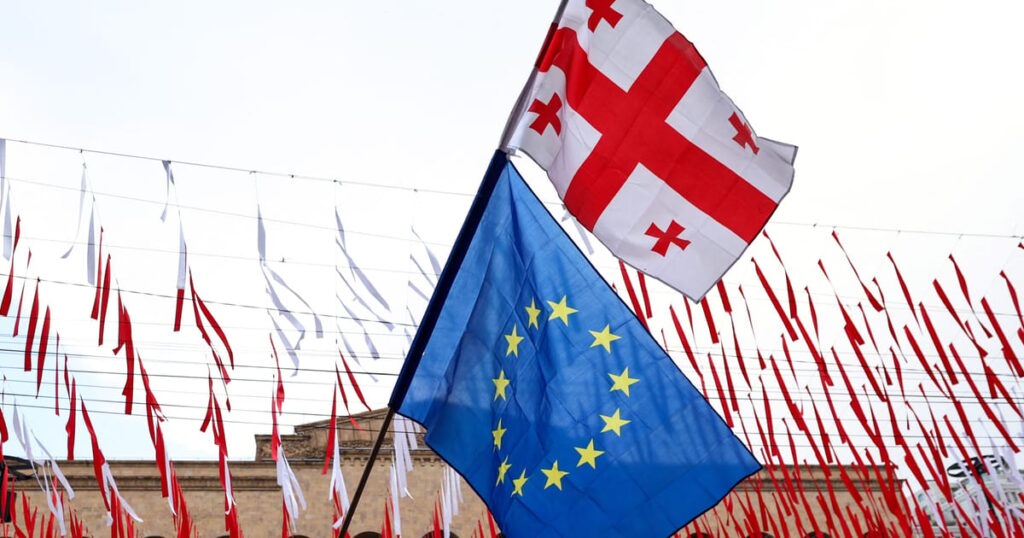
But with the “Russian Law,” Georgian Dream is now swimming against the tide of history and contradicting the people’s distrust of Russia. Georgia’s destiny is in the Euro-Atlantic community because its past has been rooted in Europe for centuries. The middle-aged Georgians now protesting in the streets are old enough to remember what life was like under Soviet rule, and they don’t want to go back. The younger demonstrators know nothing other than Georgia’s Western perspective, and they want to stay on this path.
It remains to be seen how Washington, London and Brussels will respond now that the law has passed. But one thing is certain, it can no longer be business as usual between Georgia and its Euro-Atlantic partners. But even with this setback, Georgian civil society remains strong and resilient.
As the Georgian literary giant — and staunch critic of Russian imperialism — Ilia Chavchavadze wrote in his famous work “The Phantom”: “Tell me, what other land has had so thorny a path to tread? Where is the land that has maintained such a fight twenty centuries long without disappearing from the earth? Thou alone, Georgia, could do it. No other people can compare with thee for endurance.”
So, with national elections now scheduled for October and still no political resolution or compromise in sight, it’s going to be a long and difficult summer. The last thing the South Caucasus or the Black Sea region needs is more instability. And if policymakers aren’t watching Georgia now, they should be.