
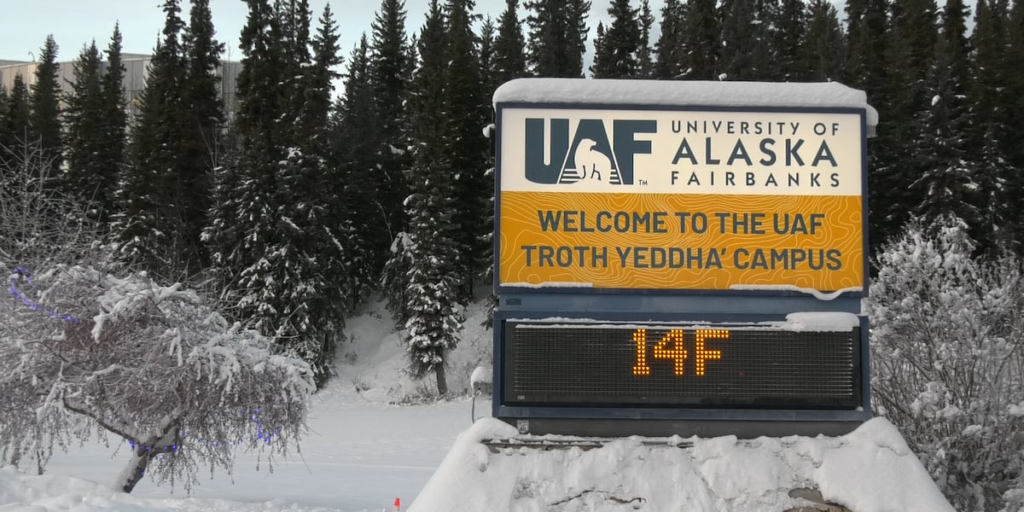
ANCHORAGE, Alaska (KTUU) – A team of University of Alaska Fairbanks (UAF) researchers have released a report linking the impacts of climate change to the increased frequency of extreme weather and climate events in every corner of Alaska
The report, along with the 2024 Arctic Report Card, is being presented this week in Washington, D.C. by its co-editors, Rick Thoman and Heather McFarland.
Forty scientists and Indigenous experts contributed to the 32-page report, called Alaska’s Changing Environment 2.0.
The report lists examples of extreme weather conditions in Alaska, including former Typhoon Merbok in the Bering Sea, which devastated Western Alaska coastline in September 2022.
“Whether it’s extreme rain causing flooding, causing landslides, whether it’s extreme snowfall, whether it’s long-term permafrost thaw and riverbank erosion,” said Thoman.
The Arctic, Thoman estimates, is warming three to four times as fast as the global average.
“Certainly the changes in the environment, the loss of sea ice, the changing seasonality of sea ice, the warming temperatures, and the changes in the ocean are all very advanced in the Arctic,” he said.
Thoman works as a Climate Specialist with UAF’s Alaska Center for Climate Assessment and Policy, while McFarland is a Science Communicator with ACCAP.
According to Thoman, the Arctic began pulling ahead of the world average for warming around 11 years ago.
He said the warming trend can be expected to continue, despite variability year-to-year.
“There’s going to be some years that are warmer, some years that are cooler, some months that are warmer, some months that are colder,” Thoman said. “That doesn’t change in a warming environment. So while the long-term trajectory is clear, that shorter-term variability remains.”
He explained ways people can prepare for the changing environment vary depending on where someone is located in Alaska.
“How much snow are you prepared for, if you’re in an area that that is susceptible to extreme snow? How far up the beach do you have to pull your boats, if you’re in a area that’s subject to river or coastal flooding? What can you do to harden your seasonal camps, or can you make them so that they’re easier to repair or replace when storm damage comes along?”
See a spelling or grammar error? Report it to web@ktuu.com
Copyright 2024 KTUU. All rights reserved.