
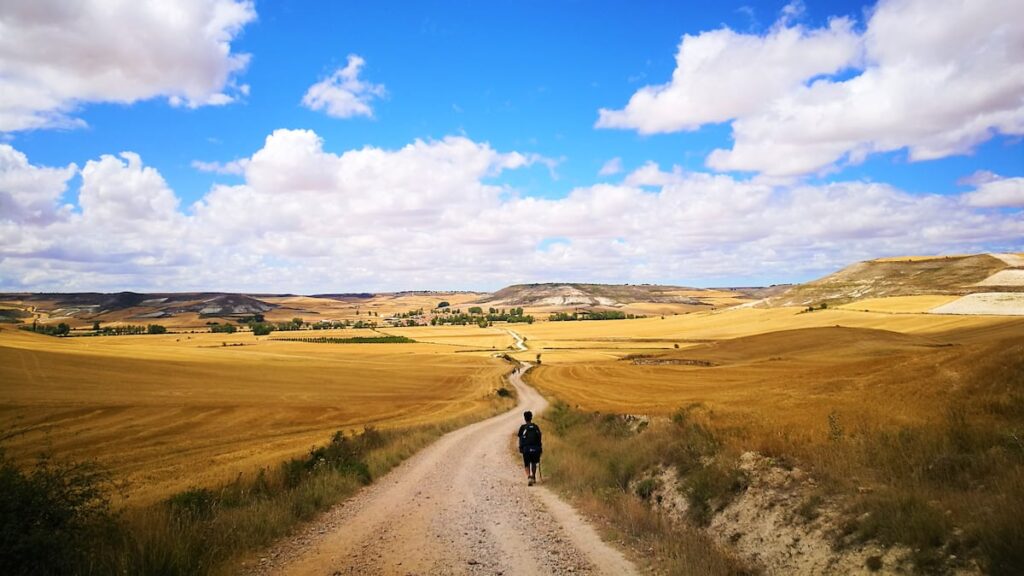
Hunger pains hit differently around mile 13. I learned that the hard way while hiking the Camino de Santiago this September, a popular but arduous pilgrimage culminating in Spain’s Cathedral of Santiago de Compostela.
I’d been wanting to hike the Camino for years after hearing friends rave about their long excursions, including one who walked 10 days through the English countryside on the Cotswold Way and another who spent more than a month hiking the Colorado Trail. I was able to fit in a seven-day hike.

Panoramic aerial view of San Sebastián on a beautiful summer day in Spain. [ Photo from Shutterstock ]
After some preliminary research, I settled on the northernmost route: the Camino del Norte. I couldn’t do the entire trek, which takes roughly five to six weeks, but decided on the beginning portion, which kicks off in the small town of Irún and hugs the northern coast of Spain, passing through the celebrated Basque towns of San Sebastián and Bilbao.
Many people hike the trail as part of a spiritual pilgrimage. Also known as the Way of St. James, alternate sections of the Camino have been traversed by millions of travelers, culminating at the Cathedral of Santiago de Compostela, the reputed burial place of St. James the apostle. I chose this particular portion of the Camino for a chance to get out into nature and for self-reflection. There was, of course, another reason: food.

Basque Country is well-known for its high-quality beef and steaks. [ Photo by Helen Freund ]
The small seaside town of San Sebastián is known for a lot of things — incredible beaches, cobblestone streets crammed with pintxo bars, stunning architecture and myriad cultural events. But perhaps more than anything, the city is beloved for its incredible culinary scene. It has one of the highest concentrations of Michelin-starred restaurants per capita in the world.
I wanted to walk. But I really just wanted to eat.

Many varieties of seafood, including octopus, sardines, tuna and oysters, are served at restaurants all over San Sebastián. [ Photo by Helen Freund ]
What I hadn’t taken into account was that this route is one of the more challenging sections, and the portion I’d chosen was considered particularly difficult. With daily elevation gains upward of 3,500 feet, most hikes averaged around 15 miles per day. Florida’s flat terrain wasn’t exactly the best for training.
Subscribe to our free Do & Dine newsletter
We’ll serve up the best things to do and the latest restaurant news every Thursday.
Want more of our free, weekly newsletters in your inbox? Let’s get started.
This is how I found myself staring down a 16.2-mile hike on Day 1 with a backpack at least 5 pounds heavier than necessary, sore ankles and a gnawing sense that I might have made a huge mistake.
Pintxos are small snacks, usually costing a few euros, available at bars and restaurants all over Basque Country. [ Photo by Helen Freund ]
Thankfully, my sense of unease was short-lived. I took a well-advised break in San Sebastián after that first long hike and spent the day wandering around the city in awe of the breathtaking architecture and sweeping sea vistas. I sipped sweet vermouth garnished with orange wedges and green olives in beachside cafes and ate my way through the city’s Old Town and its plethora of pintxo bars — walk-up spots where tiny snacks are served, usually for just a few euros. I drank fantastic wines from the Rioja and washed down slices of decadent Basque cheesecake with glasses of the region’s crisp, sour ciders.
Within days, I found my rhythm back on the trail, stopping every few hours for a pick-me-up cafe con leche and a bocadillo de jamón (small sandwiches made with Ibérico ham) before heading back out for a few more miles. Along the way, I passed tiny countryside villages, hills dotted with farms, fields of wildflowers and more than a few curious cows and horses.
A quick note on those Michelin-starred restaurants: I was living out of my backpack for 10 days, and my nicest “go-out” outfit consisted of a linen pantsuit and a pair of Teva sandals — a fancy multi-course meal just wasn’t in my future. But this trip helped solidify a long-held belief that you don’t have to go looking for the best meals in shiny packaging.
This signpost is emblazoned with a scallop shell, the Camino’s traditional symbol. [ Photo from Shutterstock ]
When I finally made it to Bilbao, I wasn’t ready for the walk to end. And I certainly wasn’t done eating. The trip was, and still is, one of the hardest things I’ve ever attempted. But it’s also so clearly the best thing I’ve ever done. I can’t wait to go back. Next time, though, I’ll remember to bring snacks.
Pilgrims watch the sun set over Santiago de Compostela, seen from the famous cathedral viewpoint in Alameda Park. [ Photo from Shutterstock ]What to pack
When hiking the Camino, you don’t want your pack to weigh more than 10% of your body weight. This means that packing anything beyond what’s absolutely necessary — basic hiking clothes, two pairs of shoes, medications and toiletries — is pretty much out of the question. Pack plenty of water — a minimum of 2 liters per day — and make sure to bring a few snacks for the days when amenities are few and far between.
Where to stay
The most common choice for travelers on the Camino de Santiago is an albergue — affordable hostel-like accommodations, often with dormitory sleeping arrangements. For a little bit of extra cash, budget “pensions” are a great option in some of the smaller villages. I had some luck locating Airbnbs in larger cities like San Sebastián and Bilbao. Several luxury options, including some in historic castles and monasteries, are also available for those interested in first-class accommodations.
When to go
There are travelers on the Camino year-round, but early spring and fall offer the most optimal weather conditions. Beware that fall can bring heavy rains to the region.