
HONOLULU (HawaiiNewsNow) – Operating high above ground level on Kauai, scientists from the National Tropical Botanical Garden used drone technology to make a discovery that runs counter to the claim that there’s nothing new under the sun.
“It’s amazing for us to be able to use a drone to help with discovering new species,” said NTBG drone operator Ben Nyberg. “It’s a new thing globally and to have that happening here in Hawaii is just really exciting.”
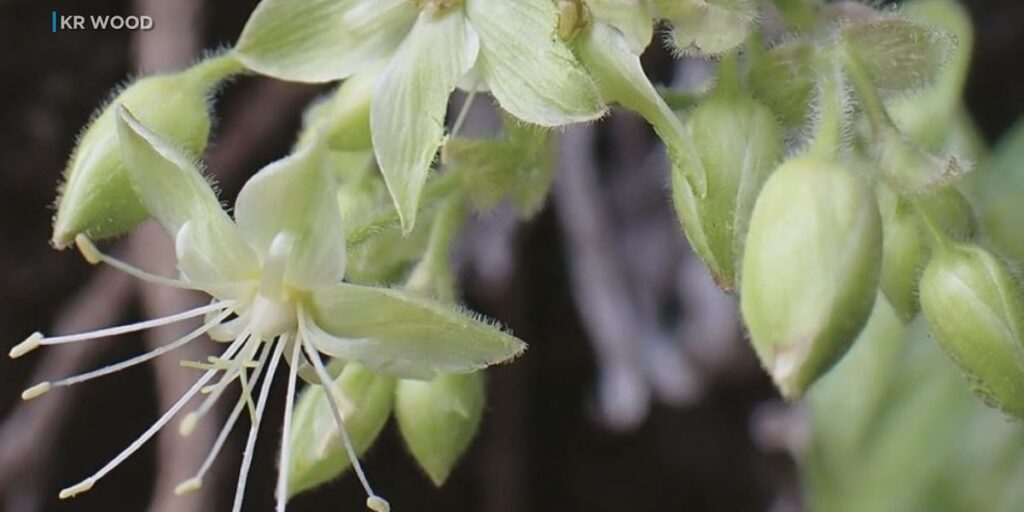
The rare species is a never-before-documented plant that belongs to the carnation family. Botanists spotted it while surveying the Waiahulu area of Waimea Canyon.
”It’s basically in the middle of a 2,000-foot cliff,” Nyberg said. “You can’t get to it from above and you can’t get to it from below. These areas are dry and crumbly rocks, so it’s kept botanists from working in these areas for a long time.”
Using a robotic arm called the Mamba, researchers were able to collect cuttings from the plant that they put through DNA analysis.
”We went in and got a really nice collection of it. We knew right away when the plant came back this was something that hadn’t been documented by botanists before,” Nyberg said.
Botanists at the University of California Irvine examined the plant’s seeds and confirmed it as a species new to science. It was named Schiedea waiahuluensis after the area where it was found.
Subsequent drone flyovers located hundreds more.
”We have been able to map close to 400 individuals of this plant, which is kind of surprising. A lot of new species that are discovered are only known from a few individuals. It’s actually fairly abundant compared to a lot of the other plants that we work with,” Nyberg said.
The botanical garden is now growing the plant in its nursery to learn how it’s pollinated and disperses its seeds.
Scientists are also trying to determine if an insect found on the cuttings may be a new species of insect.
”It’s just exciting to fill out our knowledge about the Hawaiian flora and these really special environments,” Nyberg said.
Credit for the discovery also goes to the State of Hawaii Division of Forestry and Wildlife, the plant extinction prevention program, and Outreach Robotics, NTBG’s collaborators in Canada.
Copyright 2024 Hawaii News Now. All rights reserved.