
Academic organizations, community-based groups and other partners from around the state recently kicked off a major project for the New Jersey Department of Environmental Protection’s “Building a Climate Ready New Jersey” initiative.
In July, the NJDEP announced a $72 million grant from the National Oceanic and Atmospheric Administration. Under this grant, projects will be implemented in communities throughout New Jersey, including in Essex, Passaic and Bergen counties with the goal of addressing issues from flooding to habitat loss, degraded water quality and more.
“Building on existing programs and expertise, this award will establish a resilience planning and project design pipeline that extends comprehensive, community-driven planning programs into new communities, brings more disadvantaged and overburdened communities into the resilience cycle, identifies more projects for design, and advances projects through the design phase and closer to implementation,” said the NOAA.
Earlier this month, the project’s partners held an official kickoff meeting, according to Jon Miller, research associate professor in the Department of Civil, Environmental and Ocean Engineering at Stevens Institute of Technology which will play a key role in advising the state and communities on issues related to coastline protection throughout this project.
“It’s an amazing project. It is extraordinarily complex. There’s a number of various pieces, but the basic idea is, well, it’s called Ready NJ, so it’s building a climate ready New Jersey,” said Miller. “So that grant basically begins with, on the project level, it begins with identifying places where projects can be constructed to make the state more resilient to the impacts of climate change.”
According to Miller, under this grant projects will be identified, designed, and in some cases constructed with the end goal of improving state resilience to future issues caused by climate change such as extreme weather and sea level rise. Additionally, this project aims to “create something that’s enduring.”
“Rather than just jumping in, building something at the state level, and then jumping out, the idea is really to sort of educate the community and to work with the community so that as these projects are being constructed and as these programs are being implemented, there’s an enduring capacity to improve the understanding of climate resilience within the state and really give communities the capacity to continue to work toward building a more resilient New Jersey after the grant ends,” Miller added.
Partners in this massive project range from academic institutions including Stevens, Rutgers University, Monmouth University, NJIT and Kean to community-based organizations such as the New Jersey Sea Grant Consortium and Sustainable Jersey among others.
There is a mixture of different projects under this initiative, according to Miller, ranging from coastal resilience work to what he described as “traditional green infrastructure projects” like rain gardens.

For about 15 years, Miller and his group at Stevens has been working on living shorelines and working with the state of New Jersey to develop a set of engineering guidelines for the installation of living shoreline projects.
A living shoreline, as defined by NOAA, is a “protected and stabilized shoreline that is made of natural materials such as plants, sand or rock.” Research indicates that living shorelines are more resilient than “hard” shoreline stabilization methods such as bulkheads in protecting against the effects of hurricanes.
Under this grant, Miller and his team will use their expertise and years of experience to work with the state and coastal communities to figure out where living shorelines might be appropriate and how they could improve the resilience of the communities. They will then work together to develop designs for the projects.
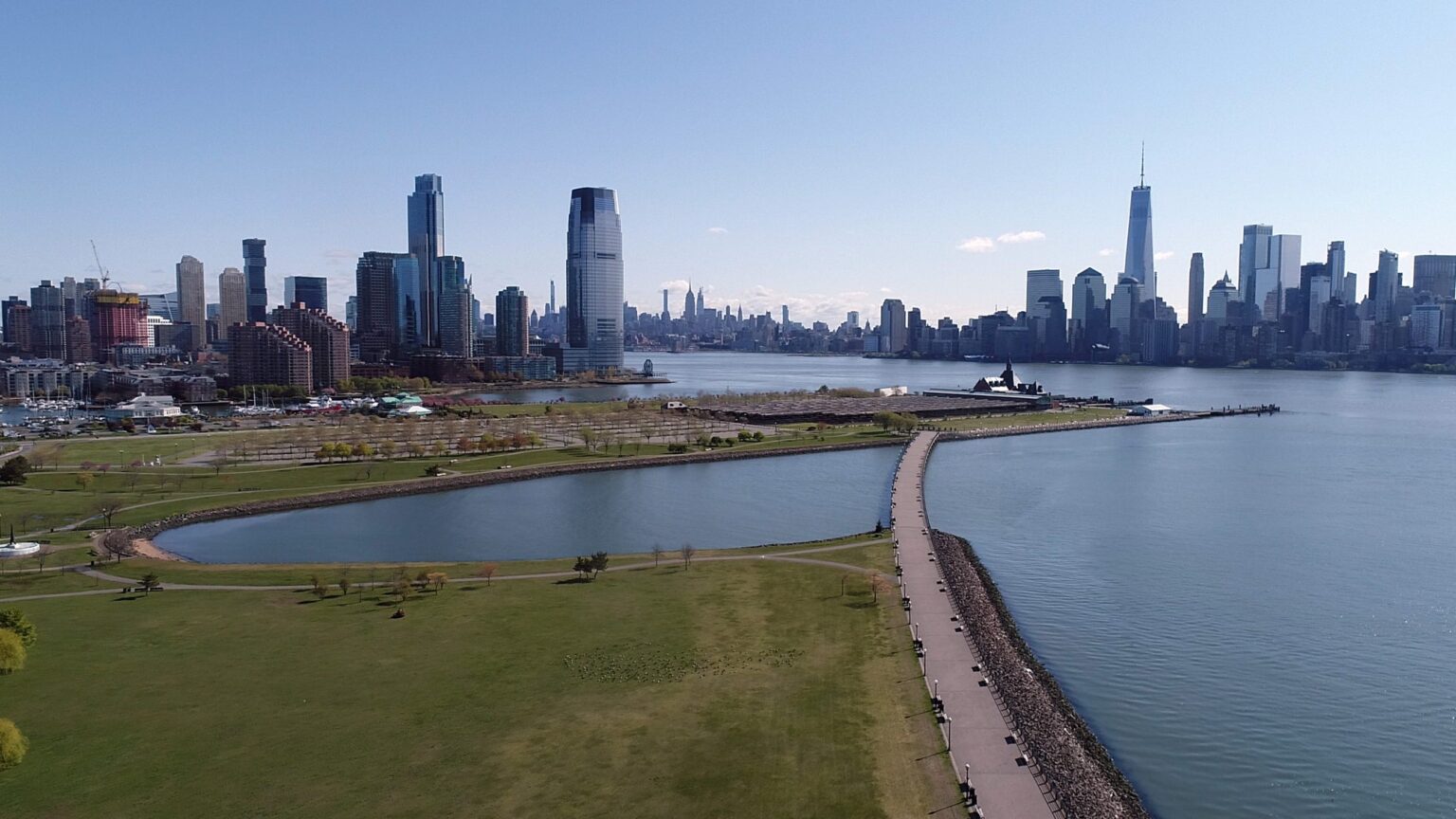
In North Jersey they will be working on project at Liberty State Park in Jersey City as well as a riverfront park in Little Ferry.
“In the case of Liberty State Park, because it is a larger project, the NOAA DEP funding is intended to move a plan forward to the point where there are final designs and specifications developed for the revitalization of Liberty State Park,” said Miller, who stated that they are looking to work particularly in areas where living shorelines might be appropriate.
In Little Ferry, the work done under this grant aims to improve the public’s access to the waterfront while restoring the area’s native habitat, according to the NJDEP. This project is a bit further along and has already had some preliminary design work, according to Miller who said, “So in that case, the NOAA DEP funding would be intended to take that project all the way from the existing conceptual design phase through project construction, and even some monitoring.”
In addition to coastal resilience work, Miller says that there are a number of more “traditional green infrastructure projects” included under this grant money, such as rain gardens and bioswales. These projects are more inland focused and will be primarily implemented in urban communities including Newark and Paterson with the goal of improving stormwater management.
“I think the important thing to recognize first of all is that New Jersey is a coastal state, and New Jersey always has been and will continue to be vulnerable to the impacts of coastal storms and climate change,” said Miller. “We need to be prepared to be able to withstand those events and to function and bounce back after those events.”
He emphasized the fact that one of the main intents of the project is to implement various solutions in various environments whether it be through green infrastructure, nature-based solutions or living shorelines, ultimately balancing ecological benefits with societal benefits in terms of reduced vulnerability to climate change. In addition, Miller highlighted the lasting effect that will hopefully come from involving community partnership in the development of these solutions.
“As the next storm happens and, you know, we don’t have to spend as much money on recovery because we’ve constructed a more resilient New Jersey, then the financial benefits can come back, you know, two-fold, five-fold, 10-fold. Who knows,” said Miller. “Then certainly there’s the nonfinancial parts. If some of the work that we do can helps reduce the loss of property and life potentially in these storms, then it’s an immeasurable impact.”
He continued, “I think really it’s that kind of integrating nature-based solutions with the traditional engineering solutions and showing how they can work together and how the communities can work to help design these solutions to become more resilient. That hopefully will be the takeaway from the project.”