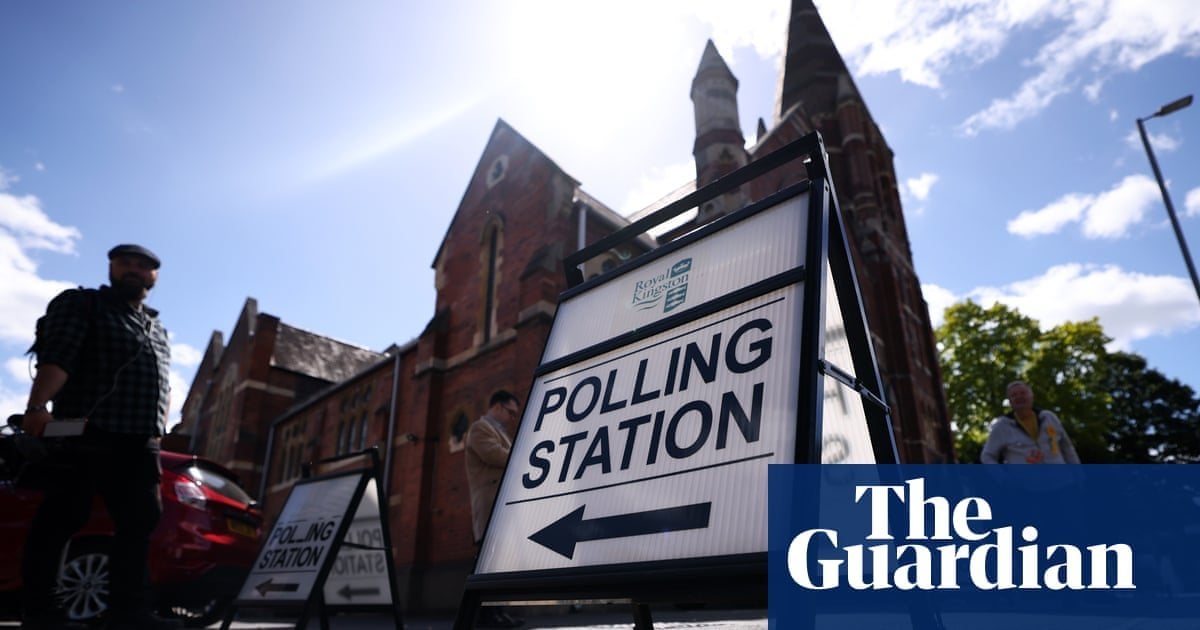
Turnout inequality in UK elections close to tipping point, report warns
https://www.theguardian.com/politics/2025/jan/01/turnout-inequality-uk-elections-close-to-tipping-point-ippr
Posted by You_lil_gumper

Turnout inequality in UK elections close to tipping point, report warns
https://www.theguardian.com/politics/2025/jan/01/turnout-inequality-uk-elections-close-to-tipping-point-ippr
Posted by You_lil_gumper
19 Comments
“Lower immigration”
“Ok”
Immigration goes up
“Will you lower it this time?”
“Yes”
Immigration goes up
“Ffs, you better do it this time”
“We will, we will!”
Immigration goes up
“Ah fuck this, they dont listen, why bother”
This feels such an important report that’ll probably get completely forgotten about. Disillusionment with politics and a rejection of involvement in the democratic process is a dangerous thing for a society. For a while I’ve thought we’re much too blasé about how many people just don’t vote. It speaks of a political class and system that only aims to engage an increasingly narrow portion of the population.
I do wonder how much our voting system is increasingly a problem also. Our system is well suited to two party politics. But it increasingly seems like we have a population that doesn’t want or suit a two party system.
It’s incumbent on Labour to reverse that by making meaningful changes that impact the lives of the disenfranchised.
Why would you participate when you feel that no government works for you? I.e unaffordable housing, low wages and public services cut to the bone.
Makes it easy to understand why people are against mass immigration when they feel like the country is already saturated in terms of jobs and housing.
The issues are easy to diagnose, but the solution is more difficult as it involves spending money we don’t have and we know that this country hates tax and borrowing so, politically, it’s an awkward choice to make.
The “They’re all the same” agenda has been pushed by right wing media for years. An apathetic electorate put up with things because “what’s the point of complaining?”. Massive PPE fraud during COVID, Johnson openly taking and soliciting bribes, economic incompetence… “They’re all the same. There’s no point voting. Labour works be the same”. Now we have a Labour government the message from the media is the exact opposite. “Why haven’t Labour fixed everything. It’s all their fault. Only the Conservatives (or Reform) can save us.”.
We’re JUST NOW realising a minimum of a third of voters never both to show up? That’s true in most countries and for 50 years.
According to a June YouGov survey:
– 82% of those polled believe water companies should be nationalised (8% against.)
– 71% polled believe energy should be nationalised (17% against.)
– Even 66% buses should be nationalised (22% against.)
– And 60% think universities should be nationalised (23% against.)
Yet the Tories are categorically against nationalisation, and Starmer ran for leader saying it was in favour, only to U-turn when in power. Why do both our political parties act like Nationalisation, something overwhelmingly popular, and something that we used to DO until quite recently, is just not an acceptable opinion to hold? And is it unsurprising that people feel disenfranchised when it’s so BLATANTLY off the table because the politicians are in bed with the corporations?
Immigration is also an issue, with large percentages thinking it’s too high. But I differentiate it because
1. Politicians are constantly saying immigration is way to high, and that they’re JUST about to do something, while even Labour haven’t touched nationalisation with a barge pole (except for trains, which is half a job to shut the lefties up, and GB Energy which isn’t a job done at all.)
2. The entire mainstream media is bleating about immigration every day, but also is strongly averse to talks about nationalisation.
Whether you think it’s a legitimate issue or not, calls for lower immigration are hyped up by the media and politicians, but nationalisation is actively opposed across the board by every institution with a fraction of power.
You don’t have to look far to find anti-immigration sentiment in politics, but you’ve got to scour a fair bit to find a politician or pundit even CLOSE to power who is arguing in favour of Nationalisation, despite it polling in the high 60s for percentage popularity.
Turnout inequality is an unusual phrase. Inequality implies there’s something preventing certain groups from voting, whenever there isn’t. Nobody is stopping anyone from going to the polls.
Voting system needs to change – FPtP – is too disenfranchising, both Conservative & Labour campaigned to keep it when it came to vote of changing it last time – vested interests to keep the Red – Blue revolving gravy train of power & self interest.
Maybe the new voter registration system has something to do with it? It seems needlessly complicated.
I’m pretty sure the word immigration turns up nowhere in the article at all, for all the GBeebies fans on this sub. Yeah the Guardian is a liberal newspaper that scratches its head and hides stuff, here is how they do it…
“Other policy suggestions included moving polling day to a weekend or making election days a public holiday, and scrapping the voter ID requirements introduced by the Conservatives.”
The difference between the poorest being unable to vote in the previous two elections was by design, because of the combination of work commitments, and ID requirements. Even if you can get over the barrier having to jump it is a deterrent, to some. Makes no difference on passport availability for those who regularly holiday abroad, to filling out paperwork for a temp ID to those who dont even have a driving license.
Turnout has been on a steady downwards curve for decades. Honestly, we should have compulsory attendance like they do in Australia. The political system is broken because average people don’t care and the political class needs to find ways to make them care (e.g. compulsory civics classes, compulsory voting and candidate policy pamphlets to every voting household (some places do this for mayoral elections) etc etc)
Surely they can’t realistically cut immigration too much because businesses want to use cheap labour willing to work under any conditions and they fund the parties. Boycotting those businesses would probably be more effective.
I don’t know if the stats bear this out, I’m sure there are people who will happily say either way, but my personal feeling is apathy really started after the 2003 Stop the War Protest and kicked into high gear after the 2008 Global Financial Crash.
The 2003 Stop the War Protest was the largest and still is, protest of its kind in British History and it accomplished absolutely nothing.
This really drove home how little Politicians cared about what we as in the general public want and that once in power they will do whatever they like.
To completely ignore an estimated 1.5 million people marching through London and in other cities around the country was breathtaking in its arrogance and showed the general public that your voice does not matter.
Then we had the financial crash of 2008. It wasn’t the cause or how it was handled that was the problem, it was the aftermath..
It was that nobody was found accountable, it was that the fact that those who were made to pay were ordinarily working people whilst the millionaires and those who were irresponsible carried on as nothing had happened.
The combination of both events had a massive effect on several generations in that it doesn’t matter who is power, you will still get shafted and nobody cares about you if you are working or middle class.
Starmer’s Labour will not help with this.
His return of labour to “grown up adults in the room” politics meaning focus group, electorate triangulation and PR bullshit speaking in place of actual honest principles and beliefs means people will stop giving a shit again.
Most people I speak to have gone back to a why bother, they’re all the same view they had under New Labour and who can blame them.
I really do fear for the next election and Farage sweeping to victory because people like that he talks like an actual human being.
Why vote when all parties are just as shite as each other
Oh so it’s a problem now that Labour won but wasn’t the past 15 years?
Getting rid of FPTP would be a great first step, but it requires the big parties to vote against their own interests (though more so Tories than Labour, as centre to left parties would accumulate more of the vote). It’s the gamble of whether people like Lib Dems would side with Tories again.
The correlation between vote % and seats is pretty disconnected. A party can lose the general election with a literal majority (>50%) of the votes
Greens would get more votes, a Corbyn-like left party would get a lot of votes (proven by 2017 result and even 2019 to a lesser degree) Reform would (sadly) have more seats (though I suspect vote% would reach a saturation point)
If the relative “right” of Labour and Labour left could be more strategic and pragmatically work together, splitting into two parties could really maximise their chances under a more proportional representation system
I’ll vote when I want someone to win. The argument that we have to pick the shiniest of two turds falls flat with me. I don’t accept. Keep running the country into the ground if you must. If you come to your senses at any point throughout the journey and propose people and policies that will actually improve Britain without ulterior motives, lies and fraud you’ll have my vote. Until then I’ve got too much to do in order to just survive in this shit tip to care.
The fact is it’s your democratic right not to vote – if there is no one to vote for or you can’t be arsed then that’s what you want to do – parties could do a lot more to get the vote out and appeal to these disinterested and disengaged voters as there’s a lot of gain to be had