
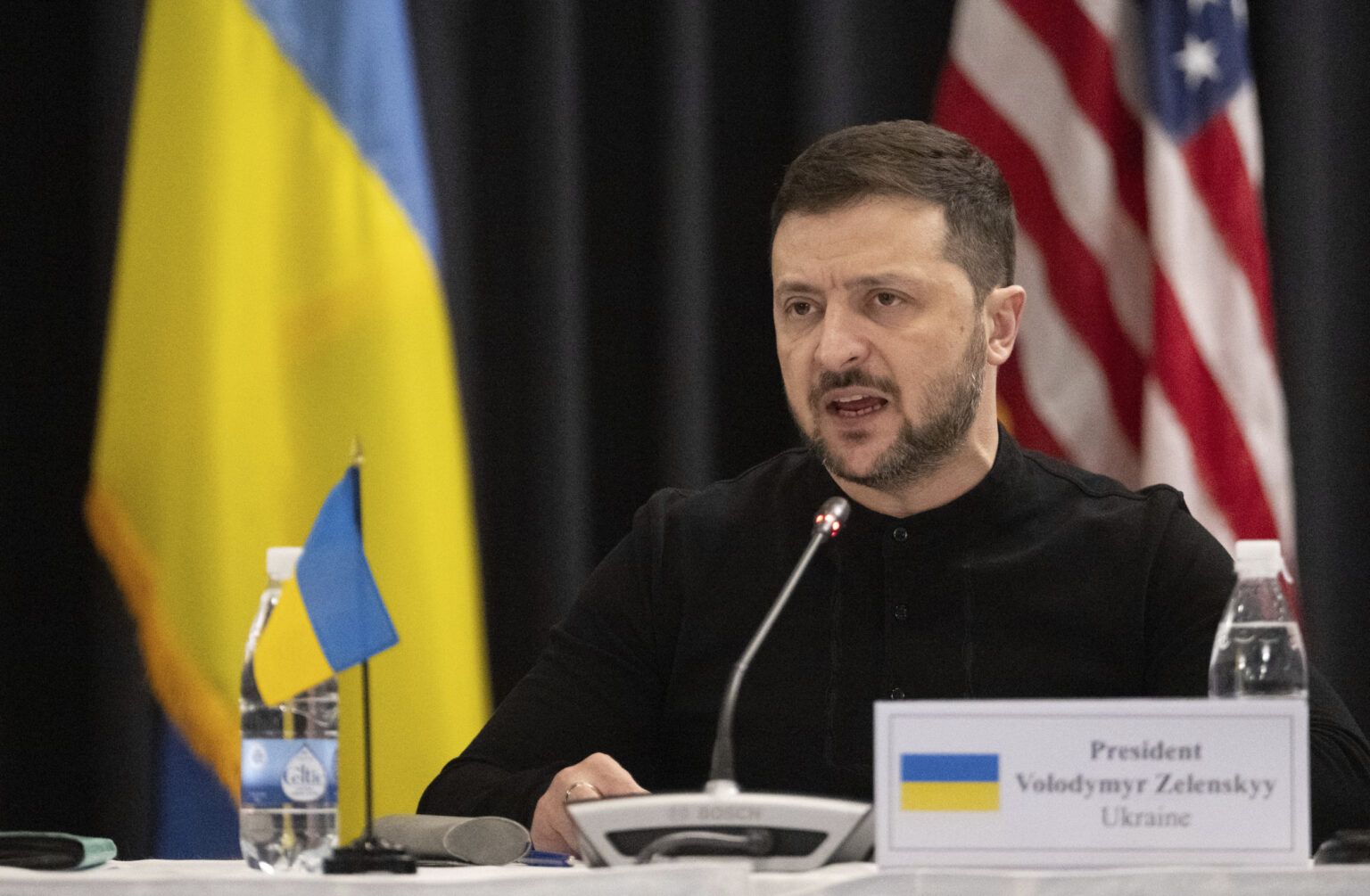
Ukrainian President Volodymyr Zelensky called on NATO allies to deploy troops in his country to aid with the war effort after a Ukraine Defense Contact Group meeting in Ramstein, Germany, on January 9.
In urging his allies to put their forces on the ground, he said he believed it would “force Russia into peace,” the New Voice of Ukraine reported.
Newsweek reached out to the Russian and Ukrainian defense ministries and NATO for comment via email and a contact form.
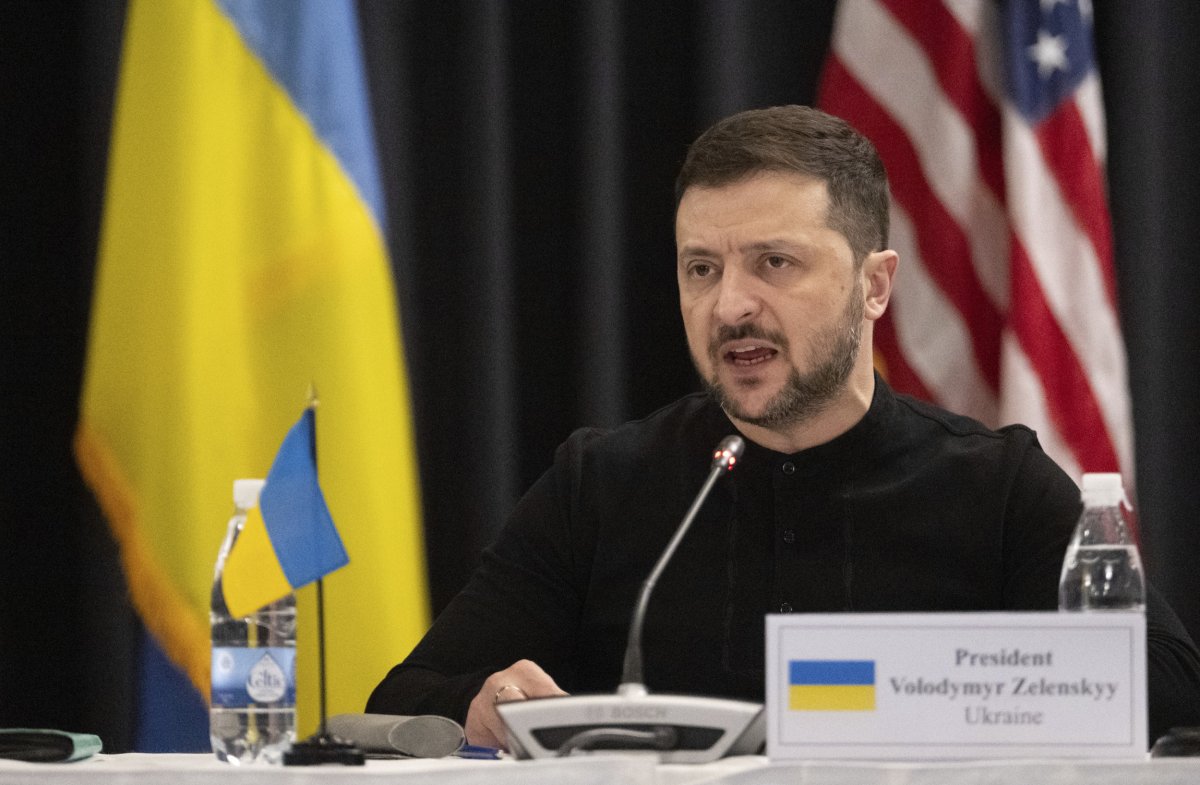
Volodymyr Zelensky at the meeting of the Ukraine Contact Group at Ramstein Air Base, Germany, in January 2025. Zelensky urged NATO allies to deploy troops to Ukraine to “force Russia into peace.”
Volodymyr Zelensky at the meeting of the Ukraine Contact Group at Ramstein Air Base, Germany, in January 2025. Zelensky urged NATO allies to deploy troops to Ukraine to “force Russia into peace.”
Marijan Murat/Associated Press
Why It Matters
Zelensky’s call for NATO allies to deploy troops is significant because it indicates that there has been a shift in the war, and Ukraine’s needs, as tensions with Russia have escalated in the last few months.
Moreover, the Ukrainian president’s statement that this would “force Russia into peace” signifies that he does not believe Moscow will negotiate peace willingly, and that there may not be an end to the war in sight.
What to Know
Speaking of the potential deployment of foreign troops, Zelensky said: “Last year, France proposed the idea of deploying partner troops in Ukraine — and you know this — to bring peace closer. We all understand that Putin’s goals have not changed. He wants to completely destroy Ukraine and break all of us, including you. Therefore, our aim is to find as many tools as possible to force Russia into peace.”
He added that Ukraine and its allies should “take a more practical approach to make this possible” and that: “We’ve also heard signals from some of our partners — from the United Kingdom — supporting this. We must be bold and explore using truly strong tools.”
France, which is currently training and equipping Kyiv troops in the 155th “Anne of Kyiv” Mechanized Brigade, has previously mentioned the possibility of deploying troops to Ukraine and has not “ruled out” the idea, according to Benjamin Haddad, the French minister for European affairs.
French President Emmanuel Macron issued a similar statement, as he said the country had no plans to deploy troops as of last spring, but that “nothing was excluded.” Paris and other NATO allies have trained more than 100,000 Ukrainian troops since the war began in February 2022.
The U.K. has also previously said that it may deploy troops to Ukraine to drive back Russian troops, which the Kremlin has called “hotheaded.” Former U.K. Prime Minister Boris Johnson recently said London may need to send troops to Kyiv if President elect Donald Trump ends U.S. funding or military support for Ukraine.
In the summer of 2024, Germany was reportedly developing plans to deploy 800,000 German and allied troops eastward if tensions between Russia and Ukraine continue to escalate. The troops would use Berlin’s ports, highways and railways to Ukraine.
The president of the Czech Republic has also recently approved 40 applications of citizens who want to fight for Kyiv, although Prague has not formally deployed troops to Ukraine. There are also currently dozens of foreign volunteers fighting for Ukraine hailing from the U.S., Canada and other European countries, in addition to one Chinese national who was recently killed.
What People Are Saying
In a thread of posts on X, Zelensky noted what was discussed at the Ramstein Contact Group and wrote: “Last year, France came up with the idea to deploy partners’ contingents in Ukraine to make peace closer. We all understand – as of today, Putin’s aims remain unchanged. He wants to totally destroy Ukraine – and to break all of us and you too.
“That’s why we must find as many instruments as possible to force Russia into peace. I believe that deploying partners’ contingents is one of the best instruments. Let’s be more practical in making it possible. We’ve heard signals from some of our partners, including the United Kingdom, in support of this. We must be brave and propose truly strong instruments.”
Jürgen Nauditt, a pro-Ukraine user, wrote: “‘The deployment of a foreign contingent in Ukraine is one of the best tools to force the Russian Federation to make peace,’ Zelensky said. ‘Let’s be more practical to make this possible. And we have heard signals from Great Britain – in support. We must be bold and offer really strong tools,’ the Ukrainian president addressed the allies during ‘Ramstein’. Brave and NATO – these are mutually exclusive.”
In a Carnegie Endowment for International Peace article about whether Poland’s EU presidency is credible without deploying troops to Ukraine, Wojciech Konończuk, the director of the Center for Eastern Studies (OSW), told author Rym Momtaz: “We as the EU are still a long way from the point where it is possible to deploy stabilizing troops to Ukraine. This will definitely not happen in the next six months, because a freezing of the frontline does not seem to be a possible scenario in this time frame. What we should probably expect is an attempt at negotiations between Moscow and Kyiv, driven by the U.S. Donald Trump administration, but with a continuation of fighting. The terms of the two sides are irreconcilable. Moscow expects Ukraine to surrender de facto and seeks to design a new European security architecture. Kyiv is prepared to recognize the fact that it will not be able to recapture its territories currently occupied by Russia in the foreseeable future, but not much more. This is not a recipe for ending the war.
“There is therefore no room for maneuver for the deployment of Western troops in Ukraine in the coming months. This does not mean that the Polish presidency and the EU can relax. Trump’s concrete peace plan is not known, but he will certainly expect Europe to make a much greater contribution to support Ukraine. The EU will soon face tough decisions.”
What Happens Next
It is not known at this time if France, the U.K. or other NATO allies will deploy troops to Ukraine in the coming months, as the war with Russia continues to escalate and Trump’s second administration gets underway.