
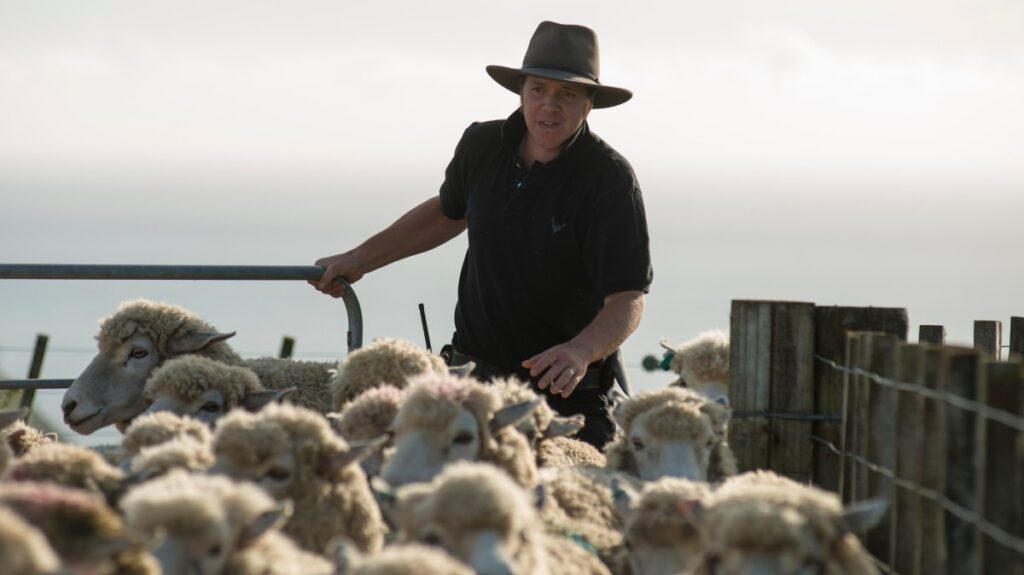
Five generations of the Williams family have grazed sheep and cattle on lush pastures in the Gisborne coastal region of New Zealand’s North Island.
Some things have not changed much over the past 130 years. “Sheep are hard work. They need shearing and they’re more prone to disease than cattle,” said Toby Williams, 44, the farm manager.
He spends most of his time tending to the ovine half of his livestock. But being a sheep farmer these days is not nearly as rewarding as it once was: these days it is a struggle just to break even.
While Williams is determined to tough it out, many of his counterparts have become disenchanted with the nation’s premium export, which has graced dining tables around the globe since the first successful shipment of frozen lamb from Dunedin to London in 1882.
Land used to graze sheep is being turned over rapidly to more lucrative pursuits, such as dairy farming, forestry for timber and carbon credits, wine cultivation and the production of high-value crops such as kiwi fruit and avocados.
The result is there are now just over four sheep for every New Zealander — the lowest ratio since records began more than 170 years ago, according to the latest industry figures.
In a nation of 5.3 million people, there are still plenty of sheep to go around. But it is a far cry from the heady days of 1982, when the flock peaked at 70 million: or 22 sheep for every human.
A long-term decline, which set in after the removal of sheep farming subsidies in the late 1980s and was exacerbated by a dairy cattle boom in the early 2000s, has picked up pace in recent years.
The global wool price has dropped sharply over the past decade amid a move to synthetic fabrics, with average New Zealand export prices almost halving between 2013 and 2021.
Williams, who also serves as the national meat and wool chair of the lobby group Federated Farmers, says he spent about NZ$80,000 (£37,000) last year on shearing and recouped only half that for the wool.
The cost of feed, fertiliser and labour have all risen as a result of the Covid-19 pandemic and Russia’s invasion of Ukraine.
The price of New Zealand lamb slumped to a record low in September 2023 before rebounding, amid competition from other exporters including Australia and South America and a switch to cheaper protein such as chicken in some parts of the world, including Europe and Britain. This has been driven in part by growing health concerns about excessive red meat consumption, although the Chinese are eating more lamb than ever.

Sheep exports have been a mainstay of the New Zealand economy since the late 19th century
ALAMY
Bad weather — particularly around the South Island — has also played a part in reducing the national flock by two million in the past two years to 23.3 million. In its Lamb Crop Report, published last month, the trade body Beef and Lamb New Zealand noted that some sheep farmers in the Marlborough and Canterbury regions had endured a “devastating spring”, with a severe drought resulting in a 10.4 per cent decline in the flock.
Wet weather and snowstorms in other parts of the South Island also meant more lambs died before being fattened for slaughter, while the number of breeding ewes also dropped.
While farmers around the world have faced similar challenges, the industry’s decline has had a more visible impact on the landscape of a nation closely associated with its vast number of sheep.
Richard Dawkins, 35, a third-generation farmer, owns about 2,500 sheep on his farm in Marlborough at the northeastern tip of the South Island. His parents are staking much of their family’s financial fortunes on sauvignon blanc, after converting 330 acres of once-lush pasture into vineyards to grow the crisp white wine grapes that the region is renowned for.

Richard Dawkins with his father, Chris, who is moving much of the family’s land into wine-grape production
JESSICA JONES PHOTOGRAPHY LTD
“The last two years have been the most difficult I’ve farmed through, while viticulture has really taken off,” he said. “You’re probably looking at NZ$20,000 per hectare of net income for grapes, compared to maybe NZ$500 to $600 for a sheep and beef farm. Post-Covid farm inflation means at NZ$8 per kilo lamb doesn’t really cut the mustard.”
As demand for New Zealand wine has increased, land devoted to grape vines in the Marlborough district alone grew sixfold from about 5,000 hectares in 1996 to 30,000 in 2018, while pastoral land use dropped by more than 100,000 to 335,000 hectares.
Lamb remains New Zealand’s second biggest export after milk, but the drop in sheep numbers has enabled New Zealand’s bigger rival across the Tasman Sea to pull further ahead in sales.
• Welsh farm dream is lost in investors’ carbon credit forest
Australia’s sheep population is at its largest since 2007, at 79 million as of June last year. Farmers have restocked after years of drought which killed millions of sheep. This month the Australian meat farming industry announced record exports of red meat for last year, including 614,327 tonnes of lamb and mutton.
Australia and New Zealand (in that order) are the two biggest global sheep meat exporters, accounting for 70 per cent of global trade, with the United Kingdom coming a distant third.
New Zealand’s sheep farmers have at least been spared from a world-first “burp tax” on methane emissions from livestock which was set to come into force this year, initiated by the former Labour prime minister Dame Jacinda Ardern. The controversial levy was scrapped last year by the centre-right coalition that took power under Christopher Luxon.