
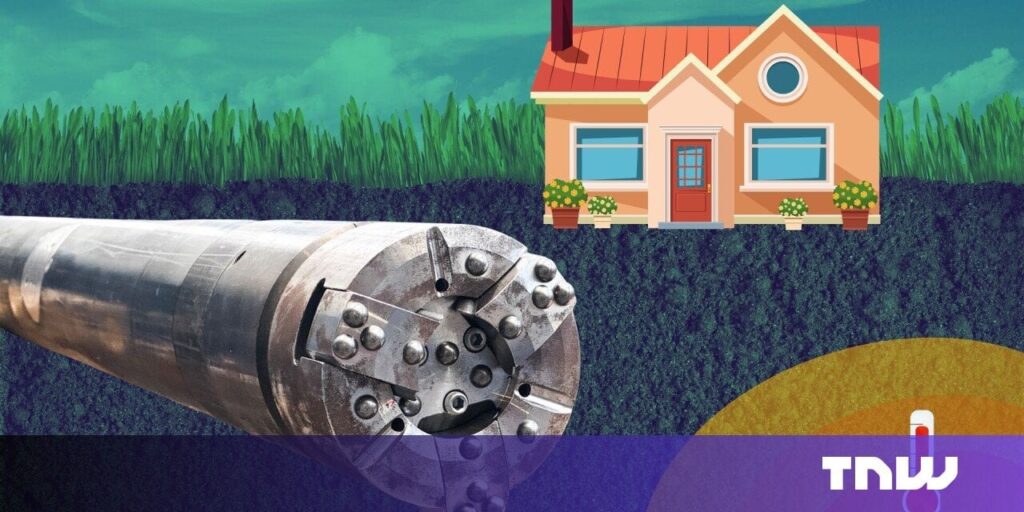
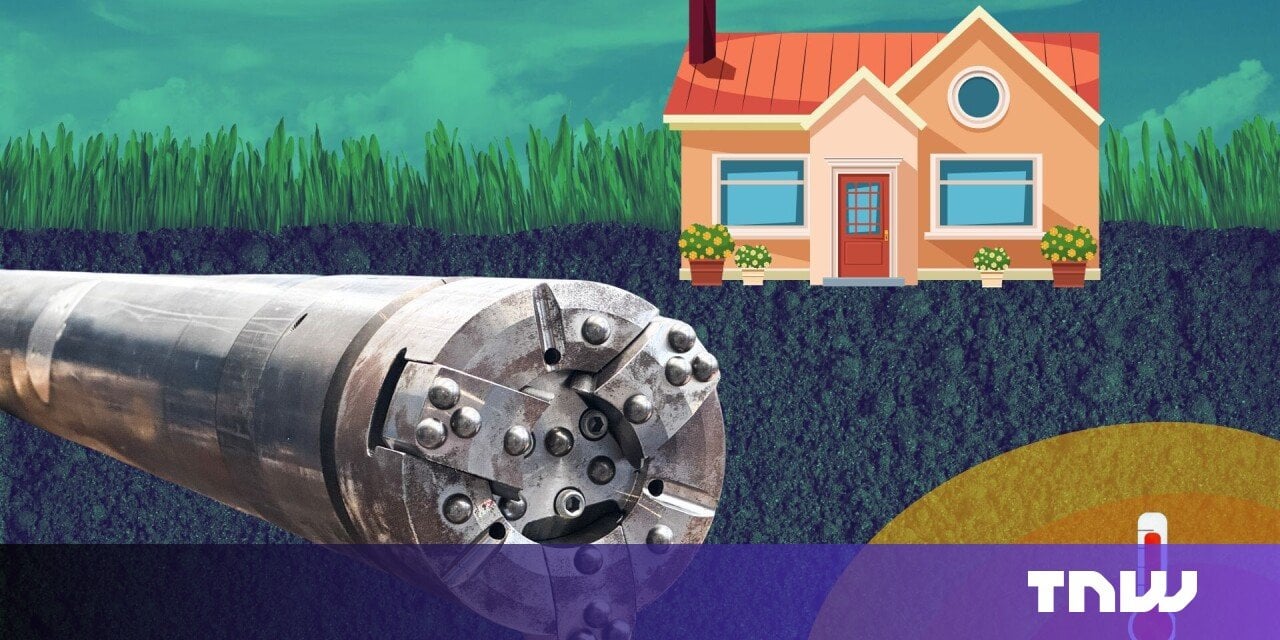
Powered from just an electrical socket, a Swiss firm has developed an autonomous drill that can drill down to 500 meters in people’s gardens to allow them to tap into temperatures of 14 Celsius, enough to heat and cool homes throughout the year.
https://thenextweb.com/news/borobotics-autonomous-robot-worm-geothermal-energy-startup
15 Comments
Submission Statement
This firm is still at the start-up stage. They’ve developed the tech, but no word on pricing. Switzerland, like most European countries, has set itself ambitious targets for decarbonizing its economy. Heat pumps like this, if they can be cost-effective, could play a large role in that.
There are several things about this that stand out. It’s for domestic customers in their homes, does not need much human labor, and can be powered by a household electrical socket. It will be interesting to see what they can do on price.
Please tell me its this: [https://youtu.be/0rmVpnvrZY8?si=UYqmX2XGIDkl8bHQ](https://youtu.be/0rmVpnvrZY8?si=UYqmX2XGIDkl8bHQ)
Because I feel like I’m living in science fiction sometimes these days. This is a series SpaceX also makes me think of often.
I have to wonder too if geothermal is going to come out of nowhere and eat the lunch of Solar, Wind, Nuclear and fossils at the rate its developing. Its obviously pricier than renewables but its 100% reliable, these days it can be done anywhere and the only remotely complex part is the turbine hall, which has always been the major advantage that made fossils cheap.
wow, and the Firm was powered only by an electric socket!
If I ever am to build a house I was always going to consider the use of passive ammonia heat exchangers embedded into deep earth bores and this drill would be great.
That socket power part is wild. Most geothermal setups need heavy drilling equipment and a whole crew. If they can keep the price reasonable, this could be huge for getting more homes off gas heating. Big “if” though.
[deleted]
So the drill bites a hole and a heat pump is installed.
I am not very knowledgeable on heat pumps. Do they work well in hot climates?
Traditional ac/heat until last 15 years or more how long do heat pumps last?
Will heat pumps work if the area underneath is an aquafer? If I were to drill 500 meters down where I live I know I would.hit an aquafer
Oh the new molds, viruses and bacteria we will be exposed to. Plus I love the idea of gold mining in my backyard.
So, serious question… what are possible negative effects of doing this?
Sure, when it’s done on a small scale, we can’t even imagine it having any negative effects. But suppose this is incredibly successful and now you have literally billions of people around the world pulling energy out of the ground. Could it cause some kinds of damage to our ecosystems?
Are we not having problems getting the temperature we already have on the surface (and rising) down? Yes let’s unleash the beast below…
That’s a joke. But still…
This would work in soft sediments but how would this do in hard rock? Typically geologists use giant diamond tipped drilla for this. These drills also need to be cooked down with a lubricant as they drill.
I’m shocked at all the comments on here that make it seem like geothermal / ground source loops are some new untested technology.
In terms of geologic scale humans are pretty insignificant. Not everyone will have a geothermal setup for one, but also there’s lots of land that simply wouldn’t have them at all. Parks for example, or farm land, or industrial spaces that have greater needs.
You aren’t going to somehow suck all the heat, or heat up the earth. In a very very localized sense that is a concern, and why you can’t just bury a radiator with a shovel in the backyard. But you solve that with proper planning.
It’s a fantastic technology. Air conditioning systems are incredibly efficient. If you’re using ground source you’re running a water pump, a compressor, and a fan or two. Maybe some other tech like an HRV setup. Those are becoming more common and required in some places.
The other part to consider is that while yeah, drilling into the ground can have some environmental concerns, they’re pretty small compared to using oil heating for example.
This sounds like it solves one of the biggest issues with a geothermal setup, which is it’s usually very expensive and frequently just not possible to install after the house is built. It can be a competitively priced option for a new build, but a massive pain on an existing home. Plus all the damage to any kind of yard you might have, probably need to remove your fence if you have one. Decking might have to come down. All kinds of headache. It’s a big job.
When about a million of these heat pumps are running simultaneously what effect does it have on normal geothermal function?
This could be a significant leap for sustainable energy in homes. The fact that it can operate off a standard socket is a game changer. If they nail the price and efficiency, we might see a real shift away from fossil fuels in residential heating. But the scalability and long-term impact on the ground temperature are definitely points to consider.
If this works, it’s not just about heating and cooling. You can use a geothermal tap to generate electricity. I wonder why that isn’t mentioned? Maybe it’s not enough power? Even if it’s only suitable for heating, it will be fantastic in a cold climate.