‘It’s a nightmare’: couriers mystified by the algorithms that control their jobs
https://www.theguardian.com/business/2025/jan/21/its-a-nightmare-couriers-mystified-by-the-algorithms-that-control-their-jobs

‘It’s a nightmare’: couriers mystified by the algorithms that control their jobs
https://www.theguardian.com/business/2025/jan/21/its-a-nightmare-couriers-mystified-by-the-algorithms-that-control-their-jobs
11 Comments
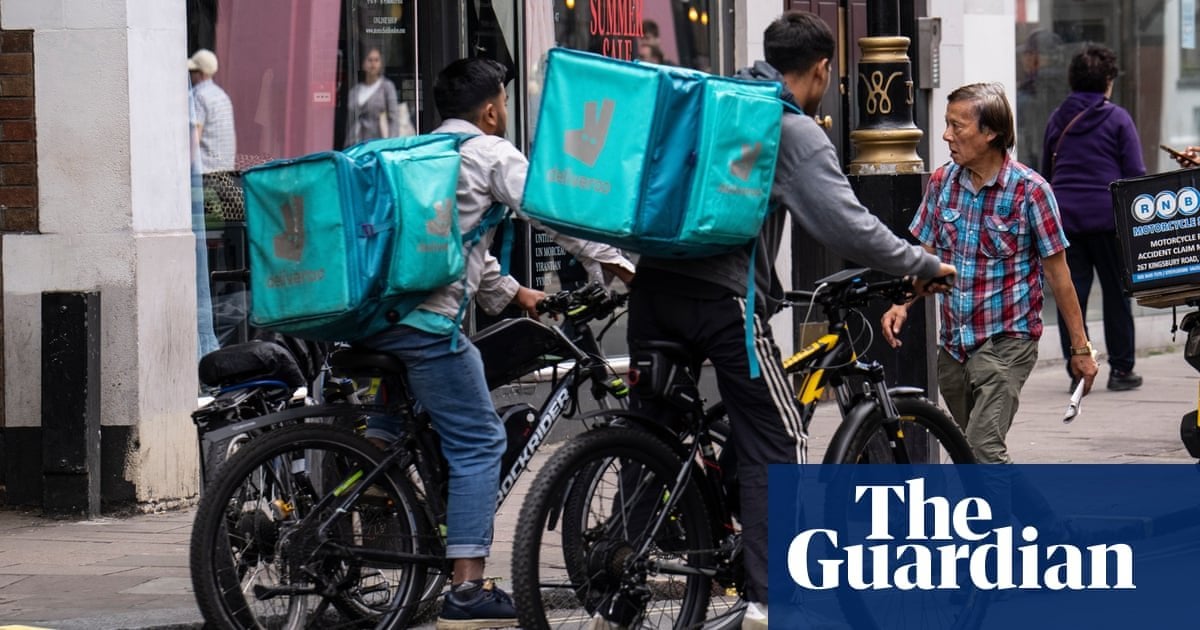
“This week gig workers, trade unions and human rights groups [launched a campaign](https://www.theguardian.com/business/2025/jan/20/food-delivery-apps-ubereats-deliveroo-justeat-urged-to-reveal-how-algorithms-affect-uk-courierss-work) for greater openness from Uber Eats, Just Eat and Deliveroo about the logic underpinning opaque algorithms that determine what work they do and what they are paid.
“We can never work out the algorithm,” one of the drivers says, requesting anonymity for fear of losing work.
“It’s an absolute nightmare,” says the driver, adding that they permanently lost access to one of the platforms over a matter of a “max five minutes” wait in getting to a restaurant while he finished another job for a different app. Sometimes he gets logged out for a couple of hours because his beard has grown, confusing the facial recognition software.
“It’s not at all like being an employee,” he says. He is regularly frustrated by having to challenge what appeared to be shortfall in pay per job – sometimes just 10p, but at other times a few pounds. “There’s nobody you can talk to. Everything is automated.”
It is by design.
The app companies dont do real job. They are just reaping the monopoly (necessary middleman) dividend.
And that is all.
The less stable the conditions for workers, the better. They don’t want the stable employment, as then workers start to get “ideas”.
This is the future of AI. Indentured servitude by micro-manipulating the wages you’re allowed to earn as independent contractors. The detractors and deniers will say that, “well, you can always work somewhere else, this isn’t a real job,” while feigning ignorance to the growing artificial skill deficit imposed by our failing education system that itself is manipulated to favor some over others. Truly, we are in dystopic times, no cap.
It’s fairly likely that nobody understands how these apps work. They are gigantic complicated beasts, the decision processes are based on algorithms highly tweaked for your aspects of machine learning (or what everybody now wants to call AI even though it’s not at all intelligent), and the underlying models and algorithms are likely very opaque.
Of course the workers doing the actual work want more transparency to understand how the algorithms work and why sometimes they get left waiting, etc, but at the end of the day, they seem to be assuming this is all somehow human controlled or a well-designed system and a semi-perfect world. It’s the opposite, it’s slapdash programming done on the fly with huge numbers of people contributing to a beast that was built fairly quickly as these apps exponentially grew, undoubtedly with black box learning models that are designed to try to somehow optimize the problem of finding and deciding different couriers to different jobs.
Overall, they work quite well, from the perspective of the app providers. For the most part people get food for the quickly, and Uber eats and all gets their cuts. They’re not designed to be convenient for the workers, because at the end of the day is the customers that matter, except at the end of the day, it’s the shareholders to really matter.
The delivery apps have been simplified in the NYC market to where drivers have to reserve shifts to work and they get paid a flat rate for active time, basically like regular employees. Yet now workers on those subs in this city complain that they aren’t getting enough hours. You can’t please everyone.
The guy who founded How Stuff Works wrote a book in 2003 about computers taking over the economy called [Manna](https://marshallbrain.com/manna1). Seems like he got a lot right so far.
their first mistake was assuming their algorithms had any sort of logic to it.
> they permanently lost access to one of the platforms over a matter of a “max five minutes” wait in getting to a restaurant while he finished another job for a different app
I’ve not got any sympathy for them on that point; working multiple apps at once shouldn’t be allowed.
Customers don’t want to have to wait longer and receive cold food while the delivery driver carries their order around town so they can make more money off a second app.
I used to work as an Uber driver, and the most annoying thing that has happened over time is the obvious push to take out most forms of human support, both for the driver and the customer. The tech bros of upper and middle management mistakenly think that people would actually prefer to spend minutes, potentially hours resolving issues with mindless bots instead of having a real human who can speak and understand proper English.
??? There are many valid criticisms but not understanding the algorithm doesn’t seem to be one? I don’t suppose the people who work for these kinds of jobs would understand Dijkstra’s algorithm, or any algorithm that requires more than basic algebra? Do they just want to pick their routes and get paid by vibes?
And why would the apps design their algorithm by taking into account that the driver is also using another app? That is straight up just a bad argument. If the problem is the low pay that makes them forced to use two apps, then that’s the problem that needs fixing, not the algorithm itself.
This is going to sound harsh if you’ve never been on the delivery side of a gig app but these apps are absolutely designed to exploit the newest and least intelligent people on the platform. They gamify the experience with stats and goals promising higher-paying orders if you are willing to take the poor-paying ones. They do not care that it makes no financial sense for anyone to drive 10 miles out of town for $2 + $0 tip, but the offer still gets put out there. The app is designed to make the driver feel guilty for declining and implies they will get less orders if they do. In reality, this industry thrives on exploiting the desperate and nothing but a NY style overhaul is going to fix that.