
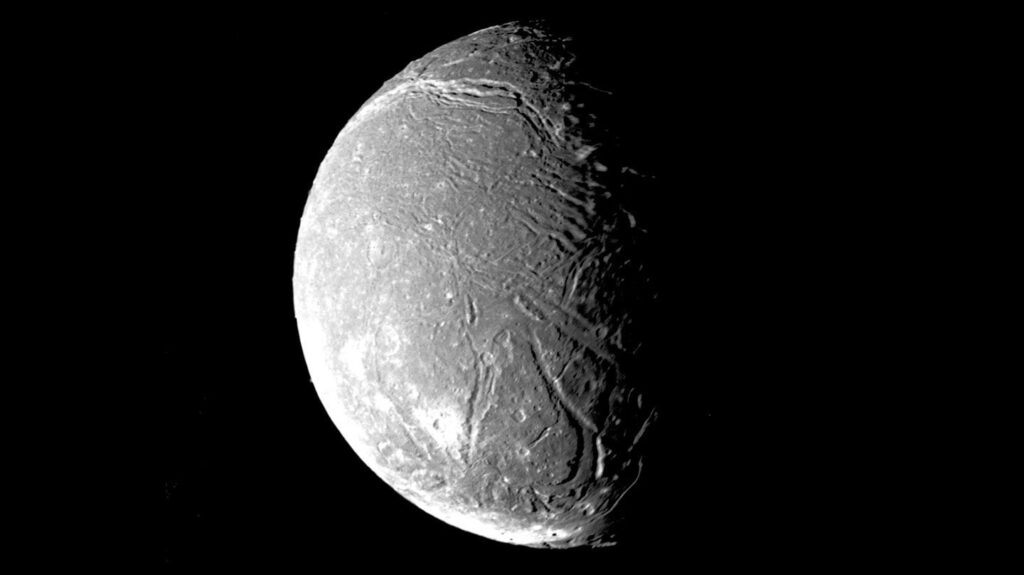
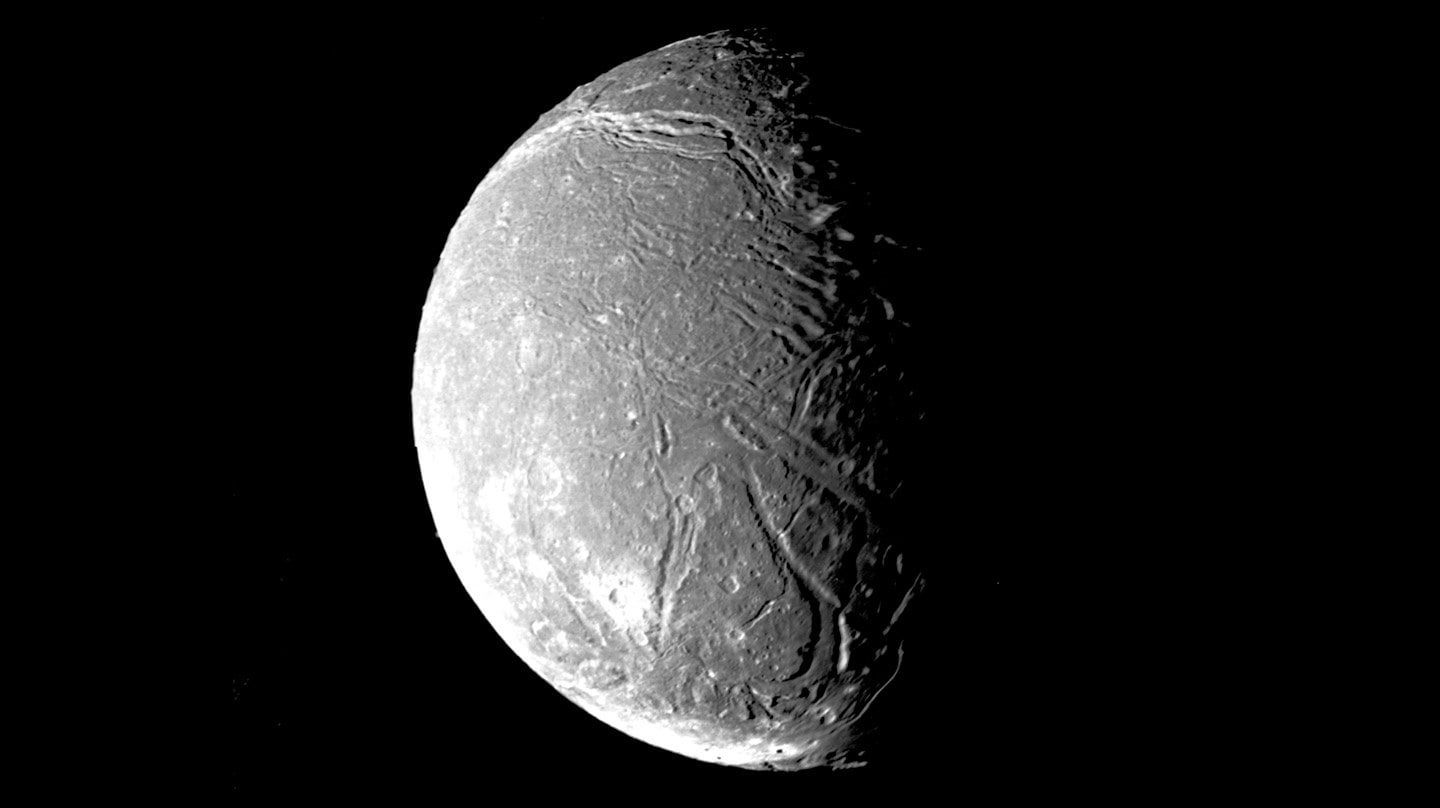
New Study Suggests Trench-Like Features on Uranus’ Moon Ariel May Be Windows to Its Interior – Ariel, too, may host a thin remnant ocean, although Beddingfield remains cautious about drawing direct links between that ocean and the medial grooves.
https://www.jhuapl.edu/news/news-releases/250203-uranus-moon-ariel-medial-grooves-window-to-interior-subsurface-ocean
2 Comments
From the article
>Last year, a study led by planetary scientist Richard Cartwright at the Johns Hopkins Applied Physics Laboratory (APL) in Laurel, Maryland, proposed that deposits of carbon dioxide ice and other carbon-bearing molecules on Uranus’ moon Ariel [likely originated from chemical processes inside the moon](https://www.jhuapl.edu/news/news-releases/240724-carbon-dioxide-uranus-moon-ariel-hint-hidden-ocean-nasa-webb) — possibly even from a subsurface ocean.
>Now, new research may shed light on how those materials reached (or are even still reaching) the surface. A study led by APL planetary geologist Chloe Beddingfield points to medial grooves — trenches that cut through Ariel’s massive canyons — as the likely conduits for this exchange. The findings, published Feb. 3 [in the Planetary Science Journal](https://doi.org/10.3847/PSJ/ad9d3f), suggest these grooves are spreading centers, like those creating new oceanic crust in Earth’s seafloors by bringing up internal material that forms a new surface.
>“If we’re right, these medial grooves are probably the best candidates for sourcing those carbon oxide deposits and uncovering more details about the moon’s interior,” Beddingfield said. “No other surface features show evidence of facilitating the movement of materials from inside Ariel, making this finding particularly exciting.”
Also from the article
>“The size of Ariel’s possible ocean and its depth beneath the surface can only be estimated, but it may be too isolated to interact with spreading centers,” she said. “There’s just a lot we don’t know. And while carbon oxide ices are present on Ariel’s surface, it’s still unclear whether they’re associated with the grooves because Voyager 2 didn’t have instruments that could map the distribution of ices.”
[removed]