
AI-powered robotics project could revolutionize electronic waste recycling | By 2030, global generation of e-waste will reach 74.7-82 million metric tons
https://www.techspot.com/news/106664-ai-powered-robotics-project-could-revolutionize-electronic-waste.html
2 Comments
From the article: As devices become obsolete at an alarming rate, the issue of electronic waste has become increasingly pressing. A project has emerged combining measurement and robot technology with AI and knowledge management that seeks to address this issue.
The problem is difficult to overstate. The European Union alone generated approximately five million tons of electronic waste in 2022. The U.S., for its part, produces 6.9 to 7.6 million metric tons of electronic waste annually, which translates to about 46-47 pounds of e-waste per person per year. By 2030, global generation of e-waste is projected to increase to 74.7-82 million metric tons.
Meanwhile, the current state of electronic recycling is far from ideal. Manufacturing processes in the electronics industry prioritize cost-effectiveness over recyclability, leading to devices that are difficult to dismantle and separate into their constituent parts. Traditional recycling methods often involve manual dismantling, which is both costly and inefficient. Moreover, many devices end up being shredded, a process that limits the potential for recovering valuable components.
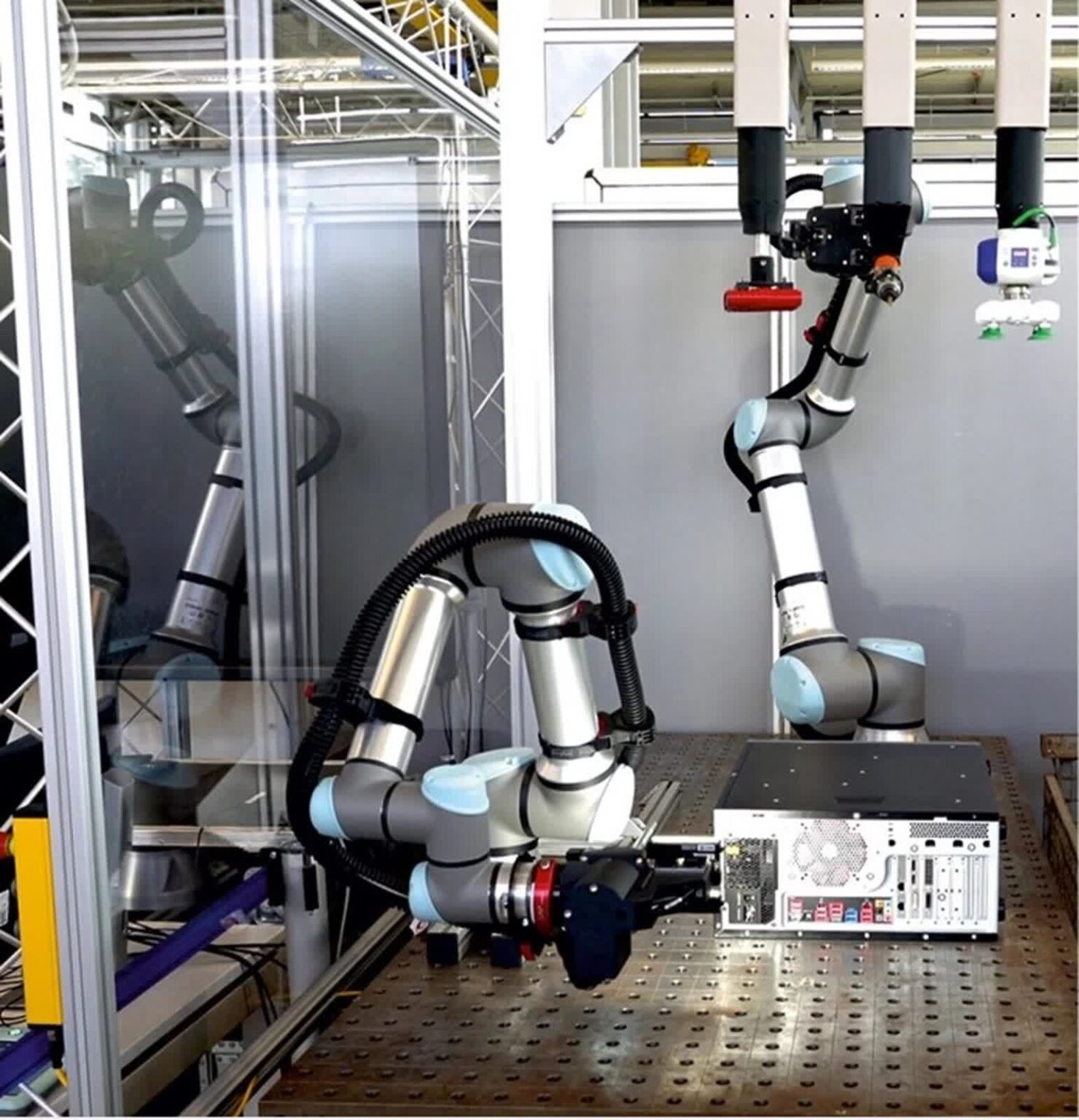
To address this growing crisis, researchers at the Fraunhofer Institute in Magdeburg, Germany, have developed iDEAR, which stands for Intelligent Disassembly of Electronics for Remanufacturing and Recycling. It not only makes electronic recycling more effective but also could one day help manufacturers access valuable raw materials. So far, the iDEAR system has successfully removed mainboards from PC housings – a task that requires a high degree of precision and sensitivity.
The iDEAR process begins with an identification and diagnosis phase. AI-powered 3D cameras and optical sensor systems scan the electronic waste, capturing information such as manufacturer details, product type, and serial numbers. These systems then go beyond identification, assessing the condition of components, detecting anomalies, and evaluating the state of connecting elements like screws and rivets.
Development seems to be the sector which will be most affected by AI. I personally believe that this is not true, but tech companies carry the ball in the news…