
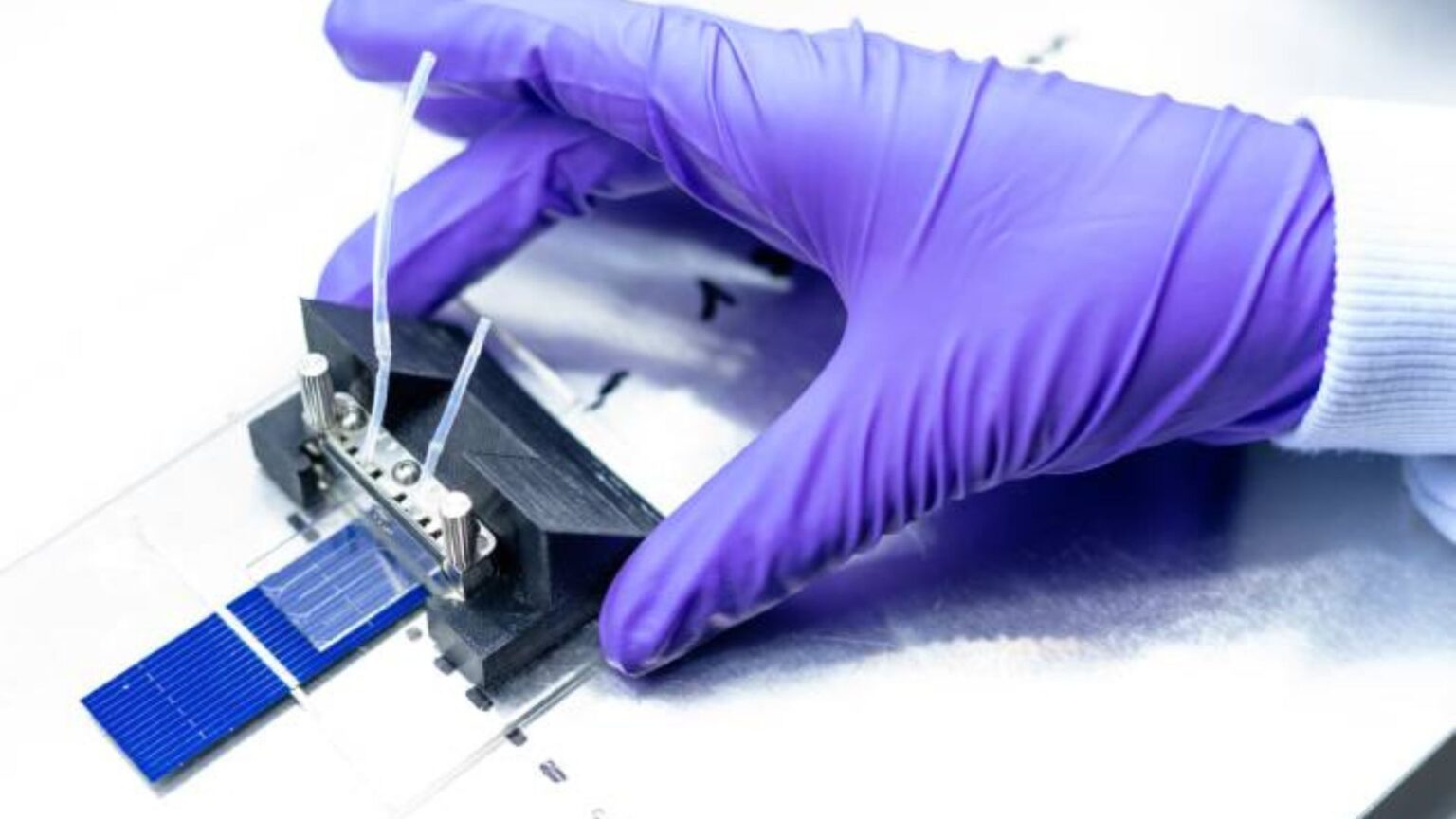
Researchers at the Universitat Politècnica de Catalunya—BarcelonaTech (UPC) in Spain have designed hybrid solar cells that can generate electricity and store it onboard.
This is the first-ever demonstration of such technology that could revolutionize access to solar energy.
As the world seeks cleaner approaches to meet its energy demand, renewable energy technologies such as wind and solar have received a major boost. However, given their intermittent nature of energy production, these technologies are co-dependent on energy storage solutions for effective deployment.
There are many approaches to energy storage, but battery-based storage solutions are the most efficient and easiest to deploy. While attempts are made to make them eco-friendly, battery-based storage is unsustainable in the long run and associated with other operational risks.
An international team of researchers led by the UPC team may have found a simpler solution by combining energy storage and production into a single photovoltaic cell.
Hybrid solar cell
The research team led by Kasper Moth-Poulsen, a professor at the Department of Chemical Engineering at UPC, developed the hybrid device where the silicon-based solar cell has been teamed up with an onboard MOlecular Solar Thermal (MOST) energy storage system.
According to the press release. MOST consists of organic molecules that undergo a chemical reaction when irradiated with high-energy photons, such as those from ultraviolet light. These molecules then store the energy in the form of chemical energy, which can be harvested later.
An added benefit of using onboard energy storage is that it acts as an optical filter and blocks photons that would otherwise cause the photovoltaic cell to heat up. Instead, the MOST component of the hybrid device acts like a cooling system, thereby saving solar energy from losing its energy conversion efficiency.
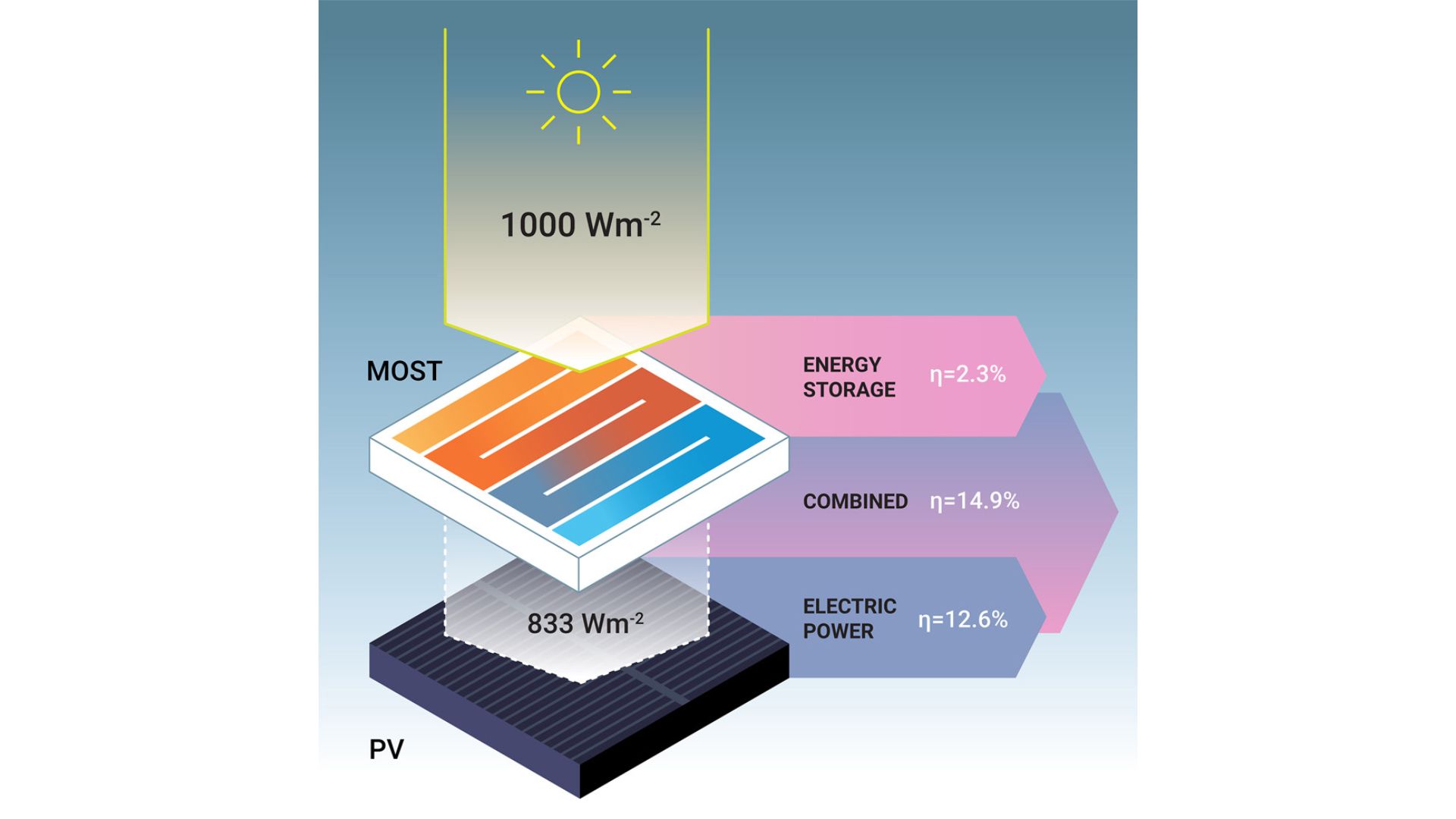 Schematic showing energy conversion efficiencies of the hybrid solar cell. Joule 2024
How efficient is the hybrid cell?
Initial experimental analysis shows that MOST has an energy storage efficiency of 2.3 percent. While this might not seem too much, its cooling effect on the photovoltaic cell improves energy efficiency.
According to the press release, the energy storage component reduces the overall temperature of the solar cell by 46.4 degree Fahrenheit (eight degrees Celsius). This temperature drop prevents the loss of efficiency that would have resulted from higher temperatures. This leads to an improvement of 12.6 percent in solar cell efficiency.
Put together, this results in an improvement in the overall energy efficiency of the solar cell to 14.9 percent, which is a major feat when compared to efficiencies if the two systems were operating independently.
In addition to the energy efficiency improvements, the researchers also point out other advantages of using a hybrid cell system. Solar cells can reduce their dependence on external energy storage solutions such as batteries by switching to onboard energy storage.
As onboard energy storage is developed using organic materials, it is much more environment-friendly than batteries made using rare-earth elements that need to be mined from the ground.
The research findings were published in the journal Joule.