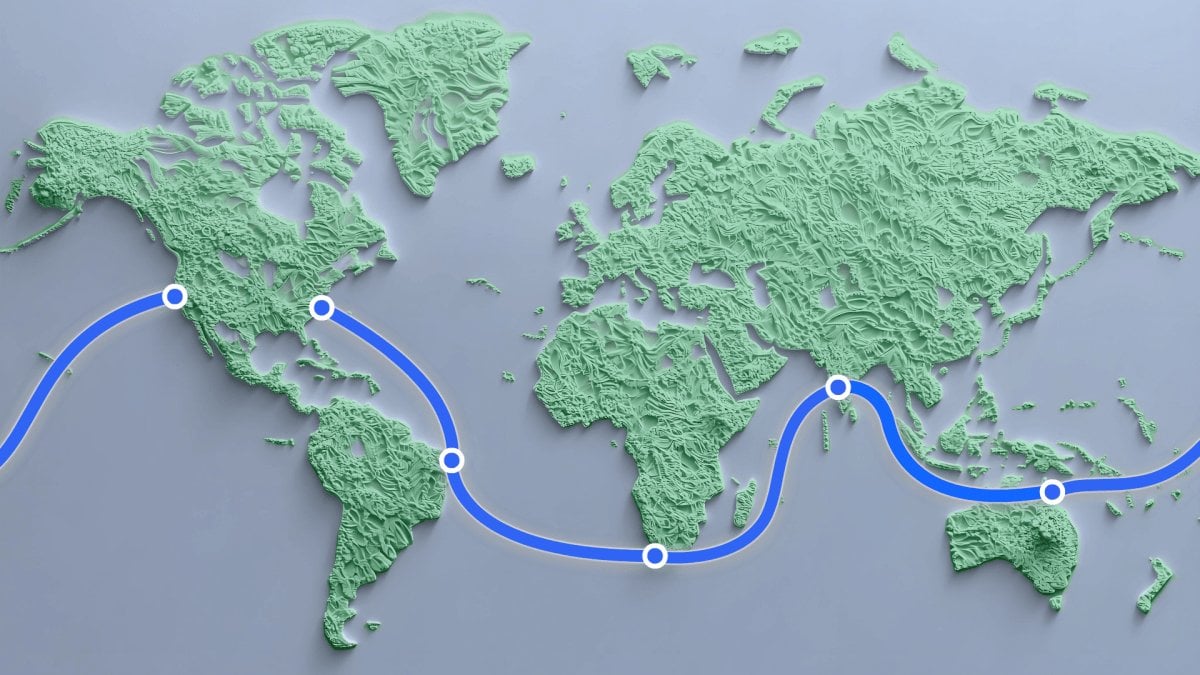
Meta confirms ‘Project Waterworth,’ a global subsea cable project spanning 50,000 kilometers – The world’s longest subsea cable project
Meta confirms ‘Project Waterworth,’ a global subsea cable project spanning 50,000 kilometers

Meta confirms ‘Project Waterworth,’ a global subsea cable project spanning 50,000 kilometers – The world’s longest subsea cable project
Meta confirms ‘Project Waterworth,’ a global subsea cable project spanning 50,000 kilometers
4 Comments
From the article:
“In terms of the network itself, Meta says it will be breaking new ground with its architecture, using 24 fiber pair cables, and what it describes as first-of-its-kind routing, “maximizing the cable laid in deep water — at depths up to 7,000 meters” along with new burial techniques to reduce faults in areas deemed “high risk,” either because of geographical issues, or politics — and sometimes both.”
Apparently the typical standard is 8 to 16 fiber pairs.
They’ll own the landing stations and will establish a business around multiplexing others data for subsea traversal. Not the first company to do this, but perhaps the first to do it at this scale, outside of consortiums. If you can’t put satellites in space, this is their next best option for global network domination.
Don’t they mean two 25,000 cables that aren’t connected anymore?
Chinese research vessels will just drag an anchor across it on accident.