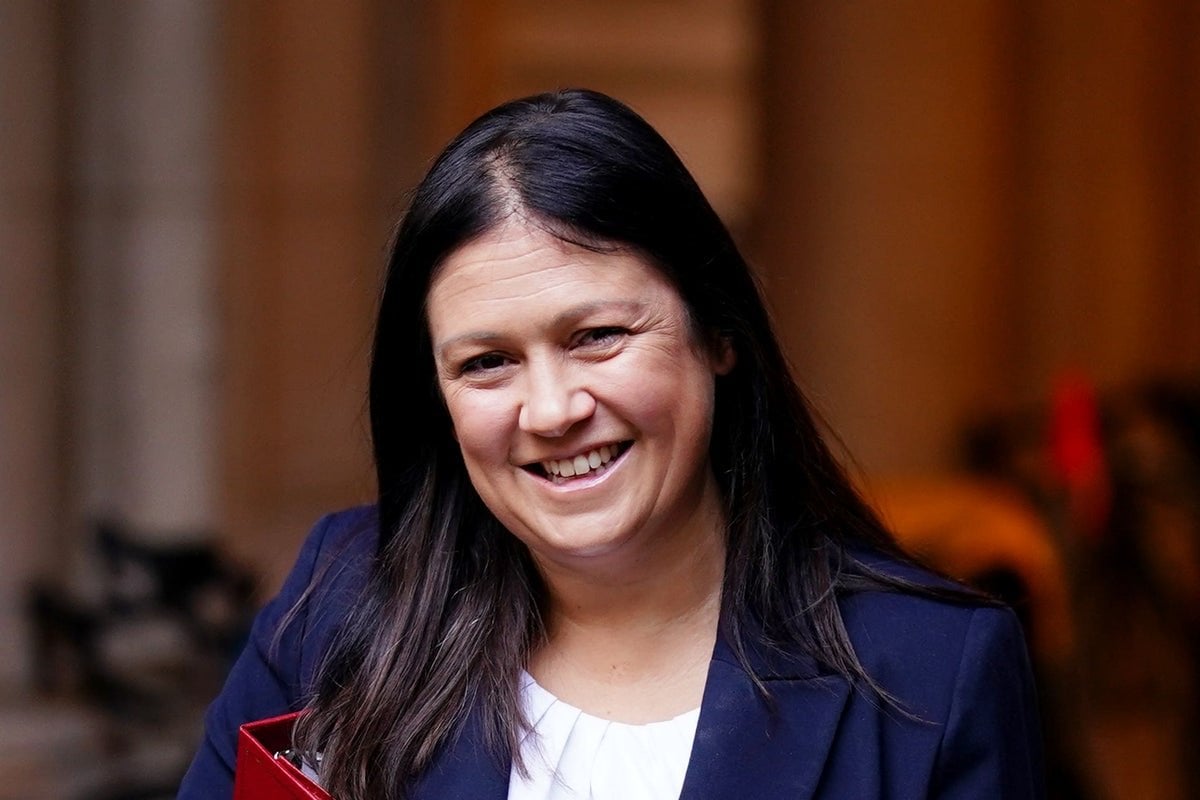
Labelling the arts ‘Mickey Mouse’ degrees was economic madness, says Nandy
https://www.independent.co.uk/news/uk/politics/mickey-mouse-degrees-arts-lisa-nandy-b2701925.html
Posted by tylerthe-theatre

Labelling the arts ‘Mickey Mouse’ degrees was economic madness, says Nandy
https://www.independent.co.uk/news/uk/politics/mickey-mouse-degrees-arts-lisa-nandy-b2701925.html
Posted by tylerthe-theatre
26 Comments
I am also of the opinion that you can measure everything in terms of money is madness.
It’s always been a stupid comparison in the first place. Isn’t “The Mouse” worth $200bn or something.
The government estimates that creative industries generated £126bn in gross value added to the economy and employed 2.4 million people in 2022. [https://lordslibrary.parliament.uk/contribution-of-the-arts-to-society-and-the-economy/](https://lordslibrary.parliament.uk/contribution-of-the-arts-to-society-and-the-economy/)
In terms of £££ that’s about the same as the entire agri-food sector (£127bn) which encompasses **all** operations within the food supply chain, including farmers, food industry, **food retail**, wholesale, food service, as well as their suppliers of inputs and services such as seeds, pesticides, fertilisers, machinery, packaging, repair, transport, finance, advice, and logistics. [https://www.gov.uk/government/statistics/agriculture-in-the-united-kingdom-2022/chapter-14-the-food-chain](https://www.gov.uk/government/statistics/agriculture-in-the-united-kingdom-2022/chapter-14-the-food-chain)
Edit: Here’s the breakdown:
* Agriculture (not including fishing) £12.1bn
* Food and Drink Manufacturing £30.4bn
* Food and Drink Wholesaling £12.7bn
* Food and Drink Retailing £36.9bn
* Food and Drink Non-Residential Catering £35.2bn
What a lot of silly comments. Yes we have more arts graduates than we need, and art courses are not always designed well to get their graduates into creative industries. That’s not the same as calling arts degrees worthless and it’s not graduates’ faults that the government has starved culture of funding for the last 15 years.
Glad someone is finally saying it. The arts are hugely important to the economy and, more importantly, are obviously very important to everyday life: through books, TV shows, movies, actual art, visual and graphic design, through theatre (I thought the right liked British tradition?), cooking, dance, photography, etc etc. Even podcasting or Youtube/Twitch. All these things have a big impact-usually positive-on the day-to-day lives of regular people. How many people do you think seriously don’t engage with any form of art recreationally? Not many. The number of people who don’t engage with ‘artwork’ if you include its professionalised use (graphic design and such) is 0.
If the remove financial support for people going into the arts then it just returns to being the sole abode of the ultra-rich. Hell, it already is that to a significant extent (e.g., many top musical theatre schools aren’t technically universities and so can charge above the fee cap + don’t qualify for student loans, not to mention all the extra private classes you have to take and the stuff you have to buy for it), we should be making it MORE accessible, not less.
One of the great quotes from the 2015-2019 Labour ~~government~~ leadership was about “there’s a poet in all of us”. I don’t like poetry myself, but the point is that everyone has creative potential, even the working-classes, and that potential should be allowed to be explored, be it at an amateur level (for the majority of people) or at a professional level for those who can do so proficiently. Everyone should at least try prose, poetry, or painting, etc etc, and this idea of it as a solely ‘elite’ profession needs to be dismantled through actual ways of supporting working-class people into the fields rather than locking them out.
I remember when Corbyn talked about there being an [artist] in everyone there was inevitably a harsh reaction from some rich lobby journo called Helen Lewis saying “don’t encourage them Jeremy!”. Of course, she was private schooled and went to Oxford. Prick.
**A lot of the anti-creativity stuff just comes from anti-worker classism.**
If you want to reduce oversubscription-though frankly I think the issue posed by that is overstated-then you can just make the courses more selective, though even that will inevitably have a class discriminatory bent to it as, shocker, working-class people can’t afford to give their kids singing lessons, dance lessons, buy pointe shoes every other week, etc, and the government sure as hell doesn’t care about it.
Art is for everyone, not just for the rich, and the working-classes deserve a chance at creativity.
I’d support funding the arts if we lived in an ideal world where all of our needs are met.
We live in a world where inflation is rampant, housing does not suit the population’s needs, infrastructure is woefully underdeveloped, our children are consuming foreign political propaganda, and we pay ridiculous energy prices. Funding the arts is unfortunately at the bottom of our priorities as a country.
Like with any University degree today, there is an oversubscription, but that does not necessarily mean that the Liberal Arts are a waste, they can generate a net positive overall.
I am a Biosciences undergraduate, and my university on average loses about £ 3K per home student, as the reagents and materials used are non-renewable, so this will be an ongoing cost, so Liberal Arts degrees and the humanities actually help cover that deficit in funding as generally more of their course are less resource intensive.
Universities are already struggling with the previous conservative governments mishandling of student visas, and by getting rid of liberal arts degrees we will see collapses of major institutions.
Research and Innovations requires a major investments before we can see a direct and tangible effect.
Yeah but all the talented actors, artists, musicians and technical specialists in ancillary industries worth billions of billions should have all instead trained to be plumbers or electricians.
Or so I’m told fuckin over and over again.
I reckon they’re just pumping money into it because if the if we get the world interested in our media again, we can control the propaganda better.
It’s not a move that directly benefits the industry, it’s a means to an end
The idea that an arts education is not worth funding is ridiculous. Humans have been doing art of one form or another since the stone age, it speaks directly to a very deep part of us. And art and design are very wide fields that cover a lot of things most people don’t even think about.
Design is a fundamental part of engineering. You can’t have one without the other. And our civilization is so complex that we have to specialise. Having design specialists is only natural.
Removing education funding for arts just means only the rich get to do it. A very Victorian idea. But even the Victorians considered an arts education worth doing.
The problem is that we’re using arts education as a proxy for artistic ability and creativity, which doesn’t actually line up well. Arts degrees teach you how to fit into mainstream artistic canon, they don’t teach you how to actually make good art. And in my experience, the best artists have tended to be the ones that self-taught.
Just pushing more people through the stagnant pipeline of arts degrees doesn’t accomplish anything, and the economic benefit of making the same thing again that’s already been made ten times is going to show diminishing returns. We need to be finding a way to encourage independent creative development.
I took International Relations and Politics and the last 10 years since have demonstrated that the top role in this area _definitely_ competes with Michael Mouse for entertainment.
With the state of Labour’s comms strategy at the moment, I give it a week before we see an education minister talking about how we need more STEM and less arts as part of the growth strategy.
I went to retrain when I turned 30. My mickey mouse arts degree got me a job in movies the day after I graduated. That social science degree o go tin my 20s remains unused
Go spend a day hanging out with arts grads and a day hanging out with maths or computer science grads, then come back and tell us which are of the ‘higher’ value to society.
I don’t disagree, but I know at least 5 people who did a fine art degree at uni and now work in areas of complete irrelevance. Now they have student debt and work in jobs that any old Tom, Dick, and Harry could do.
Well said Lisa. We are world leaders in the Arts, and this has been a definitive aspect of our culture for decades if not centuries.
The blue rinse chintz mob associate the Arts with all that diversity stuff that scares them terribly
What a misleading title.
It wasn’t “the arts” that was classed as Mickey mouse degrees – although they would have been BAs. It was things like sports science, American studies, media studies etc. It was never about music or art or even drama. Or certainly this was the case 20 years ago.
It was of course pretty much rubbish, I did an American studies degree, it was mostly politics and America (in my case) referred to The Americas; my dissertation was on terrorism in the USA compared to south America.
My ‘useless’ Media Studies degree led to 35 years of employment in the TV industry, so there’s *that*…
It’s pretty ironic too considering the value of Disney and their iconic Mickey Mouse image
Does an arts degree particularly help if you are a talented creative? I would have thought your talent would speak for itself.
There’s some pretty mickey Mouse science degrees too. I once met someone who was studying “Equine Science”.
Arts are important for the country but I think there should be a better way for them to learn it e.g. apprenticeships etc
Otherwise they’re in so much debt they would find it hard to earn a good living in the arts afterwards or afford to move to an arts hub without getting a job that’s not in arts.
Arts is important to make life worth living but if you’re boring
– physical art usually need trades skills. Theatre, contemporary sculpture, film etc all hire metal workers, electrical engineers, carpenters, caterers etc media and art degrees should teach lots of these but bad ones don’t
– not forgetting production jobs in organising, legal requirements, safety inspections etc.
– also cool Britain boosted our trade and tourism but slowly killing artists development we are losing our image and trade potential
Every year they need to review the median highest and lowest paying graduates, those in careers relevant to their degree.
Those with the lowest poorest performing need the intake numbers curtailed. The government needs to then enforce extra spaces for areas in demand.
This is an area which the government needs to socially engineer better. We can’t leave our future job market up to fucking 17 year olds deciding what they fancy.
The arts are great if you have family money to support you.
If you’re trying to work your way up from the lower classes, it’s probably a fool’s errand.