
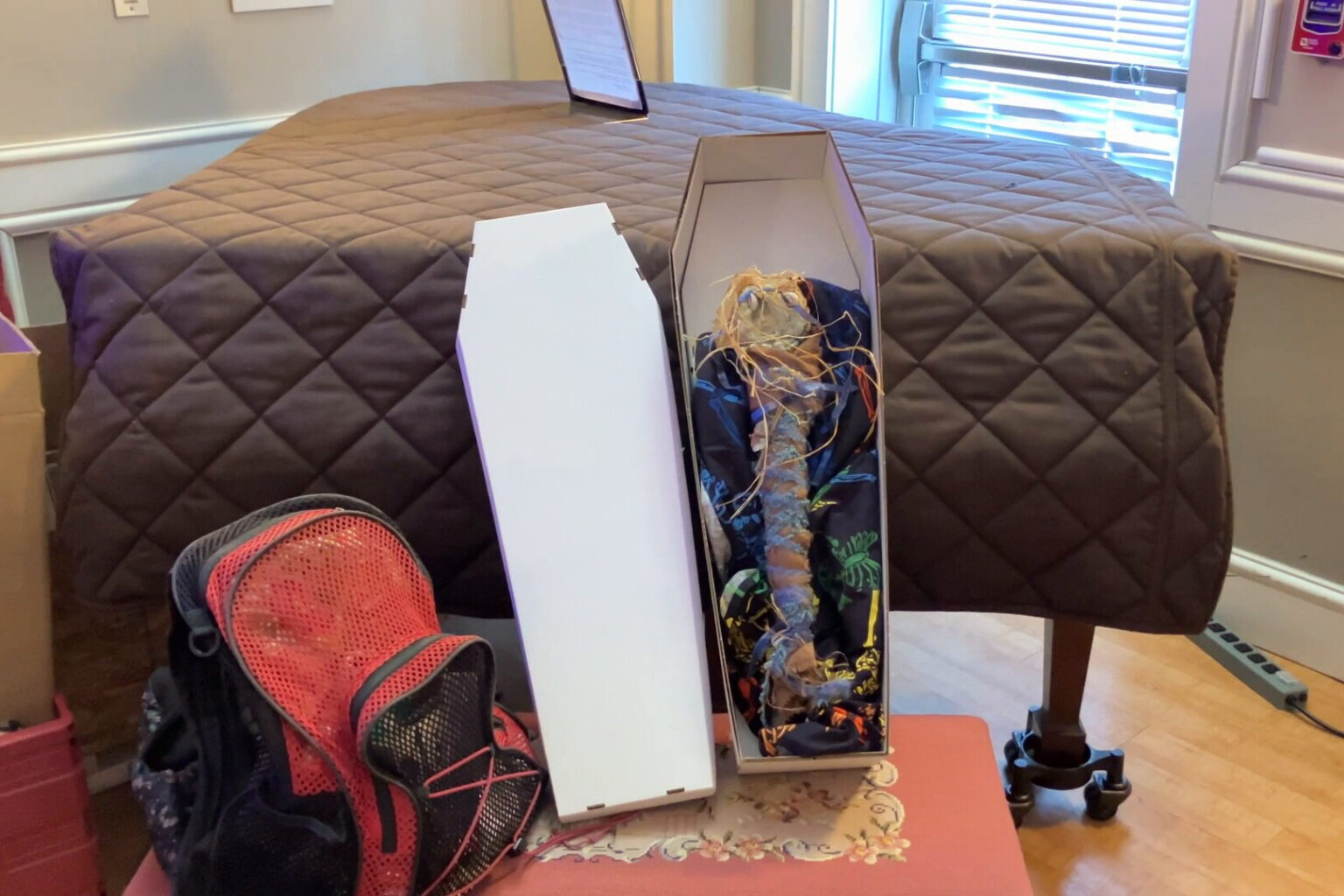
Vineyarders at the Oak Bluffs Public Library on Saturday were faced with a heavy question — how they would like to be buried.
They were there to hear about “green burial,” an unconventional process that does away with environmentally harmful materials used in a typical burial in the United States, especially in embalming fluid. With green burial options including housing a body in a cardboard box or wrapping it in a fabric shroud, everything that goes underground is meant to be biodegradable.
And for the two dozen Vineyarders attending the information session, residents of an Island where people are looking to protect the local environment, a green burial would be their final eco-friendly act.
“To me it’s disgusting,” Eva Skibild, one Oak Bluffs resident, said of the traditional burial. “The environmental impact of the average American burial is, to me, so bizarre.”
In Europe, where she’s from, green burials are the norm and she will forgo being embalmed when she dies.
“My background is, I’m from Denmark, and we do not do that embalming,” Skibild said. “We don’t put all the chemicals in the ground, we don’t do the cement vaults and all that.”
Three Vineyard towns have approved green burial so far. Oak Bluffs voters approved the process in 2023, and it is allowed in West Tisbury and Chilmark. While no Oak Bluffs resident has been laid to rest this way yet at the town’s Oak Grove Cemetery, there was a clear interest among the audience in attendance on Sunday, almost all seniors.
The information session was helmed by Heather Massey, a Falmouth-based end-of-life specialist and funeral consumer advocate, and Joyce Maxner of West Tisbury. The two have a history of discussing mortality at the Death Cafe series, which has organized conversations around death on-Island and on Cape Cod.
Massey has also given presentations for Green Burial Massachusetts, a nonprofit working to open the first green cemetery open to all in the state.
The main differences between conventional and green burials, Massey explained, concern whether to embalm the body and what container to bury it in.
Island towns’ regulations generally describe green burial as using a casket of biodegradable materials such as soft wood, wicker or cardboard, or simply burying a body in a shroud of natural fabric. The casket or shroud is then laid directly on the earth at a depth of around four feet. No embalming chemicals are used, and the vault constructed around a conventional casket, often made of metal, cement, or plastics, is also left out.
The benefits of a green burial, Massey said, can be personal or spiritual. But the “green” part has to do with reducing damage to the environment. In typical burials in the U.S., she said, millions of gallons of embalming fluid are buried each year. A typical wooden casket, she added, can leach varnish into the surrounding soil, and even options like cremation release toxins such as mercury into the atmosphere.
Embalming has also been linked to risks to the health of funeral industry workers. Massey cited a 2016 Harvard University study that men in jobs with a high probability of formaldehyde exposure died of Lou Gehrig’s disease at a rate nearly three times higher than normal.
Instead of embalming, Massey said, a body prepared for green burial can instead be preserved by refrigeration before burial.
Aside from the ecological benefits, some people choose a green burial to save on cost, with some finding it cheaper to go without elements of conventional burial. While the costs for purchasing a burial plot or working with a funeral home can be high, a cardboard container for burial generally costs under $100, Massey said.
While no green burial has occurred at Oak Grove so far, town cemetery commission chair John Tiernan said there is a lot of support for the process.
“I think all three of the commissioners on the board right now are in support of green burials,” he said, noting that the process is allowed in the town-owned section of the cemetery.
As the event let out on Saturday, Rob Chaunce stood out as a younger attendee. The Oak Bluffs resident was interested in discussing green burial with his parents.
“My parents are getting older, and [I’m] just thinking about the options that are environmentally friendly,” he told The Times. “My family and myself are married to the natural idea, and it seems like there are a lot of good options there.”
“It’s good to know that a few towns on the Island are doing it,” he said.
On March 23 at the West Tisbury Library, Massey and Viennia Booth will discuss alternative ways to organize a funeral, including caring for a body at home or with the help of community volunteers.