
After noticing health disparities among specific communities, the University of Nebraska-Lincoln formed the Nebraska Minority Health Disparities Initiative in response. In hopes to bridge the gap, they conduct research, work with communities and build projects, according to their website.
Health disparities affect rural populations, people with disabilities and different ages, associate professor of psychology and Co-Director for the Minority Health Disparities Initiative Arthur Andrews said.
“Health equity is one of those things that affects us all, even sometimes we don’t know it, and making sure that access to health care or other resources that promote health are as open as possible and includes as many people as possible, so that we do advance and really help everybody,” Andrews said.
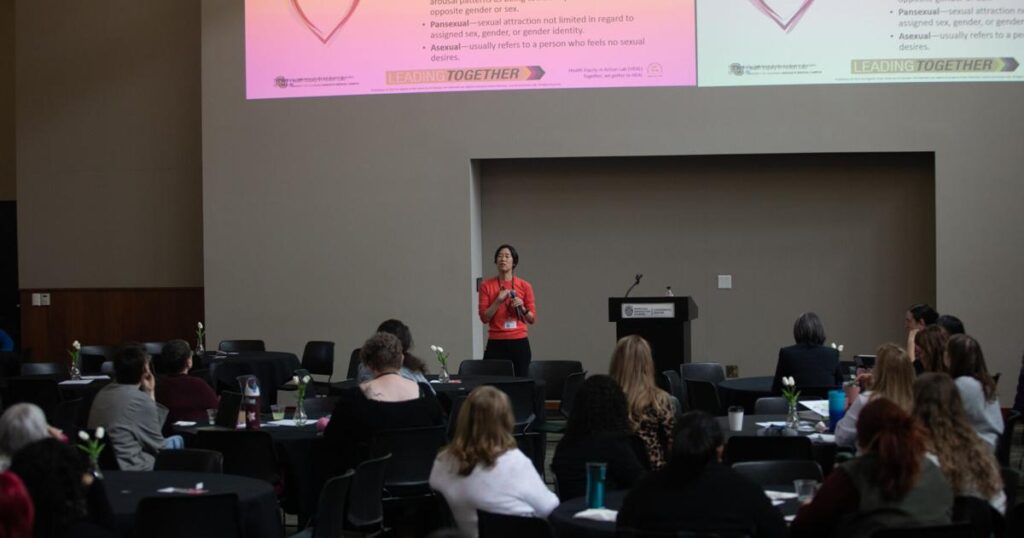
The institute hosts a Health Equity Conference annually to share ways to combat health inequity. This year’s conference took place Feb. 28 at the Nebraska Innovation Campus Conference Center.
“The conference on health equity is something that we put on for several years now, and it’s just an opportunity for people who work with populations experiencing health disparities to get together, share research, collaborate on work that they’re doing and just have a chance to connect,” Andrews said.
The conference consisted of breakout sessions, mindfulness meditation, a poster session showcasing projects in health equity, a networking session to discuss health equity and keynote speaker: Dr. Rita Lee, a professor and associate division head of education for general internal medicine at the University of Colorado School of Medicine.
The conference brought together people from Nebraska and other states. Imani Driskell, an Ohio native, spoke on expanding vaccine access.
“Looking at the landscape of where we can go to advance health equity is something that I’m really passionate about,” Driskell said. “I really wanted to attend and learn from others who are stakeholders in the health equity field and learn about what they’re doing, what has worked here in Nebraska and other states and just around the country.”
Driskell said she learned many topics, but most notably the term ‘Nebraska Nice’ and the move to ‘Nebraska Kind’ as a way to be truthful about disease states.
Lee spoke specifically about health inequity across the LGBTQ+ community.
Lee discussed violence and discrimination against the community, the need for inclusive policies, supportive environments and reasons for higher mental health issues among the community.
“I don’t know about you, but if I am moving through life, distantly, fearful of moving through space and worrying about whether I’m going to be safe or not, if I didn’t have an anxiety disorder, I probably would,” Lee said.
Throughout the speech, Lee encouraged the audience to speak out against policies they did not believe in.
“If you have testimonials, if you have personal stories, if you have patient stories, moral injury as a provider, offer that testimony,” Lee said.
At the end of the conference, Andrews asked participants to stay connected with each other.
“We get through this work,” Andrews said. “We do this work together as a community. None of us can do it alone.”