
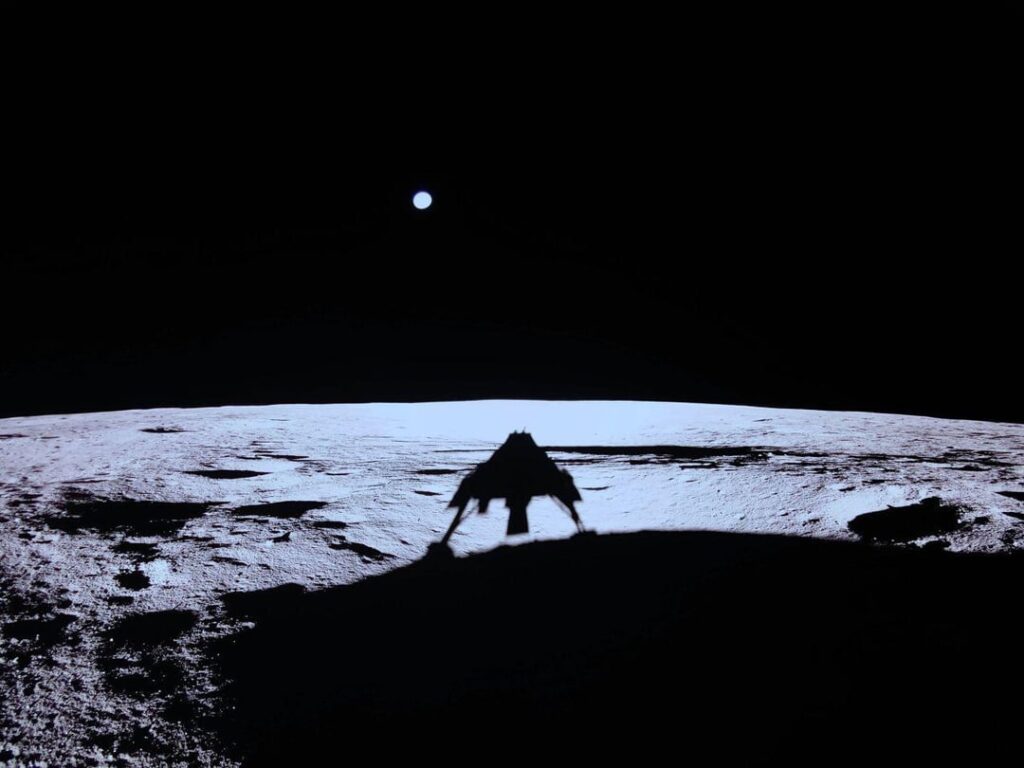
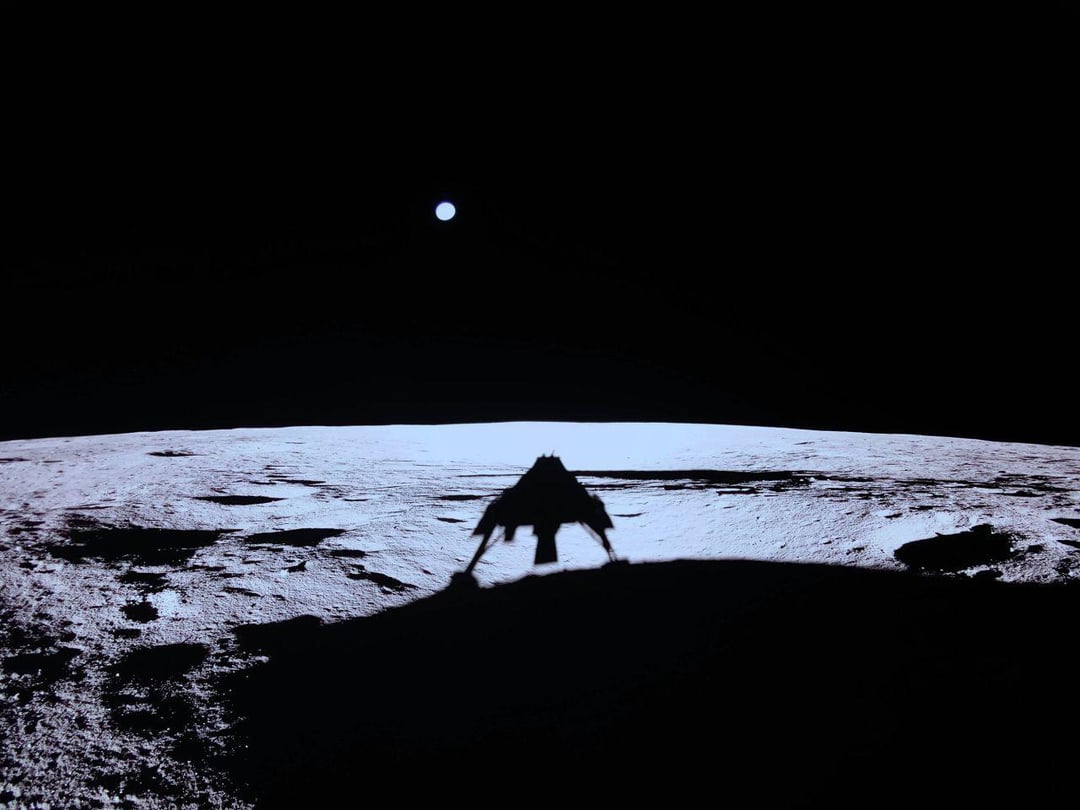
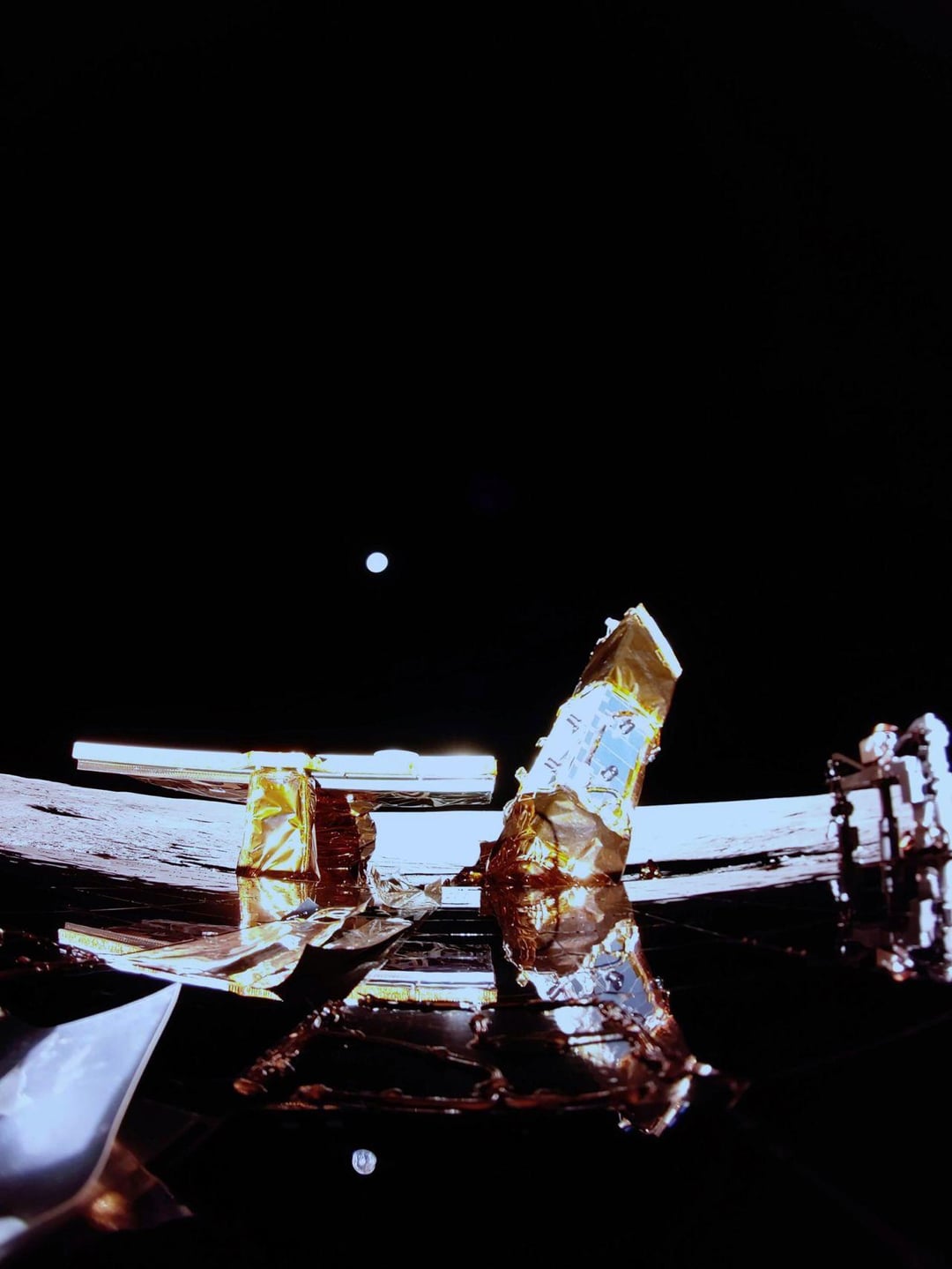
Can someone help me understand why the surface is convex in one photo and concave in the next? My first assumption is that the photos are being taken from two completely different views, but the Earth is present in the sky in both shots. Both bodies are in motion so I suppose a different view at a different time could line up with the Earth as well. Also, is that a reflection of the Earth at the bottom of the second image? I’d just like clarification as to what we’re seeing here. Images pulled from https://www.flickr.com/photos/fireflyspace/albums/72177720313239766/
https://www.reddit.com/gallery/1j1rt5s
18 Comments
Different cameras. One on top is fish eyed it seems.
Different camera lenses, and positions. The second shot where the horizon is more flat appears to be a wide angled lens. The first image has a lens that isn’t quite fish eye, but has a very similar shape causing the horizon’s curvature to be more pronounced.
On that first image – where is the light source coming from ? The shadows on the right rock suggest the light is from the right, yet we see the shadow of the lander suggesting light behind it. Two light sources?
She looks really lonely 🥺! She needs a friend!
Long story short: they’re not using [rectilinear lenses.](https://en.wikipedia.org/wiki/Rectilinear_lens) Thus straight lines beyond the center axes appear curved. The effect is known as [barrel distortion.](https://en.wikipedia.org/wiki/Distortion_(optics)#Radial_distortion)
Wide angle lenses produce distortion. A horizon above centre will curve one way, and below centre will curve the other.
[removed]
Curvature depends ob how far away from the center a line is. Above the center line it will be convex, below concave. In the final image it may look like both are at same location due to cropping.
Surprisingly I hadn’t even heard about this thing until it actually landed on the moon. Really cool!
With a lens like this, if the camera is positioned so the horizon is above the center line it will follow a curve up at the edges, and if it’s slightly below it will curve down. And a vertical line on the left will bow out to the left in the middle, while the opposite happens at the right. That’s why photos of buildings with columns often have that effect.
You can see this even with a horizontally-oriented phone camera zoomed out all the way, but especially with a fish-eye lens attached.
the amount of people that still dont understand how lenses in a camera work is baffling-go take a photography course
If your phone has an ultrawide zoom option ( 0.5 , 0.6, 0.7, etc , anything less than 1) open it. Keep phone in landscape mode, find a straight horizontal line in ur surrounding. You can see it go concave or convex with the ultrawide lens depending on if the phone is pointing above or below the horizon. The same thing occurs on lander’ cam.
The opposite of ‘fisheye’ is ‘pincushion’…they didn’t (IIRC) use zoom lenses on the lunar missions, but zoom lenses can have both kinds of distortion at both ends of the zoom.
I saw the title and came here dreading that the question was “Why can’t you see any stars? This is fake!”
Whew! This was a good perceptive question, OP!
/s
[deleted]
Their image processing team isn’t staffed, or haven’t had at it yet. They could invert the lens distortion. The color accuracy on the color images are also a little meh.
Try this. Hold your hand in front of your face so it is sideways, just 4 inches in front of your eyes. Back of hand facing away from you. Fingers together so the top edge of your index finger is making a straight horizontal line. Then move your hand below eyesight and above eyesight. If you pay attention, look at the tips of your finger when below your eyes, you will notice a slight curve up. Now move your hand up. When you look above your eyes you notice a slight curve down. This is a behavior of all lenses, including eyes, and what you see in the photo.
How did the earth disc know to always have the observer?