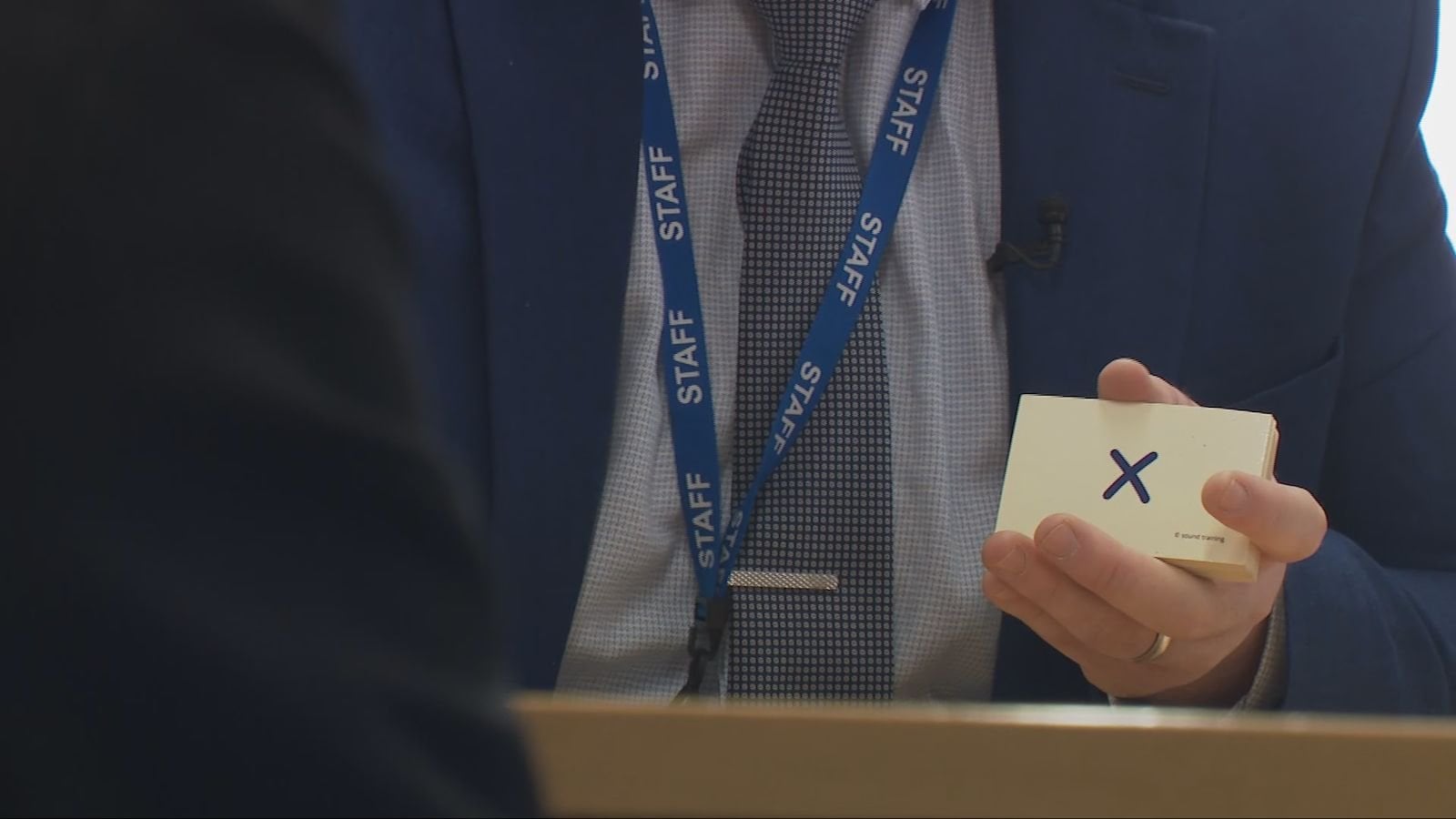
The GCSE pupils being taught the alphabet amid literacy crisis | ITV News
https://www.itv.com/news/calendar/2025-03-10/the-gcse-pupils-being-taught-the-alphabet-amid-literacy-crisis
Posted by adultintheroom_

The GCSE pupils being taught the alphabet amid literacy crisis | ITV News
https://www.itv.com/news/calendar/2025-03-10/the-gcse-pupils-being-taught-the-alphabet-amid-literacy-crisis
Posted by adultintheroom_
47 Comments
My partner was a teacher until 2022 and I was genuinely shocked at how far the standard of education has fallen. She was teaching 13-14 years olds the same stuff I was being taught at primary school in the 90s.
> She oversees phonics sessions where students as old as 15 and 16 – who are preparing for their GCSEs – are being taught the basic letter sounds normally learned by four and five-year-olds in reception.
>’Life and death’: The Bradford school holding emergency literacy lessons
I’m sorry but the Alphabet is the parents fucking job jfc. They need basic skills taught by parents at least.
*If… you’re a 15-year-old boy who can’t read, that’s 11 years in a row where you have been failed by the system*
she’s not wrong but at the same time where the hell are the parents, why haven’t they done anything!
Back in the 90s you were required to have no spelling mistakes or you would only get a c grade at the most.
I worked with “challenging” and low ability kids for over a decade. Mostly autistic, often social/emotional problems. The ones who weren’t autistic invariably had awful home lives. It’s easy to blame teachers but when I had kids coming in who hadn’t eaten since school lunch yesterday, my priority was feeding them. Or when they hadn’t slept because there was arguing and throwing things around my priority was looking after their mental state, not pushing them to engage with fractions. It’s like the hierarchy of needs. We can only teach children who arrive at school fed, rested and emotionally secure. Simply getting them to school is not enough.
It was DREADFUL when I was teaching 10 years ago, so I can believe it.
I’m curious to know what percentage of this demographic are children from migrant families or native Brits because one of my friends works in a school and says the majority of kids needing extra assistance in class and exams are from minority or migrant backgrounds and are also mostly the ones actually paying attention in class because they want to learn. Some of these kids barely know any English at all, so I’m not surprised if they don’t understand the English alphabet either. I think it’s an important distinction to make between native kids here getting dumber, or that the student pool is just being further diluted (for lack of a better word) by foreigners who are less educated and less familiar with the English language.
Not surprised
Im a tutor, and I had a child tell me that -5 was greater than -1. He’s 15.
Are parents just getting lazier and lazier? My parents taught me so much when I was a kid.
I bet so many of them just plop their kids in front of the most brainrot Youtube content on an iPad instead of helping them read a book or something.
I’m genuinely sad for those who can’t read.
A myriad of universes closed off to them.
I have friends that are primary teachers and you would not believe the number of kids that aren’t even toilet trained by the age of 4. That and ‘swiping’ to turn pages of a book gets to me.
The real question is, wtf have you done with all the money if you didn’t teach them to fuckin read. This is pre primary school stuff.
If only there was a test to make sure you’d be an eligible parent!
Should be on entry level or functional skills if they don’t know the alphabet yet
I feel bad for these kids I really do but at the same time how did they get so far without learning the alphabet ?
Bradford, so I am going on a whim and guessing the kids that are 15 and learning the alphabet are new immigrants that are ESL
Unless you’ve got a severe learning disability how can you not know the alphabet aged 15? Little lad’s kindergarten had them all chanting out the English *and* Thai one aged 4 (all 44 consonants and 32 vowels of it)
My initial reaction was to think about special needs kids who no longer have helpers nor alternative schools… but most kids with special needs whose parents would send them into regular school (dyslexia – autism – down syndrome spectrums etc) would still know the alphabet by 7-10 depending on the severity?? Without the helpers that they used to have I can’t imagine making them sit through regular classes every day for 12 years of their life if they were learning absolutely nothing.
Clearly it’s not about special needs, or even really the schooling situation – it’s people not knowing the basics of parenting…
Teen pregnancy has reduced by 68% between 2007-2021 too so it’s not like it’s a “kids raising kids raising kids” situation either
If you don’t know the alphabet, you shouldn’t fucking leave nursery, never mind be in primary school or secondary school. That’s beyond ridiculous. We need to bring back standards into our schooling system
How do these kids navigate the Internet? Even YouTube and tiktok require some level of literacy to use.
I get that many kids don’t read books or newspapers anymore but this level of struggle is surprising.
In a nutshell the wrong peopele are having kids. Illiterate people are pumping out kids while literate people have chosen not to have kids
Unfortunately even with all the government initiatives and educational funding in the world, you will never be able to correct for the devastating effects of having inadequate and negligent parents.
>Bradford
Isn’t this also the centre of all the articles where there’s an issue with children with learning difficulties as a result of family members marrying eachother?
I know it’s not the point, but if you can read, knowing alphabet is pretty useless. I moved to the UK when I was 12, learned the language etc but I could never recite the alphabet in the correct order, I’d get lost around LMNOP if not earlier and kind of guess the rest.
The only thing it’s useful for is alphabetical order, and again there I kind of guessed most of the time. Funnily enough the only reason I had to make sure I knew the alphabet off by heart was a further maths exam because D1 modules required alphabetical order sorting.
It’s like when Sherlock Holmes said he didn’t know anything about the solar system because it was of no use to him.
We need more rap that recited the alphabet. Bring back garage! A to the B to the C!
Something is odd because those kids would have done the phonics screen in Year 1, so they would have been picked up then and sent for extra sessions from Year 2 onwards to catch up. Schools hammer home the basics of reading and I cannot imagine the primary schools not doing something to make sure kids know something so basic. I suspect this is ragebait and that actually a lot of these kids are ESL, from countries that do not use our alphabet.
When I was in school for GCSES due to my autism and ADHD I was placed in low sets (This was 2016 so outside of what I’m about to talk about there’s issues with lack of support for certain kids)
It was baffling to me how many of my peers had to sound out and put fingers under words to read
To boot I would then get in trouble for ignoring the class reading session and just reading ahead because thankfully my dad instilled a love of reading in me when I was little
Because apparently I couldn’t have been reading it properly because of how slow everyone else was
The failure in this stuff is on both sides
The patents for not encouraging their kids and teaching them the basics and the education system for being an over worked mess filled in by teachers who lack the ability to actually teach
As a comparison, the Chinese dictionary has 54,000 different characters. Failure to learn 26 characters is a failure of schools, parents and the child.
Oh no, if it’s not the consequences of critically underfunding education.
If your kid has reached year 10 and cant even read, you’ve epically failed as a parent
It’s almost like our government left or right are underfunding the future generations… Classes getting bigger, teacher pay caught up with minimum wage..
Maybe when the media tells you immigration or Musk is the problem, you consider it’s actually the media and this old timey 2 party establishment bullshit that’s behind it all.
Failing NHS over 15 years and our kids only getting dimmer… Let’s send troops to war with Russia to get the rich richer 🤡
This is where you start looking at the parents for absolutely failing their children if they can’t read. A school can only do so much and it’s the responsibility of the parents to make sure their kids can read and write.
At some point you got to start blaming parents and have them done for some sort of neglect because they’re hindering their children from attaining their full potential.
> She oversees phonics sessions where students as old as 15 and 16 – who are preparing for their GCSEs – are being taught the basic letter sounds normally learned by four and five-year-olds in reception.
Surely, by definition these must be kids with severe learning difficulties
100% On the parents here.
I was lucky enough to be taught how to read simple words and do basic maths before going to school and it gave me a head start which lasted all the way through mandatory education.
Not even knowing the alphabet when you’re taking your GCSE’s is beyond ridiculous.
My mom had the alphabet pinned on the walls in the house, we could read and write our own names by the time we were 3, we knew our address if we got lost, dad taught us some simple maths and when we were old enough he taught us how to play cribbage, it’s not great for much other than addition and being a fantastic game, but I can make 15 in my sleep😂. For those people who don’t play cribbage, it’s part of the game to make 15, also we were sent home with books to read and words to learn and spell.
‘The alphabet’ is an interesting one, curriculum wise. I’ve taught children between 3 and 11. Learning to read does not involve the alphabet, it’s all about phonic sounds, which are NEVER taught in alphabetical order. Teaching 30 very young children to read is hard and takes a lot of man-hours over several years, even depending on when you draw a line for having ‘learned to read.’ That’s the big focus.
I’ve taught many many children to read and write, but not really that alphabet.
Maybe a bit higher up we’ve used it to look things up in dictionaries. I’m not surprised kids don’t know it. (And I’m not saying it doesn’t matter.) I’m sure there are other, bigger gaps in their knowledge.
This is what happens when you have 30 plus people in a classroom. People who are struggling get missed.
Given the current state of parenting (my mum was a primary school teacher), it’s genuinely shocking. Parents today often hand their kids phones to distract them instead of engaging with them. Some aren’t even toilet-training their children, expecting schools to handle all this. I remember one instance where parents tried to sue the school because it expelled a 7-year-old child who wasn’t toilet-trained, citing health and safety concerns after multiple incidents.
Both my parents worked full-time—my mum as a nurse at the time and my dad as a service engineer who wasn’t home most evenings. Despite their demanding jobs, they always made sure we did our homework, sat with us to teach us the alphabet, and ensured we could read and write our names before we even started nursery. That’s two busy, full-time working adults managing to raise two children properly.
Honestly, at this point, it borders on neglect. I’d recommend returning mandatory SATs at KS1 and maintaining them at KS2. Schools should be empowered to have kids repeat years if needed (excluding those with significant learning disabilities), and I’d support implementing welfare checks for parents who refuse to engage with their children’s education and development.
I think people are underestimating how far you can get with word recognition alone and are picturing 16 year olds who literally cannot read a sentence. More likely they didn’t fully learn to phonetically sound out words so have trouble with less common words they haven’t encountered before, but otherwise if you put some common phrases and sentences in front of them they’d be able to identify words and read them.
I also think people severely underestimate how common this is between generations. 40, 50, 60 year olds who can barely phonetically sound out a new word. A lot of people learn like parrots, they can repeat what they know but ask them how they got there and they have no idea. Part of that is because we often teach memorization over understanding.
I have y11 still calling verbs “doing words” and adjectives “description words”. At least those know what I’m trying to say, try to teach a second language with these gaps in knowledge.
I’ve taught GCSE kids who couldn’t read.
One issue is that if a kid is dyslexic, has missed some primary school due to illness or refusal or any other reason, all the remedial programmes to get them reading are really quite baby-ish and usually by secondary they have got some quite defensive coping mechanisms to get around their poor literacy, and usually feel quite embarrassed about their situation.
You need to spend a longg time with kids like this breaking down that mental barrier and building up their trust before you can even start doing the work of getting them reading.
But when the school budget cuts come, they stick those kids back into a class of 30 and say it’s their regular teacher’s job to differentiate for them, even though a lot of times it’s literally impossible.
If you were that kid, would you rather reveal to the other 30 in the room that you can’t read, or would you kick off and disrupt the lesson so you get kicked out and don’t have to do it? Easy choice.
Also, shout out to Michael Gove for decreeing that every GCSE student in the country had to read Great Expectations from cover to cover.
Just want to bring everyone’s attention to something the previous government came up with around 10 years ago called “quality first teaching”.
It means – no, we won’t fund any extra resources or support for special needs. All the students need is better teaching from their regular class teacher (so get on with it yourself)
How’s that going for kids’ literacy levels??
– 69% of the pupils at this school have English as a second language…
– 0.9% of the pupils at the school are white British ….
This school is also part of a recognised and praised refugee and asylum seeker programme.
These children aren’t stupid or let down by education or their parents … they have been raised in other countries and/or by parents who don’t speak/write/read English to the same level someone who has been here there entire lives would …
By all accounts the school is doing a pretty good job in fast tracking the children through learning English.
I would like to know if we are actually legitimately suffering from a lowering of the average IQ in this country. I wouldn’t be surprised if it’s dropped at least 2 points like America, or actually more like 5 points. A concept called dysgenic fertility: a problem affecting every state, even China. The unintelligent outbreed the intelligent, and the average IQ of the populace drops.
The main issue here is the fact that the majority of pupils at this school come from homes where English is the second and sometimes third language. In many cases speaking English will be forbidden in the homes where these pupils are being raised.