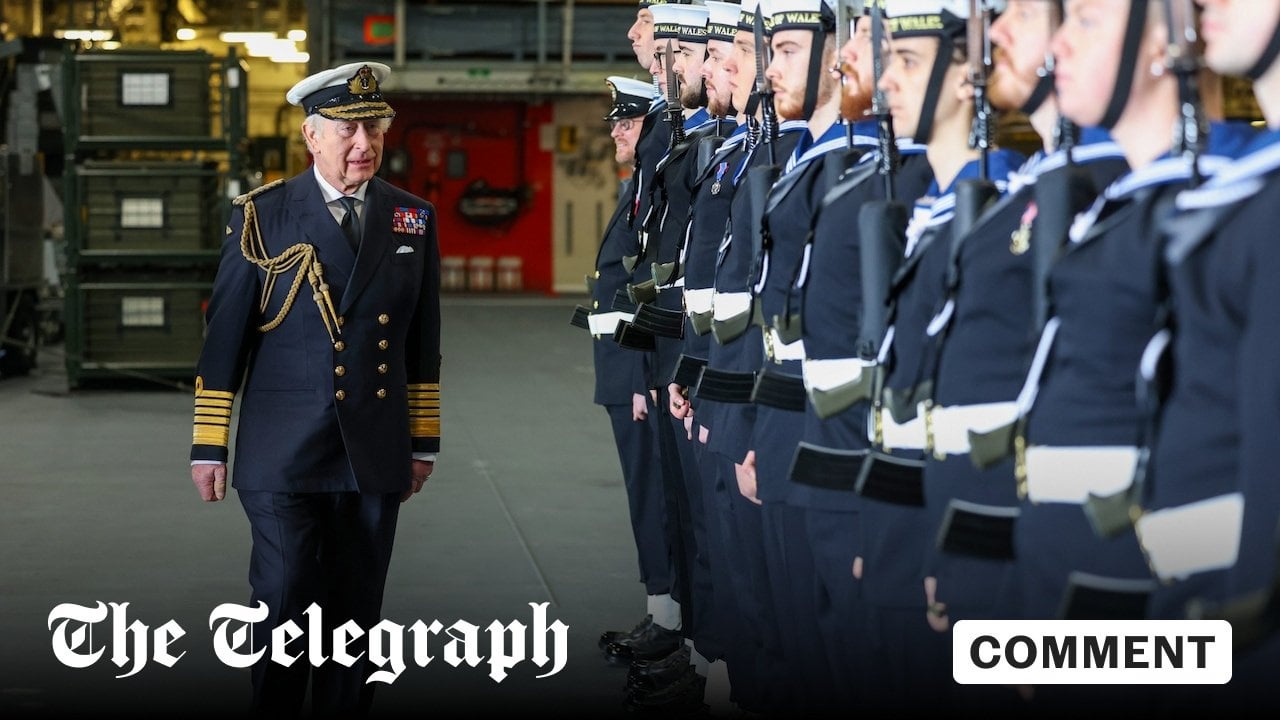
Britain’s naval power can stop Putin. It has always been our best safeguard
https://www.telegraph.co.uk/news/2025/03/10/britains-naval-power-can-stop-putin-always-been-safeguard/
Posted by MGC91

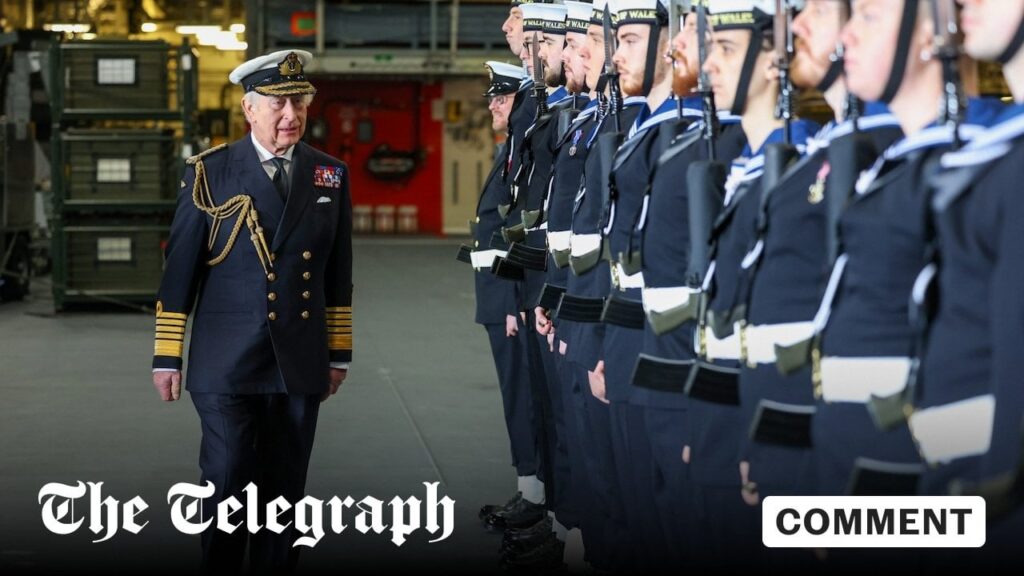
Britain’s naval power can stop Putin. It has always been our best safeguard
https://www.telegraph.co.uk/news/2025/03/10/britains-naval-power-can-stop-putin-always-been-safeguard/
Posted by MGC91
22 Comments
>Britain’s diplomatic strategy for more than 150 years – since 1940 perhaps its only coherent strategy – has been to ensure that the United States was never our enemy and if possible our ally.
>This was dressed up with sentimentality, especially on our side. As early as the 1890s, Brits were exalting the solidarity of the “English-speaking peoples”, and in 1917 we managed to drag the Americans into the First World War.
>But the US has often been predatory and isolationist. It has a long history of threatening Mexico and Canada. In the 1920s, it damaged Europe’s hard-won peace prospects by rejecting the Versailles Treaty and demanding full repayment of inter-allied loans. Between 1940 and 1945, it extracted much of Britain’s accumulated wealth and destroyed its trading system.
>Alliances are not friendships. Donald Trump is different only in his brazen cynicism. The great Lord Palmerston thought we should be friendly with the power that could do us most harm. That, for now at least, is the special relationship. Perhaps it always was.
>Trump has woken us up. Or more precisely, has made us stir in our long slumber. We now pay lip service to national defence. But the Prime Minister’s plan is to try to galvanise the special relationship by offering to put British troops into Ukraine to tempt Trump into providing the “back-up” he has repeatedly refused to give. We similarly put inadequate military forces into Iraq and Afghanistan, and before that into Bosnia, all to show that we were a useful ally of America or of the EU.
>We did something similar in 1914 (when the British Expeditionary Force was practically wiped out in three months) and in 1939 (which led to Dunkirk). Palmerston, and probably every statesman since, would have regarded sending a token force to Ukraine as insane. Either they will be hostages, like European troops in Bosnia (remember Srebrenica?), and as the BEF nearly was at Dunkirk, or they will end up giving shameful respectability to a “peace” dictated by Putin and forced on Ukraine.
>Let us be honest. The only thing we can usefully do is provide money, training and arms to Ukraine as long as they resist, and encourage other countries to do the same. We have never been able to intervene in central and Eastern Europe: this was as true in 1849 (when we felt sorry for the Hungarians) and 1945 (when we felt sorry for the Poles) as it is today.
>If we are serious we must aim urgently to make ourselves as invulnerable as possible, so that we might be able to play an effective part in European or global affairs. A crucial aspect of Britain’s historic strength has been such invulnerability, despite its small population, its long coastline and its tiny Army.
>Invulnerability was hard won, and only finally achieved after Trafalgar. Previously, invasion was a constant danger. But Napoleon, the Kaiser and Hitler all realised it was no longer feasible. So they tried to cut off our commerce, food and raw materials. As early as the 1840s, enemies were anticipating the day when Britain would starve.
>Fortunately, enemy surface raiders and submarines never came even close to winning. Instead, it was Britain that could starve its enemies: during the First World War perhaps 750,000 Germans died in consequence. During the Second World War, Britain could fight off a death blow from the air thanks to 1930s developments in radar and fast fighters, while eviscerating the German war economy and decimating its work force by mass bombing.
>And today? We are no longer invulnerable, and we are no longer able to retaliate against attack. Not only surface shipping, which carries 95 per cent of our trade (even the Houthis can attack British ships), but undersea cables, pipelines and offshore wind farms are frighteningly vulnerable. We also discover that we have, at best, inadequate defence against air attack. As for cyber, I hate to think.
>History rarely gives clear lessons, but this is surely one. To be safe, and to be influential, Britain must be a maritime power. We cannot (except briefly in extreme emergency) be strong on both land and sea. Hardly any state in history has managed this.
>We must not be distracted into building up land forces to send to the far side of Europe. Tanks cannot protect pipelines and wind farms. Nor will a regiment of Challengers in Ukraine frighten Putin. We cannot help allies when we are so vulnerable.
>At worst, brave soldiers sent to do the impossible lose life and limb to no purpose, and have to be rescued, as at Basra and Helmand. But naval power can support European security and deter aggressors. A navy is expensive, but in a dangerous world it is indispensable to Britain’s prosperity and safety: the Russians are – and the Chinese soon will be – sailing round our coasts.
>Forty years of complacency mean that we have to start from the bottom up, first making a naval career attractive. Fortunately, Navy personnel make up in effectiveness for small numbers. In Queen Victoria’s heyday, the Navy’s headcount was about the same as today’s, but they had the best (and most expensive) equipment.
>Now we need submarines, planes, drones and operational aircraft carriers and their escorts. We need a serious defensive and offensive cyber capacity – the modern equivalent of Palmerston’s gunboats. This would require fundamental political changes, including redirecting public spending and indefinitely postponing net zero. Whether the Government does this will tell us whether it is just play-acting.
>There are alternatives. One is to continue as we have done since the 1990s and let our defences run down through underfunding; to hope that danger will go away, and that the Americans will save us if it doesn’t; to disguise reality by talking up defence spending and making token gestures, such as putting “boots on the ground” at the cost of a few hundred soldiers’ lives.
>Another alternative would be to opt out, like Spain, for example. We are not on the front line. We could hope that others would sort out the world’s problems. That has not worked badly for Spain, and it would at least be honest. For the first time in 700 years, we would become spectators in world history, hoping that aggressors would always leave us in peace.
>Deep down, we know they won’t.
don’t like this talk./ it doesn’t matter if our naval power can beat their naval power. nuclear weapons don’t care much for boats.
Air power counts more in defensive terms than a surface fleet.
In short: give us (print) more money so we can go pretend to be the empire of old.
“Indispensible to safety and prosperity.” I don’t see it.
How does this work in age of current missile tech.
Seemed not too long ago that there was unanimity among military experts that carriers are obsolete. Other types too I presume.
I’ve always said that the MOD should fund the Navy more than the RAF and the Army. As an island nation, the best way to protect our interests and project power is by sea. We should have a surface fleet of 12 type 45 destroyers, 13 frigates and 2 carriers supported by tankers, resupply ships, patrol boats and drones. The army would likely have to be reduced to a single division
>This would require fundamental political changes, including redirecting public spending and indefinitely postponing net zero.
There it is.
Imagine bragging about dragging another country into a world war that destroyed the lives of millions.
What an embarrassing article.
“while eviscerating the German war economy and decimating its work force by mass bombing.” This is simply propaganda as German industrial output peaked in 1944, and it was only the land slog into Germany that finally did them in.
This a joke right? The Royal Navy has been decimated for decades. It can’t even operate without the Americans.
And that’s problematic right now.
Don’t know why people are so worried with Putin or China meanwhile is USA that is clearly buttfucking Europe.
Ships are obsolete due to water based drones. If Ukraine has been using them then Russia is gonna be developing their own.
I’m all for funding the Royal Navy,
This journalists history lessons leave rather a lot to be desired though.
Barry and his mates down the boozer could take a fishing vessel and stop Russia at sea. They are beyond shit at naval.
We need to ramp up our armed forces and redevelop a manufacturing sector. Russia isn’t letting up and the US can’t be trusted at the moment
I’d be surprised if the defence review doesn’t suggest we significantly invest in the navy, because we’re an island and our first priority is defending our island and shipping lanes to our island.
Whilst a larger navy would be good it is still vulnerable.
And what good is a navy when Europe is overrun? The idea is to stop the Russians at the furthest point from the UK i.e in eastern Europe. To do that we need boots on the ground and aircraft first and foremost. Drones are all well and good but, as we see in Ukraine, they have only slowed the Russian advance not stopped it.
Ah yes, the same Navy that can’t even stop rubber inflatables from crossing the Channel
Not a big fan of the Telegraph, but I do agree our increased defense budget should go towards somethwat ruling the seas again.
With our single aircraft carrier with no planes?! Lol
is sTORYgraph NON DOM tax evader and tax avoider media baron aware uk navy are not a charity and need billions taxpayers funding to stay afloat
Naval power has been proven to be vulnerable to modern small drones and requires a rethink in modern naval doctrine, evidenced by what remains of the russian black sea fleet.
We would be foolish to think our vessels don’t share similar vulnerabilities.
We should look to adapt and improve before putting too much confidence into our current naval strength.
They have one diesel powered aircraft carrier, obviously our naval power can stop them.