
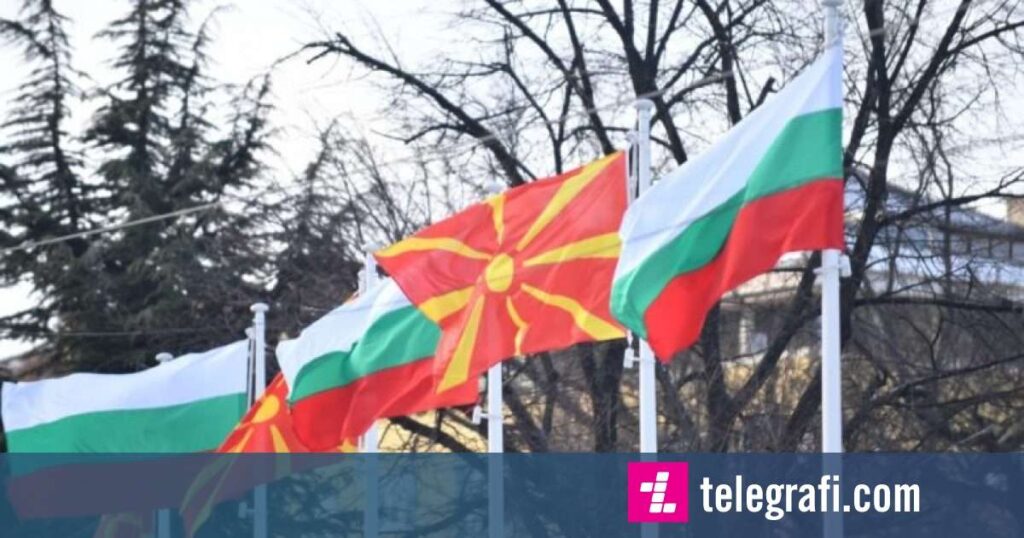
Even after the formation of a political government in Bulgaria, Skopje and Sofia are unable to cool their differences and take the next step towards unblocking European integration. Prime Minister Hristijan Mickoski said that Bulgaria has forgotten how to build good relations.
“I regret that the new Minister of Foreign Affairs in the eastern neighboring country forgets that good neighborly relations are a fundamental value of European values, regardless of whether someone is in the EU or not. However, we are partners in NATO. We will remain here and our fellow citizens there in Bulgaria. If changing the constitution is not a direct interference in a sovereign and independent state, then I don’t know what is,” declared Hristijan Mickoski, Prime Minister.
The Ministry of Foreign Affairs has also reacted. They regretfully note that our neighbor is once again trying to shift the responsibility for failing to fulfill its international obligations onto our country.
“We emphasize that respecting and implementing the decisions of the European Court of Human Rights is not a bilateral issue, but an obligation of each member state of the Council of Europe. The Republic of North Macedonia remains fully committed to the rule of law and respect for human rights and freedoms as fundamental values for European integration, and cannot accept their denial and relativization, including the rights of members of the Macedonian minority in the Republic of Bulgaria,” the Ministry of Foreign Affairs announced.
The Ministry of Foreign Affairs says that the policy of conditionality does not help build good neighborly relations and that they are strongly committed to dialogue.
These reactions in Skopje come a day after the Foreign Ministry in Sofia responded to Mickoski, recalling that the EU decision from July 2022 is still valid and that it is surprising that Prime Minister Mickoski experiences the obligations assumed by Macedonia as interference in internal affairs.
“We consider such statements as another attempt to circumvent the commitments made and to divert public attention from the lack of reforms. The Prime Minister of the Republic of North Macedonia once again proves his lack of understanding of the decisions of the European Court of Human Rights. In this way, willingly or unwillingly, he promotes manipulative and false theses, which can be considered as real interference in the internal affairs of the Republic of Bulgaria,” the Bulgarian Foreign Ministry says.
The inclusion of Bulgarians in the Constitution and the respect of the good neighborly agreement with Bulgaria are conditions in the negotiating framework that the country must meet to open the accession chapters. /Alsat/