
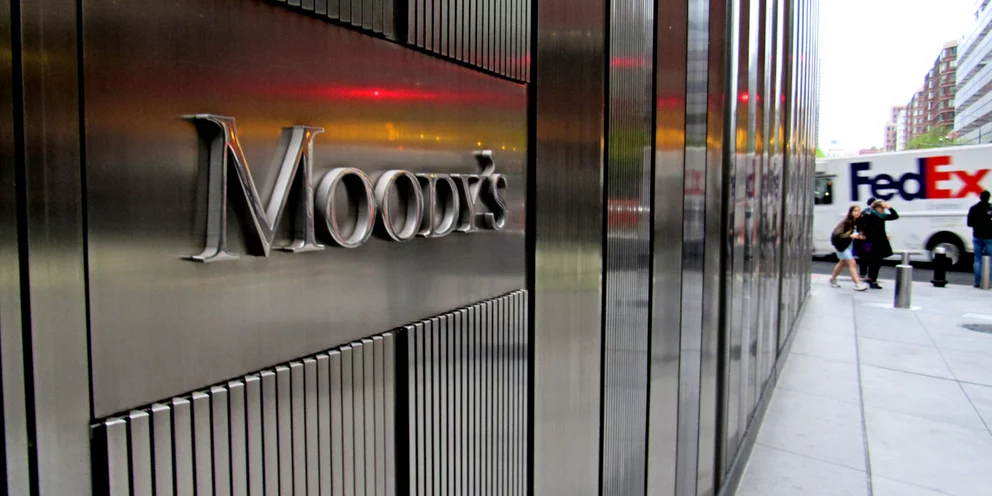
Moody’s has upgraded Greece’s credit rating to “Baa3” with a stable outlook, stating, “Public finances have improved faster than initial estimates.”
Today marks a significant day for the Greek economy as the final barrier keeping the country from investment grade status has fallen. Moody’s, the strictest of the major rating agencies, has granted Athens the investment grade designation.
In its verdict tonight, the American agency upgraded Greece’s rating to “Baa3” from the previous “Ba1.” The outlook shifted to stable from positive.
It should be noted that in September 2024, Moody’s maintained Greece’s credit rating at “Ba1,” one notch below investment grade, but upgraded the country’s outlook from “stable” to “positive.” This reflected improvements in the banking sector and better-than-expected economic performance.
Just a week ago, the Canadian agency DBRS upgraded Greece to “BBB” with a stable trend. However, Moody’s decision carries far greater weight, as it is considered the most stringent rating agency.
“Greece is poised to shed the last remnants of its debt crisis with a credit rating upgrade that would definitively lift it out of the ‘junk’ territory it entered 15 years ago,” Bloomberg emphasized in an article hours before Moody’s announcement. Meanwhile, according to an analysis by Jefferies, the Moody’s upgrade could pave the way for the Athens Stock Exchange to join developed markets.
What the Report States
Moody’s has upgraded the long-term credit rating of the Greek government for both domestic and foreign currency debt from “Ba1” to “Baa3.”
Additionally, it upgraded the rating of unsecured local currency bonds from “Ba1” to “Baa3,” as well as the ratings for the medium-term note (MTN) program and unsecured foreign currency bonds from “Ba1” to “Baa3.”
Furthermore, the short-term rating for other foreign currency securities was upgraded from “(P)NP” to “(P)P-3.” The outlook shifted from positive to stable.
This upgrade reflects our view that Greece’s credit profile now exhibits greater resilience to potential future shocks. Public finances have improved more rapidly than our initial estimates.
Conclusion
Based on the government’s fiscal policy, institutional improvements that are beginning to bear fruit, and a stable political environment, we expect Greece to continue achieving significant primary surpluses, which will gradually reduce its high debt levels. At the same time, the banking sector’s condition is steadily improving, reducing the risk of a financial crisis that could negatively impact the country’s credit profile.
The stable outlook reflects a balance between the slow improvement of some of Greece’s key credit challenges and the positive prospects tied to institutional stability and the aforementioned fiscal policy. On the challenge side, completing institutional and structural reforms that bolster growth will take time. Although the debt-to-GDP ratio has declined rapidly in recent years, it will remain one of the highest among the countries we rate.
Nevertheless, Greek authorities are leveraging the positive momentum created by the Recovery and Resilience Facility resources to implement policies that support creditworthiness.
Moody’s also raised the country’s rating ceilings for local and foreign currency from “A1” to “Aa3.” For eurozone countries, a six-notch difference between the local currency ceiling and the issuer’s rating in the same currency is typical, as is the absence of a gap between the local and foreign currency ceilings.
This reflects the benefits of the eurozone’s strong common institutional, legal, and regulatory framework, as well as liquidity support and crisis management mechanisms. It also indicates our assessment of a negligible risk of Greece exiting the eurozone.