
The Triennial Scientific Plan 2024-2027 of the International Council on Monuments and Sites (ICOMOS) is entitled ‘Disaster and Conflict Resilient Heritage – Preparedness, Response and Recovery.’ ICOMOS is a non-governmental organisation that works to preserve the world’s cultural heritage, and is associated with the United Nations Educational Scientific and Cultural Organisation (UNESCO).
ICOMOS comprises global professionals who monitor tangible heritage, including those inscribed on a List by UNESCO as World Heritage (WH). All nations are being encouraged to undertake preparedness strategies that develop responses for recovery during and after disasters and conflict impacting heritage sites.
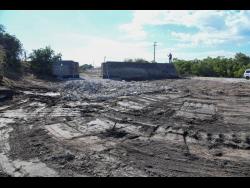
Interestingly, a totally unprecedented ‘disaster and conflict’ has arisen in Jamaica during the first week of March – bulldozing of a cultural and natural heritage site of outstanding universal value.
Nevertheless, commendations are due to the state agencies that have stepped into the midst of this conflict to try to redress the disasters that occurred, even making apologies. This is huge, and conciliatory. How therefore will Jamaica handle this recovery process?
The Blue and John Crow Mountains received inscription on the UNESCO WH List in 2015. Jamaica has two other properties on the UNESCO Tentative List desiring World Heritage inscription: ‘Seville Heritage Park,’ St. Ann; ‘Underwater City of Port Royal,’ Kingston. All nominated properties must have a prescribed buffer-zone. Both tentative properties are coastal and include heritage on land above and below ground, also underwater, both containing outstanding natural environments with habitat of endemic flora and fauna.
The Jamaica Information Service announced December 11, 2023 that the nomination was in progress for the ‘Underwater City of Port Royal’ that sank under the sea during the 1692 earthquake and tsunami, for its inscription on the UNESCO World Heritage List. This property, including its buffer zone, is totally inside the Palisadoes – Port Royal Protected Area designated 2005 as a Ramsar Site of Wetlands of International Importance. This wetland contains cays, shoals, mangrove lagoons, mangrove islands, coral reefs, seagrass beds and shallow water, hosting a variety of underrepresented wetland types with endangered and vulnerable species including American crocodile, green turtle, Hawksbill turtle, West Indian manatee, and the bottlenose dolphin. At least 26 endemic new species have been discovered in this area containing the town of Port Royal and its environs of rich historic and cultural values with forts on the sand dunes.
LISTED FOR PROTECTION
One of these Port Royal forts on the dunes inside this area listed for protection by the Jamaica National Heritage Trust (JNHT) is Fort Rocky, originally called ‘Rocky Point Battery’ until about 1945, located on the Palisadoes Peninsula. It is one of four batteries built or modified in the late nineteenth century to defend Kingston when in 1872 it became the new capital of Jamaica. These monitored the harbour during both the First and Second World Wars. Fort Rocky was abandoned after the Second World War.
The National Environment and Planning Agency has intervened to halt the bulldozing of the natural environment inside this Ramsar site around Fort Rocky that contravenes its Act, and issued instructions to reinstate the profile of the sand dunes, including that vegetation should be replanted or allowed to grow. However, what about the bulldozing of the Fort Rocky historic building?
Steve Lenik and Zachary Beier undertook at Fort Rocky, a University of the West Indies historical archaeology research in association with the JNHT and the Jamaica Military Museum at Up Park Camp in Kingston. The aim was to guide the JNHT in its management of the site. To establish construction methods and occupation dates, they all built a composite map using ESRI ArcGIS 10.1 software utilising aerial photographs, historic maps and spatial data collected during a total station survey in 2012-2013.
Has the bulldozing inside the Fort Rocky compound destroyed elements of this historic military architecture cluster? Who has been undertaking an archaeological watch during the bulldozing process? Will there be any instructions for recovery and restoration of the Fort Rocky military complex?
The facilities at Fort Rocky were built in three stages, and from 1887, had a two-mile-long railway joining it to the town of Port Royal. Phase one construction began about 1880 until about 1892, comprising walls and gun and machine gun emplacements, a barrack room, kitchen, and artillery storerooms. The second construction phase from 1908 to 1911, possibly following damage from the 1907 earthquake, included an engine room and oil store on the east wall, electric light emplacements facing south, a three-storey Battery Commander post, shelter, an ablution, a new cookhouse, two latrines, and a Royal Artillery workshop. The final stage of construction around 1919 to 1938, removed the railway, added a new barracks in the centre and a cookhouse, officer quarters, outbuilding, chapel, and rooms on the south wall.
Critically, access to Fort Rocky was only from Port Royal. There was no access to Fort Rocky from the east where Norman Manley International Airport is now located.
ABANDONED
Significantly, after emancipation from slavery, Caribbean fortifications were abandoned by the British in 1854. Locally raised militias replaced the regiments, and Fort Rocky constructed in the 1880s, manifested ‘hybridity’ as published 2014 by Lenik and Beier. They suggested that material, spatial patterns, shifting notions of affiliation, and citizenry at these sites reveal experiences of local forces on the home front. Britain began to supplement its armed forces with volunteer militias composed of recruits known as ‘local forces’ of African Jamaican militia.
Lenik and Beier argued that institutional material culture can also include buildings designed, constructed, and maintained in standardised ways. Even as considering uniform buttons and tableware ceramics as institutional material culture, they added that those objects appeared to lend themselves to a colonizer/colonized distinction in the context of the African Jamaican militia.
The question therefore arises, whose heritage is Fort Rocky that was being bulldozed? Fort Rocky I would argue is Jamaican, including its building which I shall term here military creole architecture, designed and erected by Jamaicans of African descent.
As a historic preservationist, what impressed me most about Fort Rocky was its narrow entrance portal. Having undertaken a Heritage Structures Report and analyses of the Rockfort, I had connected both Rockfort and Fort Rocky entrance gates, being very narrow, and seemingly having evidence for a portcullis.
Has this historic entrance to Fort Rocky been bulldozed? What are the recovery plans for this significant heritage structure holding Jamaican tangible architecture and intangible military significance? Will suitably qualified experts be engaged in this restoration process? Will the JNHT and the Jamaica Defence Force be involved in the Fort Rocky heritage building recovery, restoration and preservation? Will there be any apology for bulldozing this historic Jamaican military artefact?
Patricia Green, PhD, a registered architect and conservationist, is an independent scholar and advocate for the built and natural environment. Send feedback to patgreen2008@gmail.com and columns@gleanerjm.com